

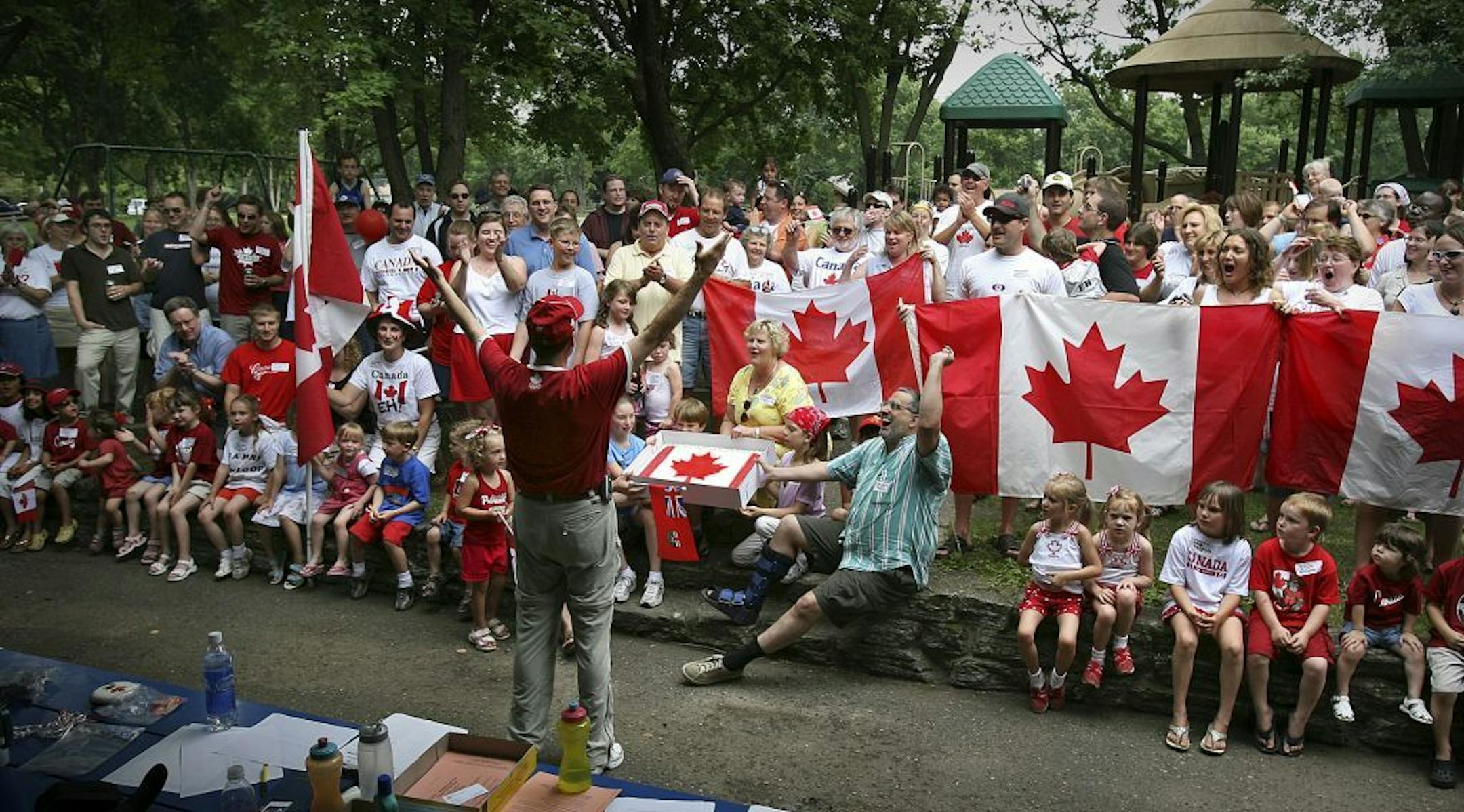
A lot of goodwill flows between America and Canada, the Minnesota International Center's 2013 focus country. A lot of goods do, too, with most of them measurable in tons or barrels or other familiar metrics. It's harder, however, to gauge the exchange of culture.
"How do you describe the structure of quicksand?" asked Andrew C. Holman, professor of history in the Canadian studies program at Bridgewater State University in Massachusetts. "Culture is always moving and not easily described or captured in one glimpse."
Holman, a native of Canada, said that for the most part capturing Canadian and American culture is mostly focusing on similarities. But, he added, there are self-definition differences.
"One of Canadians' national sports is telling themselves how different they are from Americans," Holman said. "It's sort of this need to have big brother's attention, but to be different from big brother."
Only this big brother isn't Orwellian, but the opposite: Big brother isn't watching you; you're watching your big brother.
And Holman believes the ethnicity ethos is different, too. America's vision is more melting pot, while Canada's construct is more mosaic.
"There's more of a celebration of diversity in terms of ethnicity, immigrant origins, importance of maintenance of traditional inherited values, like the 'French fact' in Quebec. Canada has never had any intention of becoming a melting pot. In fact, in the other direction, in some years it has embraced multiculturalism in government policy."
For instance, a policy put in place years ago to protect Canadian culture on radio and TV, the so-called Canadian Content Regulations ("CanCon"), requires that a considerable percentage of content be of Canadian origin, especially during peak periods of the day. (Other policies support Canadian content in the publishing sector.)


