
Twin Cities R&B: Lost, found and funky

A new 21-song anthology from Secret Stash Records chronicles the 1960s-70s music scene that planted the seeds of the Minneapolis Sound.

September 16, 2012 at 12:01AM
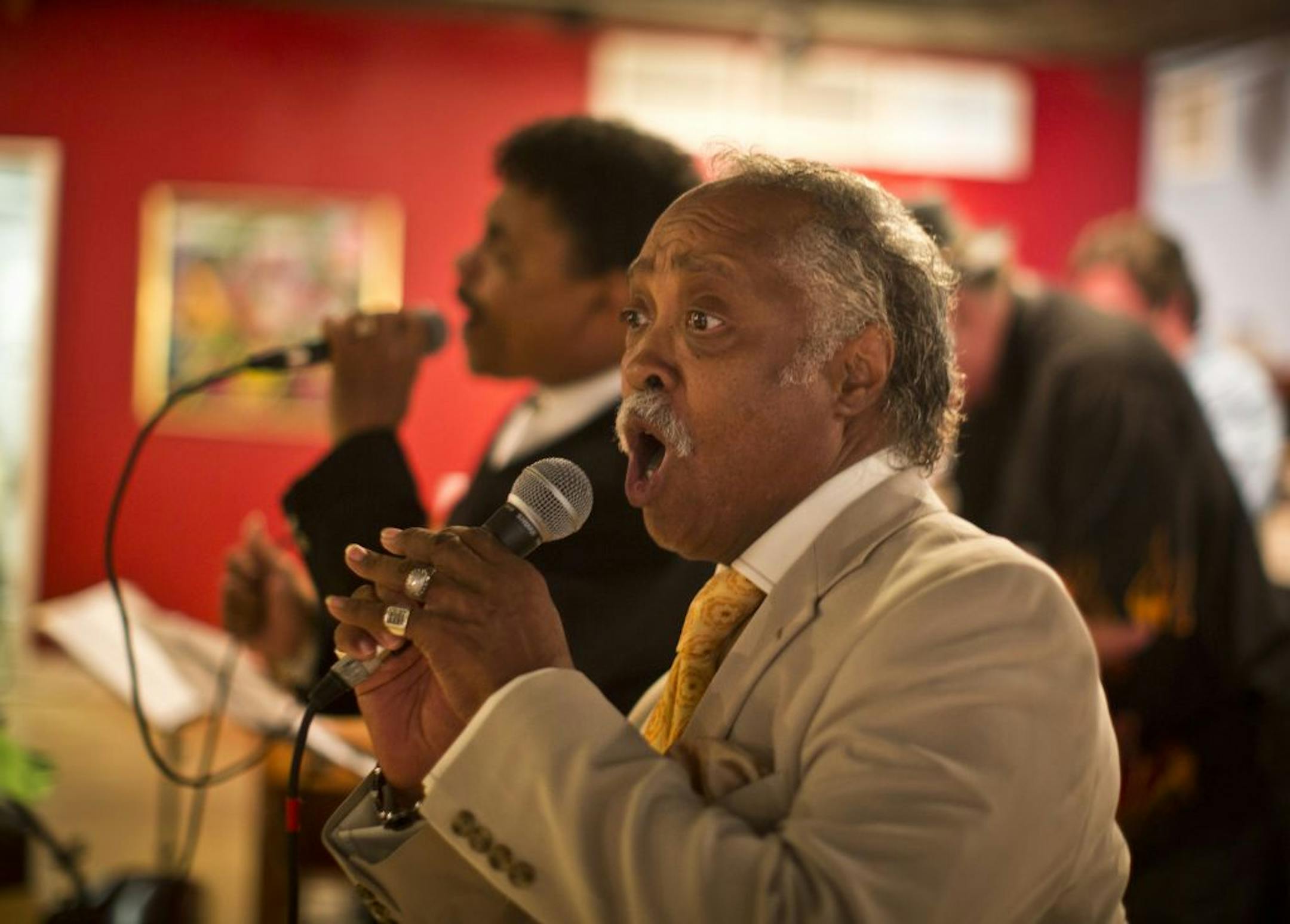
Maurice Young sang during a release party for a new 21-track anthology of the funk/R&B scene that preceded Prince, the Time and �Funkytown.� The collection was put together by Secret Stash Records, the Minneapolis reissue label with an international cult following.
Maurice Young sang during a release party for a new 21-track anthology of the funk/R&B scene that preceded Prince, the Time and "Funkytown." The collection was put together by Secret Stash Records, the Minneapolis reissue label with an international cult following. (Star Tribune/The Minnesota Star Tribune)

It felt like equal parts war-vet reunion and dog-and-pony show in the Uptown offices of Secret Stash Records. A half-dozen elder statesmen of Twin Cities R&B and soul bands hobnobbed with music scenesters half their age, telling them what things were like back in the day. Most of the older guys were dressed to the nines, even though they only played a short, private basement gig.

"Truth be told, we gave Prince one of his first jobs," insisted Maurice Jacox, one of the singers telling just one of many Prince stories.

By the end of last month's preview party for the double LP "Twin Cities Funk & Soul: Lost R&B Grooves From Minneapolis/St. Paul 1964-1979," nearly every musician in the room claimed that the P-man owed them some kind of debt. True or not, they also all believed that Secret Stash's new anthology will offer at least a little repayment for their years of service keeping the scene grooving -- and for integrating it, too.

"We started out playing primarily to black audiences," recalled keyboardist Wilbur Cole, who played in the Exciters and later Band of Thieves. "But eventually, we were playing to everyone. We saw them come together."

To music historians, this era is relevant because it directly preceded the outbreak of the so-called Minneapolis Sound, also made famous by the Time, Alexander O'Neal and Lipps Inc.'s "Funkytown."

"Prince didn't grow up in a vacuum," insisted Will Gilbert, the Secret Stash staffer who spent months digging through Minnesota Historical Society records, back issues of the Minneapolis Spokesman-Recorder, you name it, looking for details and photos from this "lost" era.

As with all the specialty releases from Minneapolis' hot new reissue label, the Secret Stash staff judged the collection less on its historical purpose than its musical value.

"We took the historian side of it very seriously, because it's the only collection of its kind and we felt like we had one chance to get it right," said label co-founder Eric Foss, but "first and foremost, the music had to really hit us."

"TC Funk & Soul" hits like a middleweight boxer and rarely lets up. From the hard-grooving, early-'60s R&B sounds of Dave Brady & the Stars and Maurice McKinnies to the more acidic funk of late-'70s bands Prophets of Peace and the Lewis Connection, it's the kind of collection you can imagine hip-hop producers sampling from, record collectors salivating over and anyone with a pulse at least bobbing their head to.

A sign of its broad appeal, it's the rare Secret Stash effort issued on CD in addition to the trendier vinyl edition.

"We know how to market to young hipsters, and I think they'll definitely enjoy this," Foss said. "We really want all the people who were around for these bands -- who bought their original 45s and saw them play -- to finally have this music back."

'We're still here'

The stars of the new compilation weren't entirely lost. Some are still popular performers around town, including Willie Murphy, Willie Walker and Jacox. Murphy, the white bandleader of the multi-racial Willie & the Bumblebees, said of the new compilation, "It might bring recognition to some of these black artists who were sort of swept under the rug."

There are a lot of those. You would be hard-pressed to find a local music fan today familiar with the Valdons, McKinnies, Dave Brady & the Stars, Jackie Harris, Wanda Davis and Band of Thieves, all of whom have tracks on the album. Many of them -- including Harris, Davis, Jacox and members of the Valdons -- will take part in an all-star revue Saturday at the Cedar Cultural Center to promote the album.

"We never got paid for [our recordings], we only played for them," quipped Maurice Young, 64, one of the Valdons, who takes his obscurity in stride. "It doesn't matter if we're famous. We're still here, still around. Everything else is gravy."

Of course, a few of the musicians weren't so lucky. Harp blower Mojo Buford and guitarist Donald Breedlove died in the past year, adding urgency to the project. Buford toured in Muddy Waters' band back then. Here, he is featured with his own funky act, Mojo & His "Chi 4," singing (get this) "She's a Whole Lot's a Woman."

A few "Lost Grooves" stars really were lost. Dave Brady & the Stars' namesake frontman still hasn't been tracked down. Some thought Harris was deceased. (He moved to Ohio.)

Featured in one of the collection's earliest tracks ("Work Your Flapper, Part 1"), the James Brown-channeling Harris was an impetus for "TC Funk & Soul." His pioneering record label of the late '60s, Black & Proud, was considered for its own compilation, but "they only put out five 45s, and there just wasn't enough there," Foss said.

The other big spark behind the compilation was the Lewis Connection, a coed dance band led by brothers Pierre and Andre Lewis. Its 1979 self-titled album caught the attention of Secret Stash staffers because it was selling for $500 in collectors' circles. The reason it's so sought after is the same reason Secret Stash opted not to reissue it. In a word: Prince. He plays guitar on one of the tracks -- but not "Get Up," the "Funkytown"-like party tune featured on "TC Funk & Soul."

Secret Stash's crew was ultimately too afraid of Prince's litigious ways to issue the whole album. Still, it planted the seed, and this collection grew relatively easily from there. Most of these artists never attracted record-label interest, so licensing their old recordings simply involved getting approval from the musicians themselves.

'Things were pretty good'

These bands were much more about performing than recording.

"Everyone went out to see the show bands and the singing groups," remembered Jacox. "I don't know if people today can understand the kind of excitement these groups generated at their shows."

They would play to mostly black audiences in north Minneapolis at the Riverview Supper Club, the Blue Note or the Cozy Bar. Crowds were more mixed south of downtown at Mr. Lucky's and, later, the Flame, a country bar that changed the cowboy on its marquee to a disco-style pimp-looking character in the '70s.

"There were nights we would have 700 people at the Flame," Young remembered. "It only held about 500."

Murphy pointed out, "The Top 40 back then was mostly black music: the Temptations, Motown, Martha & the Vandellas. Every band in town played 'Dancing in the Street.'"

Not that racial issues were anywhere near utopian. Some black musicians felt they received lesser treatment. And there are lingering memories of police harassment at one late-'60s hotbed, King Solomon's Mine. Located at the foot of the Foshay Tower, it was the first racially integrated club in downtown Minneapolis but closed in 1970.

"All in all, things were pretty good," said Willie Walker, one of several singers in the collection who relocated from the South. Not only were crowds integrated, "but you had the jobs up here," said Walker. "Music didn't pay all the bills."

Just as gigs ruled over recordings back then, many of the musicians featured on "TC Funk & Soul" don't expect much financial benefit from sales of the new compilation. Still, they hope it might lead to more live shows.

At last month's preview party, Young and fellow Valdons singer Monroe Wright III sang the Tom Jones hit "I (Who Have Nothing)," which the Valdons also recorded. Afterward, they laughed over the last time they had sung it together: "It was eight years ago at karaoke," Young recalled.

"I think we shouldn't do this once and call it a day," interjected Jimmy "Jimmieapolis" Wallace, a saxophonist with several of the bands. "We should make this a regular thing. None of us are getting any younger."

No laughs this time, just nods of agreement.

Chris Riemenschneider • 612-673-4658 • Twitter: @ChrisRstrib

about the writer

about the writer

Chris Riemenschneider

Critic / Reporter

Chris Riemenschneider has been covering the Twin Cities music scene since 2001, long enough for Prince to shout him out during "Play That Funky Music (White Boy)." The St. Paul native authored the book "First Avenue: Minnesota's Mainroom" and previously worked as a music critic at the Austin American-Statesman in Texas.

See Moreicon

More from Minnesota Star Tribune

See More
card image
J. SCOTT APPLEWHITE, ASSOCIATED PRESS/The Minnesota Star Tribune

The "winners" have all been Turkeys, no matter the honor's name.

In this photo taken Monday, March 6, 2017, in San Francisco, released confidential files by The University of California of a sexual misconduct case, like this one against UC Santa Cruz Latin Studies professor Hector Perla is shown. Perla was accused of raping a student during a wine-tasting outing in June 2015. Some of the files are so heavily redacted that on many pages no words are visible. Perla is one of 113 UC employees found to have violated the system's sexual misconduct policies in rece