

![A fall approaches, a fisherman tried his luck in the chilly waters of Lake Calhoun, in the shadow of the downtown Minneapolis skyline. ] JIM GEHRZ•jgehrz@startribune.com (JIM GEHRZ/STAR TRIBUNE) / September 21, 2011/1:00 PM ,Minneapolis MN**](https://arc.stimg.co/startribunemedia/BOZVKPLVF7KPGZVBGDCMB4HU5Y.jpg?&w=1080)
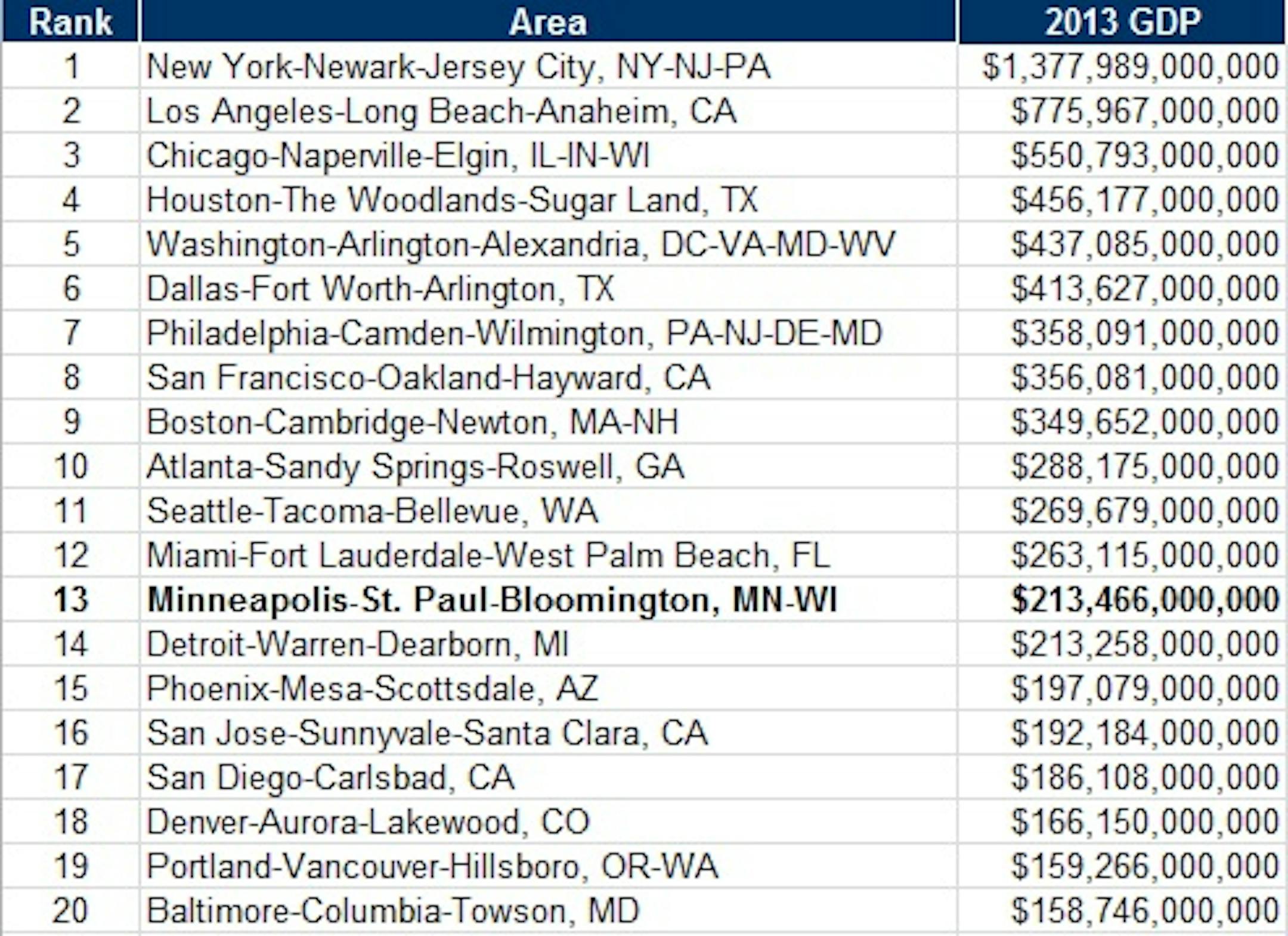
The Minneapolis-St. Paul metropolitan area saw real gross domestic product grow 2.5 percent in 2013 to $213.5 billion.
That checks all the better-than-average boxes for the metro area. The numbers are preliminary, but growth was better than average compared to the past decade, and better than the national average -- 1.7 percent in 2013 -- by a wide margin.
It was also good enough to move the Twin Cities up in the national rankings, past Detroit to #13. Miami, Seattle, Atlanta stand between the Twin Cities and the top ten. Unless calamity befalls one of those cities, Minneapolis-St. Paul will be stuck at #13 for the foreseeable future.
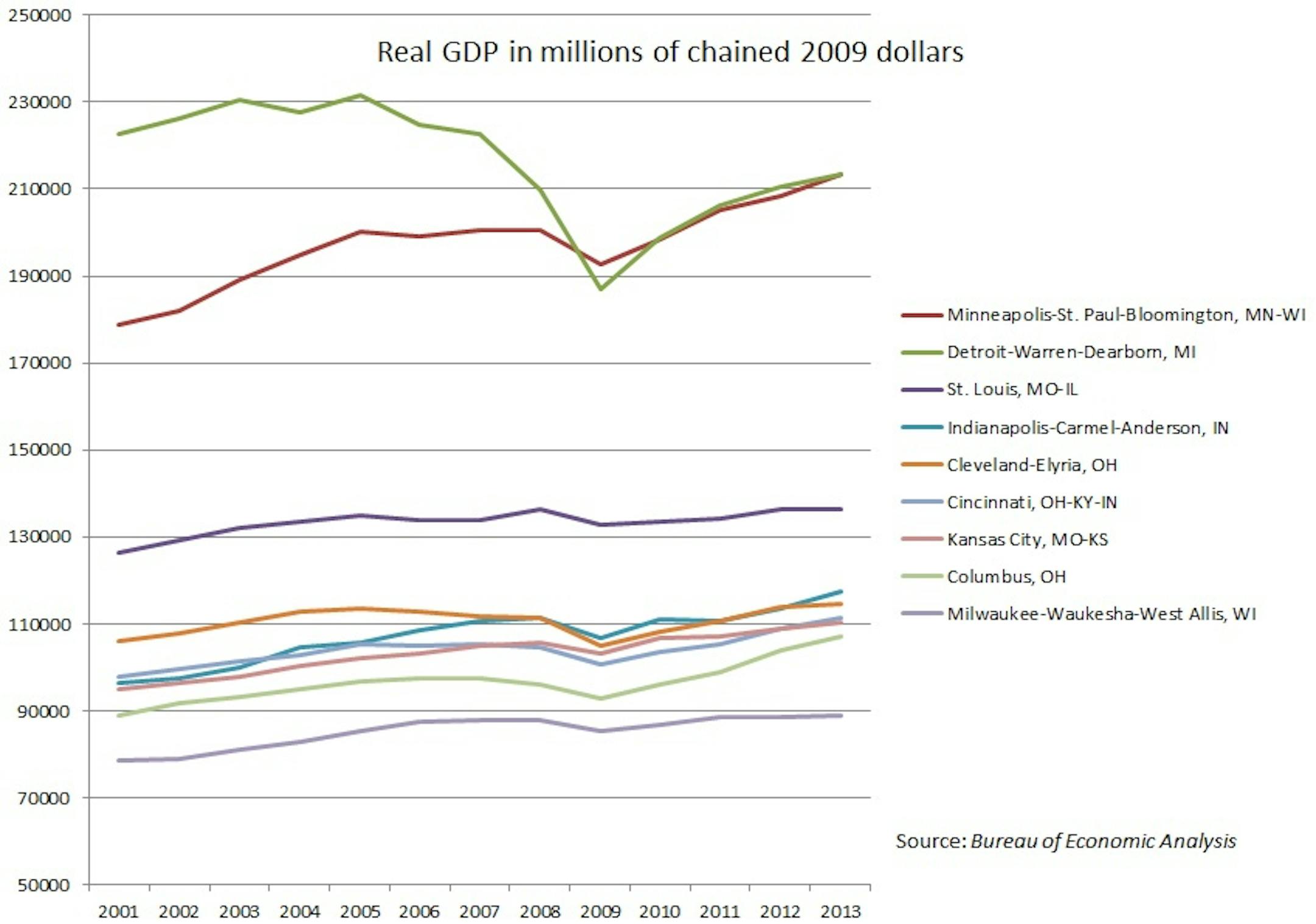
Minneapolis-St. Paul was well behind Detroit in 2001, gained ground for several years and then jumped ahead of Detroit in 2009 when GDP tanked in the Motor City. Detroit recovered its lead in 2010, 2011 and 2012, barely, but the Twin Cities moved ahead last year, according to figures released this morning. Outside of Chicago, which is one of the handful of giant metro economies in the nation, the Twin Cities now has the largest economy of any metro area in the Midwest.
The industries that grew the most in the Twin Cities in 2013 were construction, at 6.1 percent, and non-durable goods manufacturing, at 10.3 percent. Output from government and durable goods manufacturing fell slightly. Growth for most other sectors (though not all the historic data is available) was right around 2 or 3 percent.


