

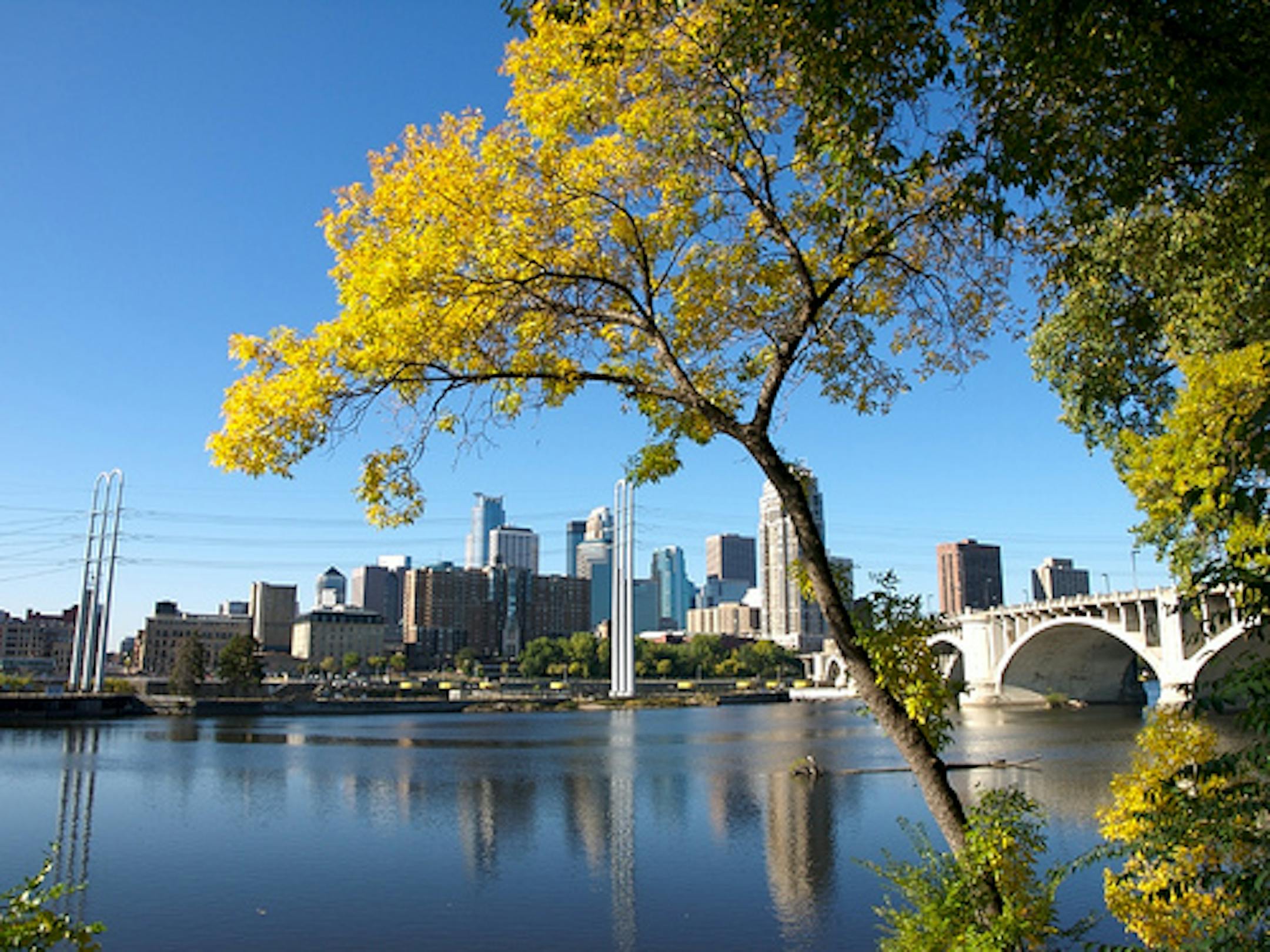
The Twin Cities economy grew steadily in 2015, setting a pace that's better than average and keeping Minneapolis-St. Paul in its spot as the 13th-largest metropolitan economy in the U.S.
Gross domestic product from the 16-county area grew 2.7 percent last year, enough to stay just ahead of San Jose-Sunnyvale and Detroit and just outpacing the national average for growth, 2.5 percent, according to data released Tuesday by the U.S. Department of Commerce.
Finance, insurance, real estate and professional services led the way in Minneapolis, St. Paul and the suburbs, but the growth was broad-based. Construction, manufacturing, trade and health care also contributed to the rise in economic output.
Mankato, Rochester and St. Cloud each grew faster than the Twin Cities last year, according to the data, while Duluth was slammed by troubles in the iron ore industry.
The metropolitan area of Duluth-Superior, which includes all of St. Louis County, saw its economy contract 4 percent in 2015. The big decline was in the mining industry, and most other industries were flat.
Around the Midwest, Chicago posted its best growth rate in five years — 3.1 percent. The rest of Illinois, however, is struggling. Five metropolitan areas — Peoria, the Quad Cities, Decatur, Danville and Bloomington — saw their economies shrink.
Fargo and Grand Forks have cooled off a bit in the past three years, but Bismarck, which grew by 5.7 percent in 2015, remained one of the fastest-growing local economies in the U.S.
States in the region known for governors who are committed to low taxes — Kansas and Wisconsin — performed below average last year.


![Attendees of Frostbike made their way through the convention Saturday at the Quality Bike Products campus in Minneapolis. ] (AARON LAVINSKY/STAR TRIBUNE) aaron.lavinsky@startribune.com Frostbike 2016 was held at the Quality Bike Products Campus on Saturday, Feb. 27, 2016 in Bloomington, Minn.](https://arc.stimg.co/startribunemedia/NH2BSHB74ND2V6GF2G2HI5X4MM.jpg?&w=252&ar=3:2&fit=crop)
