

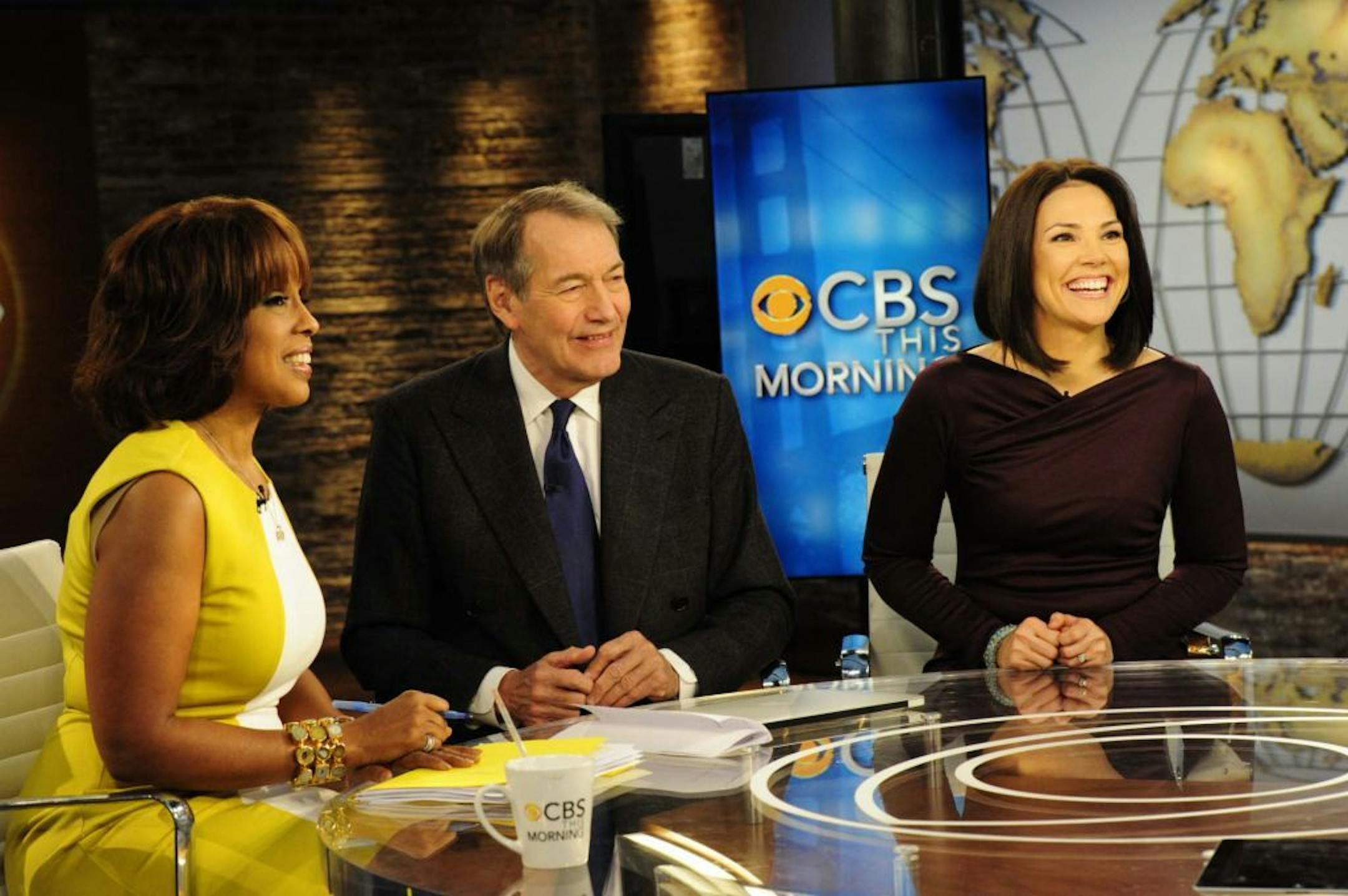
LOS ANGELES - Since the advent of television, CBS has had a hard time getting up in the morning. Despite recruiting such heavyweights as Bryant Gumbel, Diane Sawyer, Bob Schieffer and even Dick Van Dyke, the network has always trailed NBC's "Today" and ABC's "Good Morning, America" in the ratings.
So why does CBS stay in the game? Cash, and lots of it.
The desirable demographic of the morning audience -- middle-class workers with spending cash -- offers an irresistible opportunity, coupled with the fact that viewers are unlikely to change channels while making breakfast .
"Not to try would be very foolish," said Chris Licht, former executive producer of MSNBC's "Morning Joe," whom CBS hired to run its new show. While CBS' old "Early Show" drew only half as many viewers as its top rivals, it still reaped $178 million in ad revenues in 2010, according to industry analysts Kantar Media. That's nowhere near the $454 million "Today" pulled in, but it's a nice pile of cash, and it could get bigger.
Two weeks ago, CBS brought in new hosts Charlie Rose and Gayle King at a time when many believe "Today" is vulnerable -- especially if Matt Lauer, its longtime co-host, doesn't renew his contract this year. The new "CBS This Morning" emphasizes longer, more in-depth discussions around a glass table. To give the show breathing room, producers have eliminated national weather updates, cooking segments and fashion shows.
"In the past, the network has tried to do what the other guys do," Gayle King said. "That's not knocking the other guys in any way, but for the first time, you've got a different kind of program. I believe you keep trying until you get it right and I'm thinking we're on the verge of really getting it right."
Rose, who will continue to host his late-night talk show on PBS, is a big reason CBS has a fighting chance, largely because of the gravitas he brings to even the fluffiest stories.
"I was excited to do it, in part because morning television sets the agenda for the day," Rose said. "You have an opportunity to come in in the morning and say, 'What's going on? How do we find the best possible sources to tell these stories? How do we get them to our table?'"


