HUNTINGTON BEACH, CALIF.
McKenna Wetzel, a playful girl who loved selling lemonade on the corner near her Huntington Beach home, was 7 when a tumor was discovered growing deep in her brain.
It's still growing in a laboratory at Stanford — the last living part of a girl who died two summers ago, and the part that killed her.
"You could take that petri dish," her mother, Kristine Wetzel, said, "I could slam it against the wall and I could kill those cells. But we couldn't kill them while they were in her."
Inoperable while McKenna was alive, the tumor is sustained in 2 million-cell batches in California, England, Australia and beyond by researchers who see it as one of the best hopes of finding a cure for the cancer.
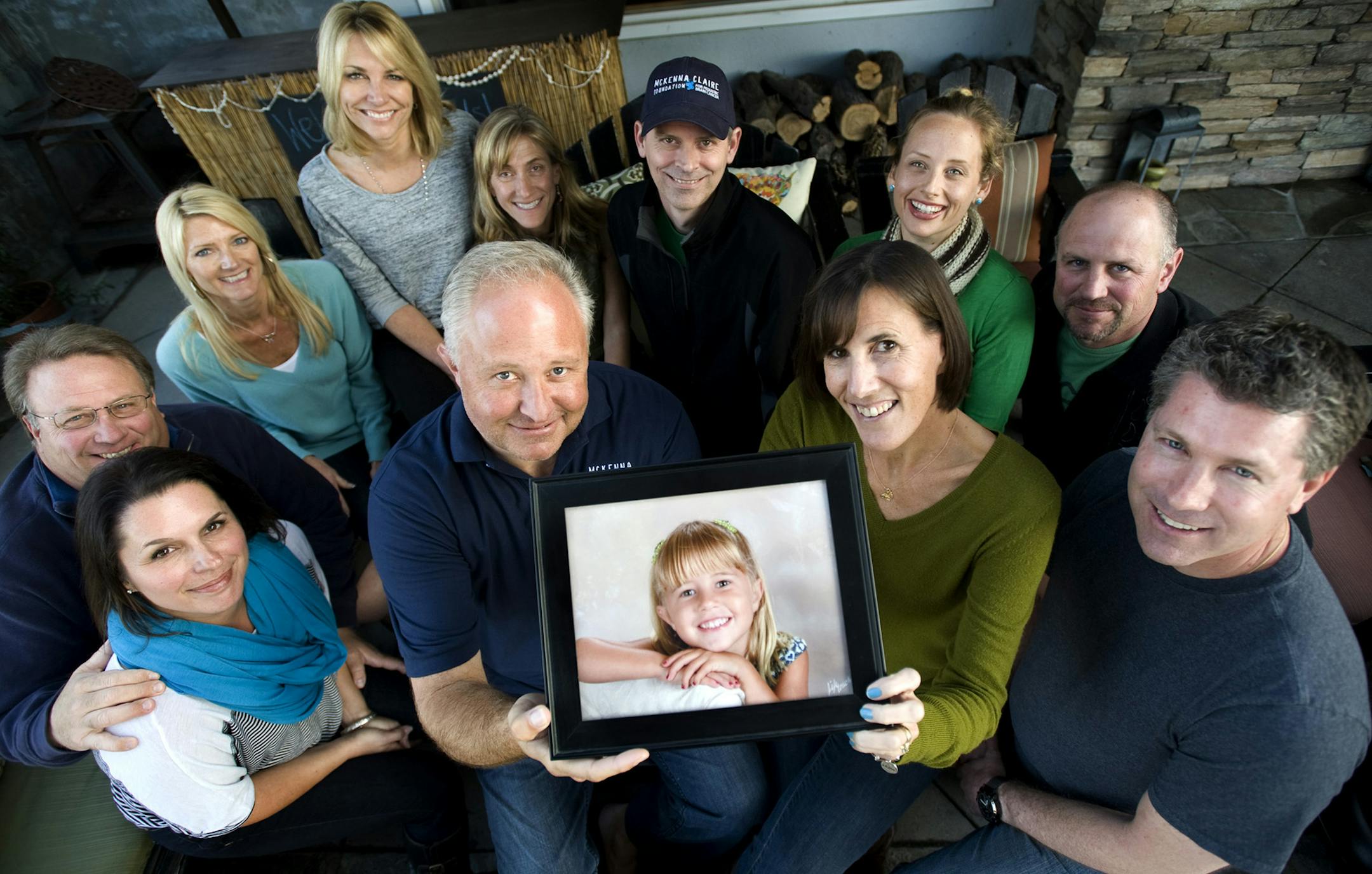
Wetzel and her husband, Dave, created the McKenna Claire Foundation, which has raised nearly $500,000 to propagate donated tumor cells from their daughter and other children who have died. They hope the research they're funding will save the next set of kids stricken with the cancer that killed McKenna.
"There's so much you can't control with this disease and there's so much, especially at the end, that's devastating and out of your control. You watch your child lose the ability to speak, to move, to see, to hear, to swallow, to breathe," Kristine Wetzel said. "I wanted my daughter's death to have a purpose."
McKenna Claire Wetzel was told she had diffuse intrinsic pontine glioma, or DIPG, in January 2011. The rare cancer that weaves through a critical part of the brain is treatable in adults but considered a death sentence in children.