
Try garden drip systems

Garden watering systems can be installed in an afternoon -- and no digging is required.

July 21, 2011 at 3:49PM
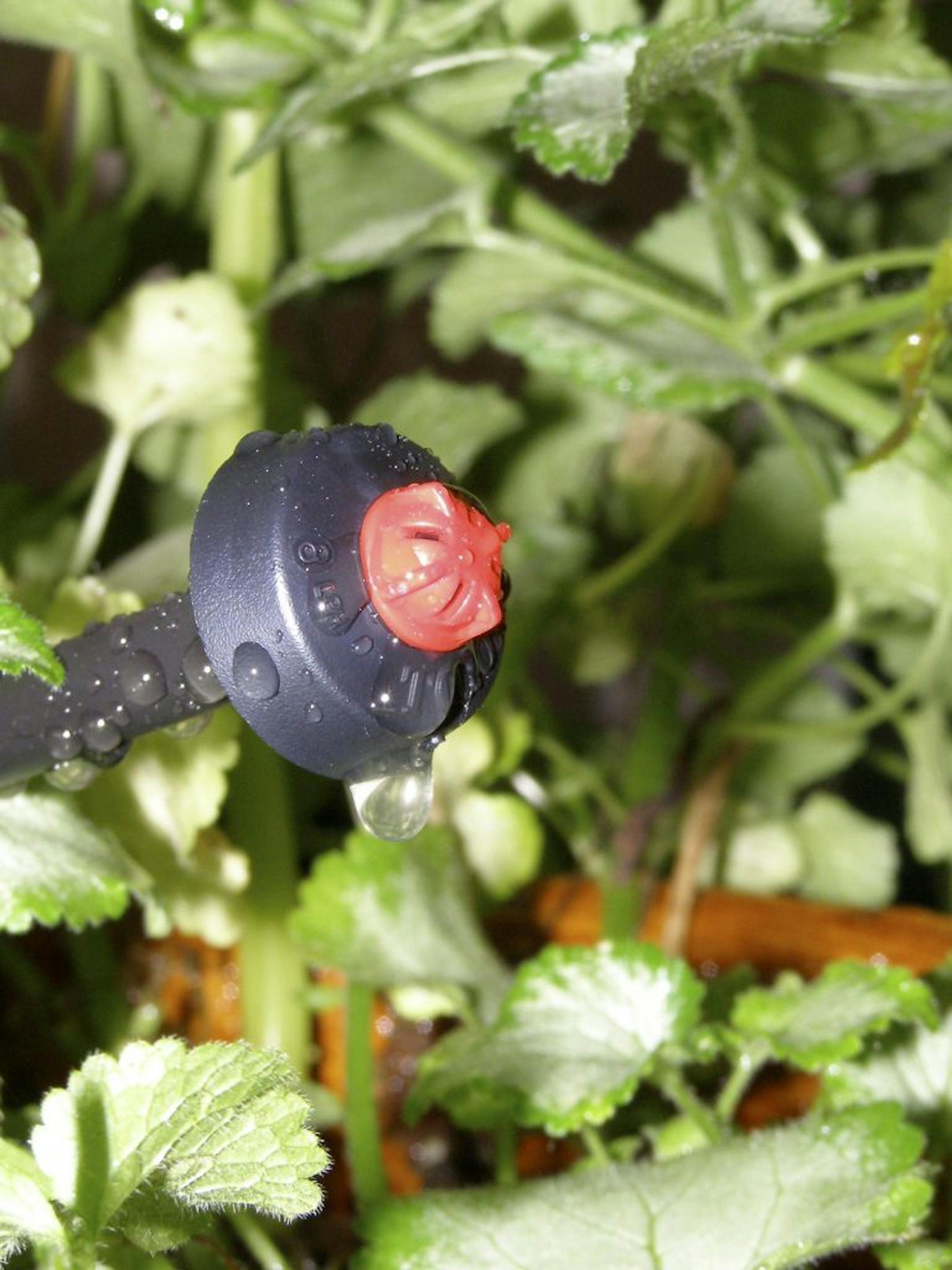
Slow and steady drip systems water your garden thoroughly.
Slow and steady drip systems water your garden thoroughly. (Scripps Howard News Service/The Minnesota Star Tribune)

To water your garden thoroughly and efficiently, slow and steady is the only way to go.

Nothing delivers water to your plants better than the slow, steady drip of a micro-irrigation system. Keeping the root zone moist without saturating it saves plants from the roller-coaster stress of traditional "drench and dry" watering. The systems use up to 80 percent less water than sprinklers, prevent soil erosion and keep the water targeted to desired plants instead of weeds.

The drip emitters are the heart of a micro-system. The tiny, buttonlike devices release a predetermined amount of water over time.

Color-coded emitters determine the flow rate. For example, red emitters might have a half-gallon-per-hour drip rate, and black ones a full gallon and green ones 2 gallons per hour. You can supply more or less water to different plants by using emitters with different drip rates.

You can build a system in an afternoon without threading, gluing or digging.

A good way to get familiar with micro-irrigation systems is to get a kit. It will have everything you need for a basic system, including mainline tubing, spaghetti tubing, different emitters, a punch, various connectors and even "goof plugs" for mistakes.

Typical components

Here's a look at the components of a typical installation, starting at the faucet with the control system.

A multiport manifold turns a single spigot into two or more connections. One connection is dedicated to an ordinary, full-pressure hose. The other holds a timer to deliver the right amount of water to the plants the system irrigates.

Mechanical timers flow for a predetermined interval, and shut off automatically. They're good for flower beds and vegetable gardens that need consistent moisture. Start them in the morning and they shut the water off for you. Electronic timers can be programmed for specific days and times. You set them once and forget them. They also have a manual override for complete flexibility.

A pressure reducer can drop city water pressure, usually 60 PSI, down to lower micro-system pressure. A threaded hose adapter connects the low-pressure, slip-fit main line tubing to the control system.

Building the line and emitter system is easy. Measure a length of half-inch-diameter mainline tubing to the area you're irrigating, cut with a utility knife and crimp the end of the tube into a figure-8-shaped tube end closer.

If you're watering a large area, such as the root zone of a tree, lay mainline around it and insert high-flow emitters directly into the tubing with a special punch. For individual plants, quarter-inch spaghetti lines are connected to the mainline and run directly to the root zones.

The appropriate emitter then connects to the end of each line. Elbow-connectors and T-connectors let you change directions and fit the main lines into any shape of area.

To each its own

Getting the right amount of water to each plant requires some planning. Divide your landscape into irrigation zones with plants that need similar amounts and frequency of water. One line may serve a large stand of trees, another a vegetable garden or perennial bed, the third the containers on a patio.

Separate zones let you water each by time: the large trees getting, say, six hours of water three times a week, containers 30 minutes every other day, etc. Further adjust the water within each zone by using different emitters: The trees would get lots of water through several 2-gallon-per-hour emitters; small containers would get about a quart through half-gallon-per-hour emitters running for only half an hour.

about the writer

about the writer

JOE LAMP'L, Scripps Howard News Service

More from Minnesota Star Tribune

See More
card image
J. SCOTT APPLEWHITE, ASSOCIATED PRESS/The Minnesota Star Tribune

The "winners" have all been Turkeys, no matter the honor's name.

In this photo taken Monday, March 6, 2017, in San Francisco, released confidential files by The University of California of a sexual misconduct case, like this one against UC Santa Cruz Latin Studies professor Hector Perla is shown. Perla was accused of raping a student during a wine-tasting outing in June 2015. Some of the files are so heavily redacted that on many pages no words are visible. Perla is one of 113 UC employees found to have violated the system's sexual misconduct policies in rece