

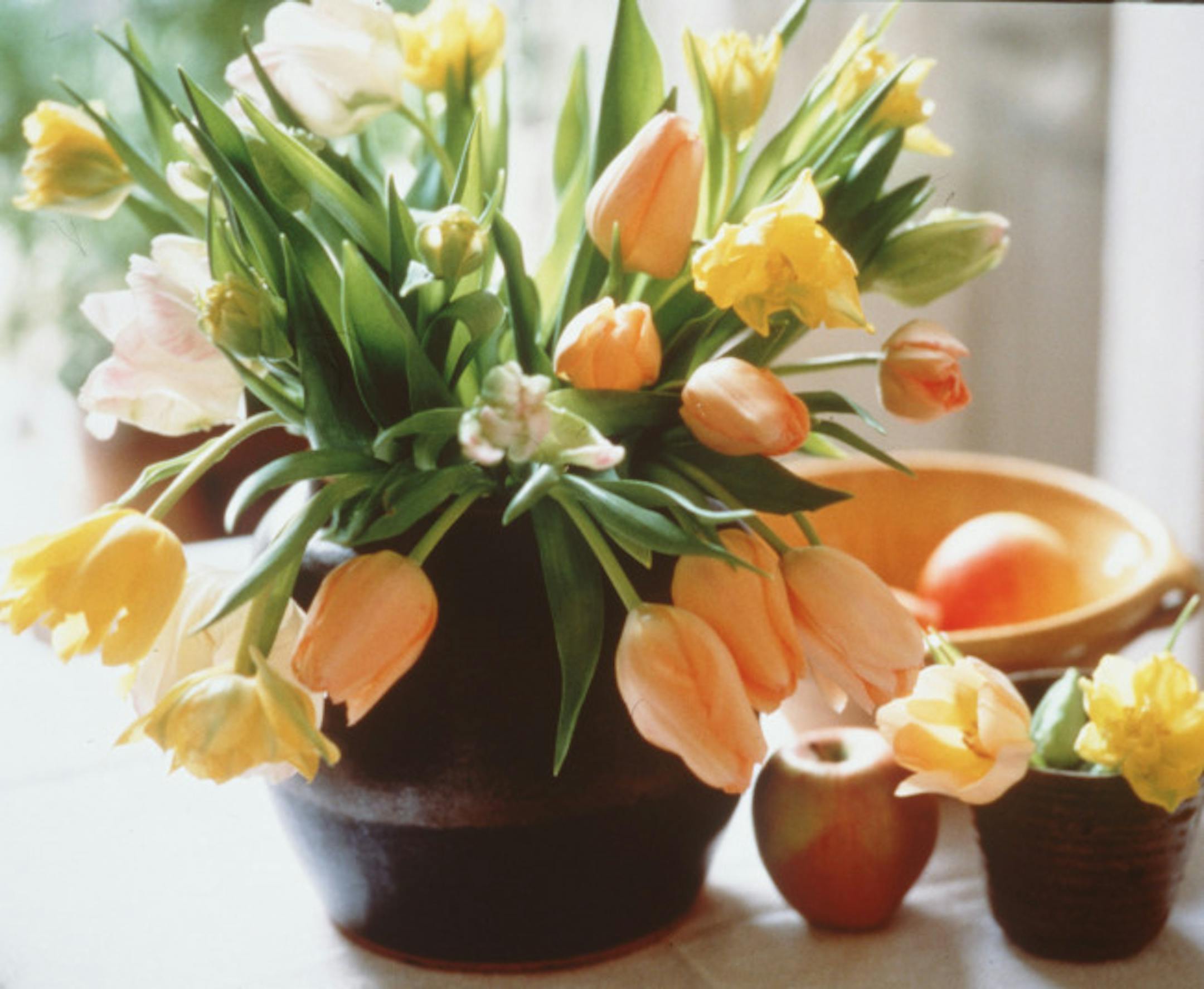
Q Once again I got behind this fall and never planted the tulip bulbs I bought on sale late in the season. Can I keep them in a spare refrigerator and plant them in my yard in spring?
A No. Simply keeping them in their bags in the fridge probably won't provide the cooling they need to bloom well. If you stored them in the fridge and planted them in the spring, the leaves would grow well, but no flower buds would be likely to emerge. In fact, it's doubtful they would ever bloom normally. (Tulips usually diminish year after year in our climate, even under the best circumstances.)
A better idea would be to force the tulips to bloom indoors. Here's how to do it: Plant the bulbs in containers of potting soil, then put them in the fridge for roughly three months. Check on them periodically to make sure the soil is moist. At the end of three months, move the containers to a sunny but cool location. Once the bulbs develop buds, you can move the containers to your favorite display spot.
Rhubarb or burdock?
Q Last year there was a lot of wild rhubarb in my yard. I imagine it will be back again this summer and I want to know if it's edible.
A The plant that's most often called wild rhubarb is actually a widespread weed more commonly known as burdock.
Burdock has a two-year life span. In the first year, it produces a rosette of large leaves on sturdy green stalks. At this stage, it looks very much like a small, all-green rhubarb. The second year, it sends up a tall stem that flowers and produces seed pods covered with burs.
Burdock is edible, but not in the same way that rhubarb stalks are edible. The most commonly eaten parts of burdock are the first-year roots, which are peeled, sliced and boiled. The stems may also be peeled and boiled early in the season and the leaves may be boiled in two changes of water) for use as greens. (Real rhubarb leaves are toxic and should not be eaten under any circumstances.)


