

WASHINGTON — The Trump administration on Thursday revoked a scientific finding that long has been the central basis for U.S. action to regulate greenhouse gas emissions and fight climate change, the most aggressive move by the president to roll back climate regulations.
The rule finalized by the Environmental Protection Agency rescinds a 2009 government declaration known as the endangerment finding that determined that carbon dioxide and other greenhouse gases endanger public health and welfare.
The endangerment finding by the Obama administration is the legal underpinning of nearly all climate regulations under the Clean Air Act for motor vehicles, power plants and other pollution sources that are heating the planet.
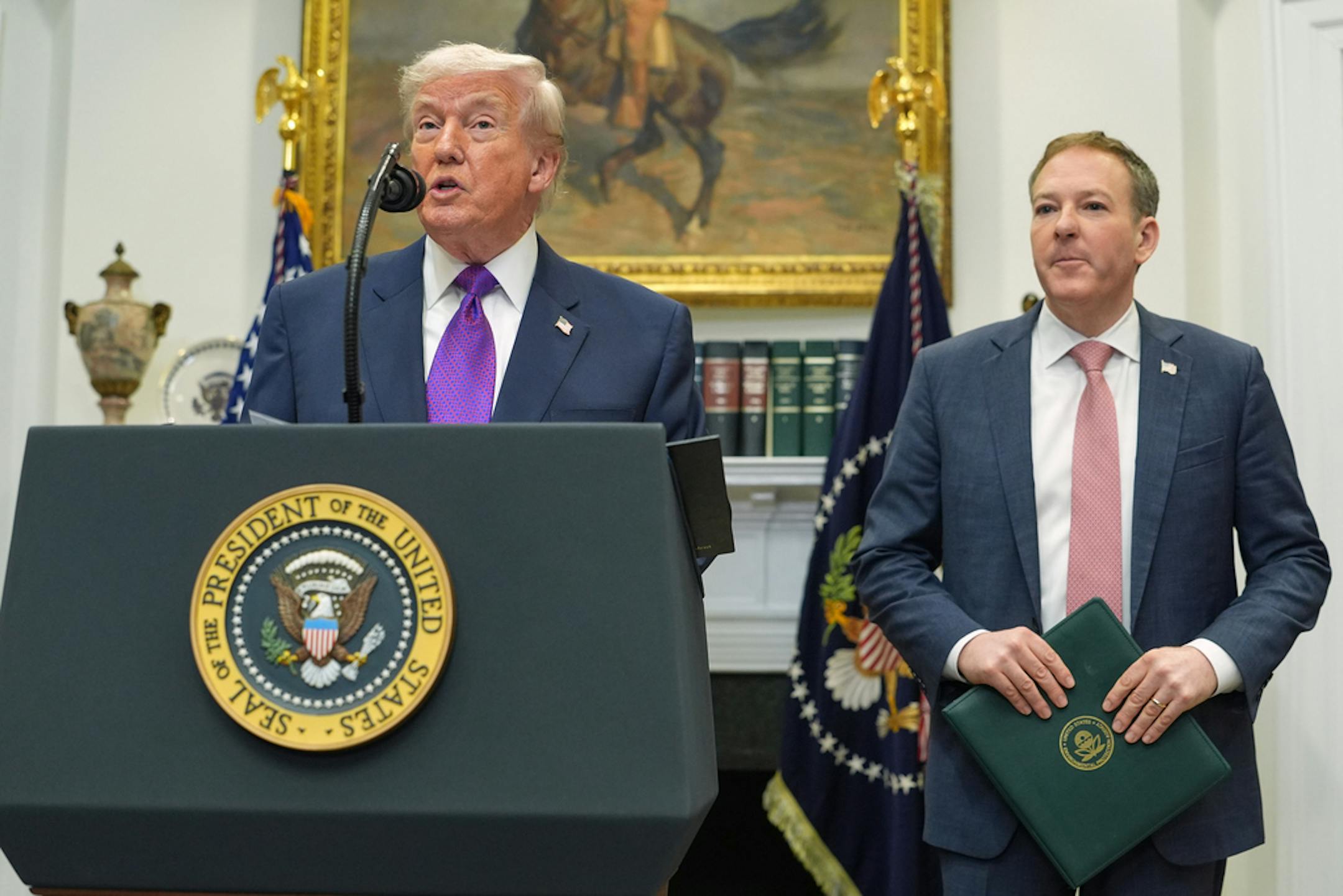
President Donald Trump called the move ''the single largest deregulatory action in American history, by far'' while EPA Administrator Lee Zeldin called the endangerment finding ''the Holy Grail of federal regulatory overreach.''
Trump said he was pleased to repeal ''a disastrous Obama-era policy that severely damaged the American auto industry and massively drove up prices for American consumers."
The endangerment finding ''had no basis in fact, had none whatsoever, and it had no basis in law,'' Trump said at a White House ceremony. "On the contrary, over the generations, fossil fuels have saved millions of lives and lifted billions of people out of poverty all over the world.''
Legal challenges are certain for an action that repeals all greenhouse gas emissions standards for cars and trucks, and could unleash a broader undoing of climate regulations on stationary sources such as power plants and oil and gas facilities, experts say. Overturning the finding will ''raise more havoc" than other actions by the Trump administration to roll back environmental rules, said Ann Carlson, an environmental law professor at the UCLA School of Law.
Environmental groups described the move as the single biggest attack in U.S. history against federal authority to address climate change. Evidence backing up the endangerment finding has only grown stronger in the 17 years since it was approved, they said.
