

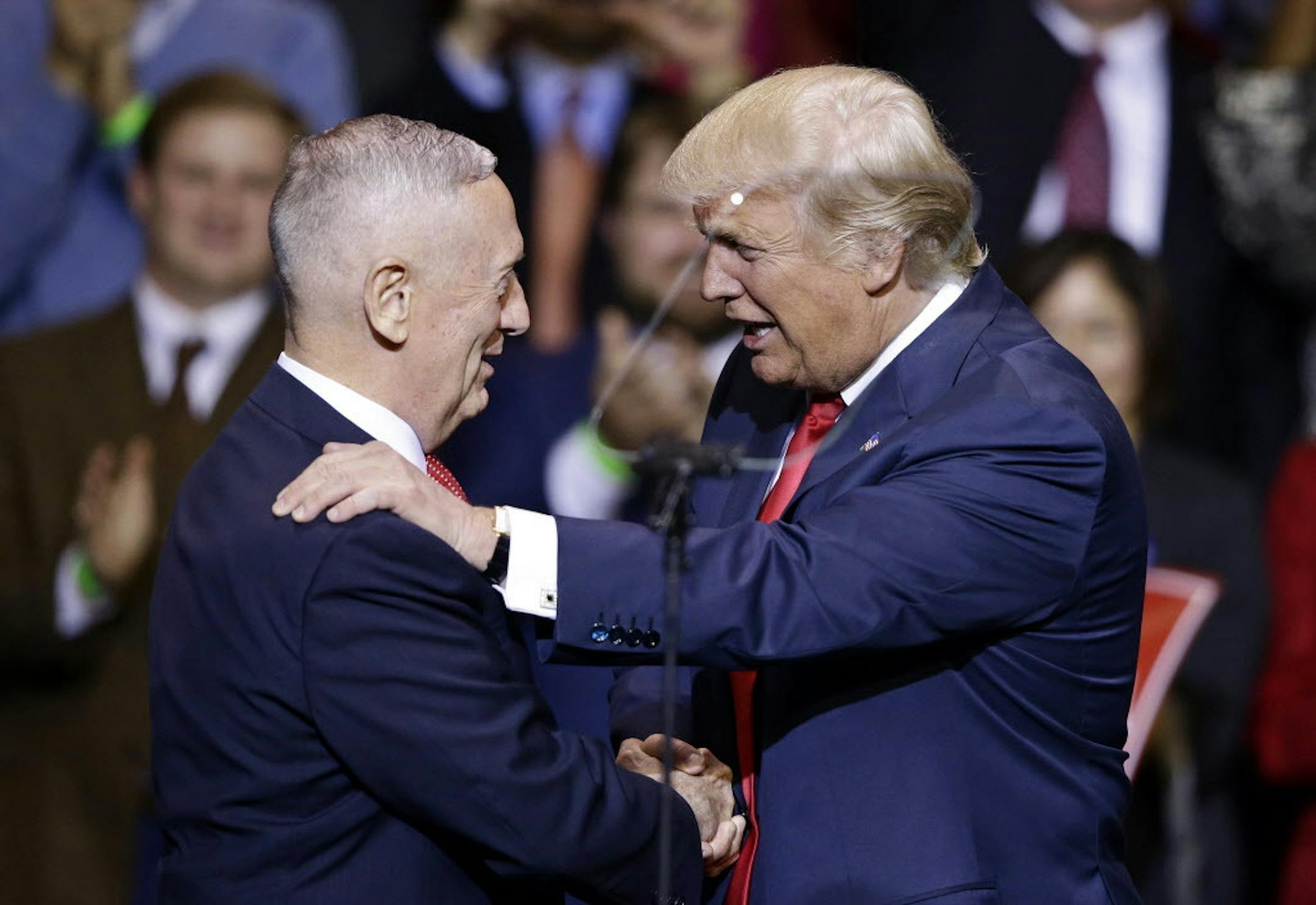
President-elect Donald Trump has stacked his Cabinet with military generals, pushed for more Pentagon spending and a bigger Navy, threatened to slap tariffs on China and Mexico and, last week, suggested that he was open to expanding the U.S. nuclear arsenal.
The aim, he has said, is to achieve "peace through strength."
If Trump follows through with this confrontational approach, it will represent a sharp break with the multifaceted foreign policy strategy that both Democratic and Republican presidents have practiced for decades, including reliance on what diplomats call "soft power" to achieve objectives and avoid conflict. Instead, Trump views foreign policy as largely transactional, aides say, and his goal is to win — by speaking loudly and carrying a big stick.
But critics, including former Obama administration officials and foreign diplomats, said winning on the world stage requires more than bluster and intimidation and pugilistic messages on Twitter. American leadership, they said, also is about the carrots — the promotion of democratic values and building U.S.-led institutions that can address shared global challenges such as economic growth, climate change and terrorism.
"If your slogan is, 'America first,' other people will think, 'What about me?' " said Joseph Nye, who was an assistant secretary of defense under President Bill Clinton.
Past presidents have tried to use "soft power" strategies to bolster the United States' cultural appeal abroad and lend moral weight to the country's standing as the free world's leading alternative to communist or authoritarian systems. Such tactics are not a substitute for military and economic "hard power," foreign affairs analysts said, but can help shape global perceptions of the United States and its motives.
President Obama, for example, spoke frequently about the need for an international order based on universal human rights and the rule of law as he pursued the Paris climate accord, a Pacific Rim free-trade pact and the Iran nuclear deal.
By comparison, Trump has seldom talked about such ideals, either during the campaign or since winning office. He has expressed skepticism about the international agreements negotiated by the Obama administration, saying they do not do enough to help the American people. This week, Trump tweeted that the United Nations has potential but "right now is just a club for people to get together, talk and have a good time."


