
Trip to the tundra

A visit to Churchill River off Hudson's Bay offers a glimpse of birding at its best.

July 8, 2008 at 6:02PM
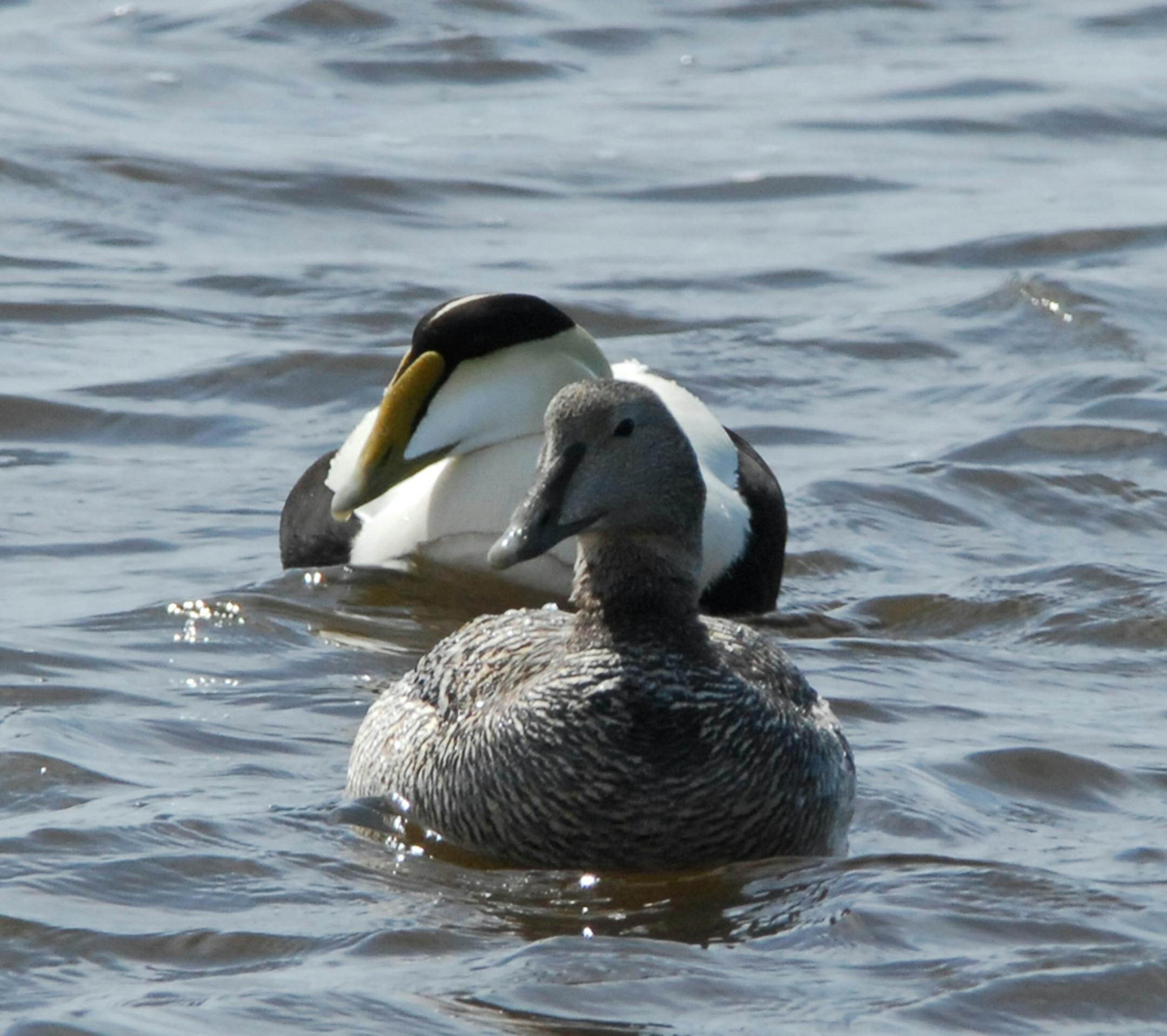
Common Eider pair, a common sight on the Churchill River near Hudson's Bay.
Common Eider pair, a common sight on the Churchill River near Hudson's Bay. (Special To The Star/The Minnesota Star Tribune)

On June 15, I sat beside the Churchill River where it enters Hudson's Bay, listening to eiders coo, terns squeal and gulls cry as I waited for the sun to set. It disappeared at 10:37 p.m., about 18 hours after it rose.

The birds' sounds had significant competition. The ice on the river was breaking -- rafts of ice 100 yards long crashing and grinding as they rode the current into the bay.

My wife, our friends and I were in Churchill for the birds, of course. It is one of the places in North America that every birder should go. The town is on the south shore of Hudson's Bay, held tight to the water's edge by thousands of square miles of tundra and boggy spruce forest.

There, in the self-proclaimed polar bear and aurora borealis capital of the world, we saw neither bears nor northern lights. Instead, we saw dozens of common eiders and little gulls. We even found a Bonaparte's gull nesting in a spruce tree. We could look out the windows of our rented truck on the nests of Arctic terns and semipalmated plovers. (Gravel roadsides suit them just fine.)

We watched Hudsonian godwits court and saw common snipe in aerial combat over nesting rights. American golden plovers hustled through tundra mud flats. Lesser yellowlegs called from the top of spruce trees. Nelson's sharp-tailed sparrows ruined their reputation as shy and hard to see by giving us face-to-face looks.

The night after my sunset vigil, I was on the riverbank again, this time in heavy fog. The sunlight glowed white, a brilliant all-encompassing light that sucked color from everything. The ice was gone, the river quiet.

I could hear birds approach long before I saw them, their cries and wing beats suddenly transforming into scoters and mergansers and eiders pulled from the fog.

And then the whales began blowing, belugas back in the river after a winter at sea. First a foursome, then a single blow. Their arching gray backs were all I could see, then slicks on the water marking where they had been. In half an hour, I watched 15 whales slide past.

Only one member of our group saw a Ross's gull, a European species that has nested near Churchill. Some birders would consider the Ross's gull the highlight of the trip, but that wasn't true for us. The Pacific and red-throated loons, the long-tailed ducks, the blackpoll and orange-crowned warblers and every other bird we saw, that's what defined the trip for us.

I have a soft spot in my heart for tundra, this flat tangle of moss and lichen and tiny flowers stretching to the eventual spruce forest. In this tough topography, where everything races through a growing season of just a few weeks, the birds are at their best, singing, winging, calling, courting and very visible.

Six days after we arrived, we headed home. Unfortunately, our trip back wasn't as relaxing as the trip there. Although our tickets said we were headed for Winnipeg, we learned -- after we'd boarded -- that the train didn't go all the way to Winnipeg. But that's another story.

Jim Williams, a lifelong birder, serves as a member of the U.S. National Wildlife Refuge Birding Initiative Committee. He also is a member of the American Birding Association, Ducks Unlimited, Pheasants Forever and Delta Waterfowl. Contact him at his blog, startribune.com/wingnut.

about the writer

about the writer

More from Minnesota Star Tribune

See More
card image
J. SCOTT APPLEWHITE, ASSOCIATED PRESS/The Minnesota Star Tribune

The "winners" have all been Turkeys, no matter the honor's name.

In this photo taken Monday, March 6, 2017, in San Francisco, released confidential files by The University of California of a sexual misconduct case, like this one against UC Santa Cruz Latin Studies professor Hector Perla is shown. Perla was accused of raping a student during a wine-tasting outing in June 2015. Some of the files are so heavily redacted that on many pages no words are visible. Perla is one of 113 UC employees found to have violated the system's sexual misconduct policies in rece