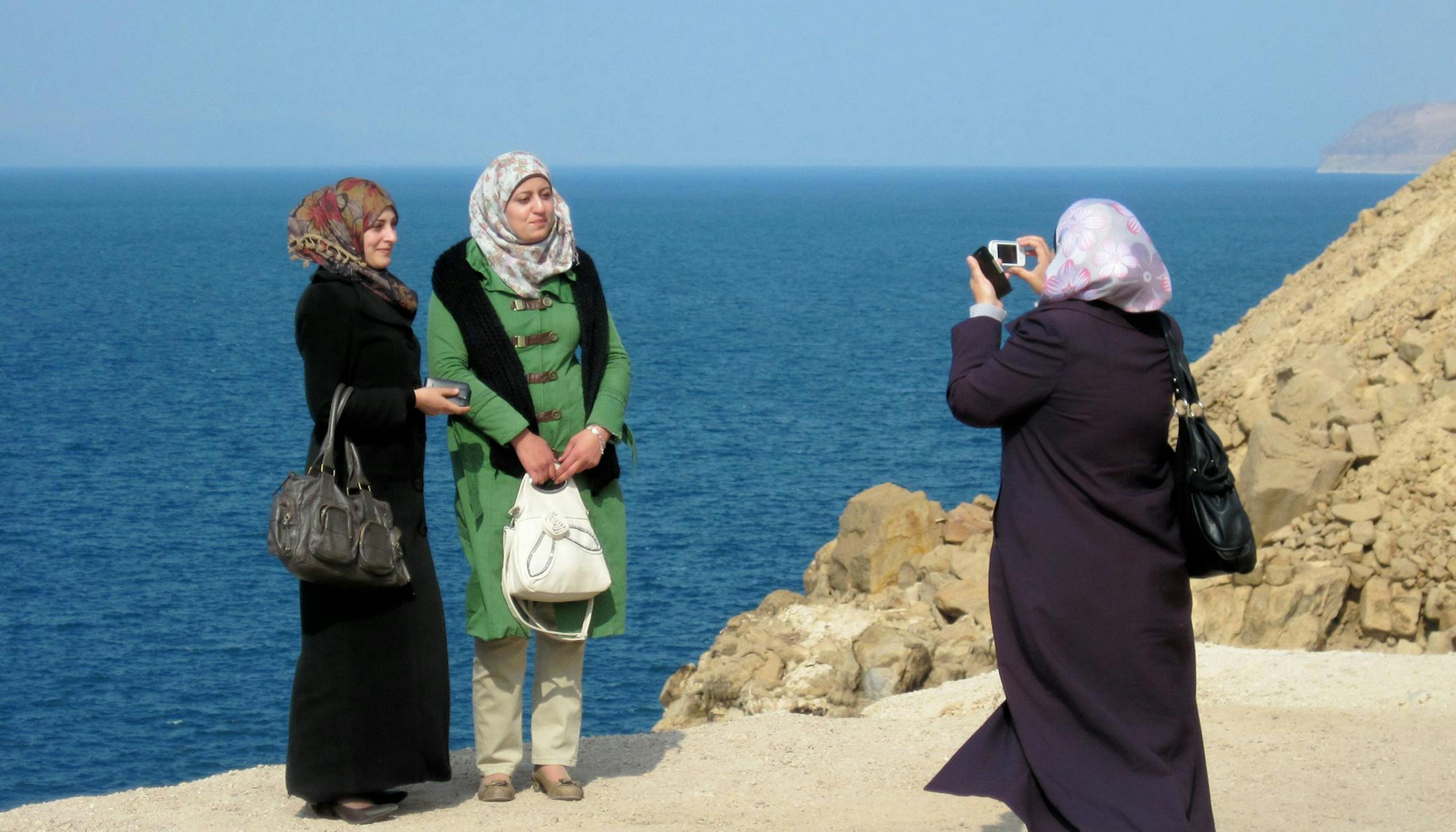
There is the kind of travel for which you are celebrated in advance. "Nice," say friends if you tell them about your plans for France, about your eye on Argentina or Japan. "Wish you'd let us tag along."
But before a recent long-anticipated trip, my wife, Kathy, and I heard this instead: "Why there?" "Why now?" "Aren't you afraid?"
We'd booked a week in Jordan. Nothing more. Nothing less. We knew about the civil war in Syria next door. And we had no illusions about the region: a box of blue-tip matches that can go up at any time.
But, well, Jordan has the ancient city of Petra, one of the world's great sights. Not to mention its moderate politics, its peace treaty with Israel (since 1994), and a tradition of treating visitors from all sorts of backgrounds like kings.
A friend who had been there warned us not to show a special interest in rugs or mosaics in a Jordanian home. "How come?" we wondered. "They will want to give them to you," he explained. "Right there. Right then."
In fact, the first word we hear in Amman — we are still at the airport — is a simple "welcome." We will hear it again and again.
"You are American," confirms our hotel driver. "Good, very good." His name is Motasem Rababah. "Well, welcome to Switzerland," he says with a laugh. "We are a bit like them. This is a noisy neighborhood. But Jordan is a quiet house."
Officially called the Hashemite Kingdom of Jordan, the country emerged out of the post-World War I division of the Middle East by Britain and France. The current monarch, Abdullah, maintains close ties with the U.S., following in the footsteps of his father, King Hussein, who died in 1999 after ruling for 46 years.