

Ann wessel • St. Cloud Times
CALUMET, Minn.
Mining opened the earth here, producing 64 million tons of iron ore, leaving a 200-foot-tall pile of reddish rock and a 300-foot-deep lake, creating a magnet for history lovers and fossil seekers.
Mining could also close it. Hill Annex Mine State Park lies beyond a locked gate. Exploration is by organized tour only, and those tours run only during the summer.
"We have a gate, and we don't let people roam around unattended. That piques curiosity," said Jordan Schraefer, manager of this 634-acre park.
A provision in the statute that established the park in 1988 states the mineral rights may be reclaimed if the site once again becomes profitable. "Every year we say this is going to be the last year," Kacie Carlson, the Minnesota Department of Natural Resources' northeast regional naturalist, said during a May field trip.
The site turned a profit from 1913-1978, briefly as an underground mine and then as an open-pit operation. Hematite-rich ore became steel. The sandy overburden built highways. The gravelly middle layer with no immediate use piled up.
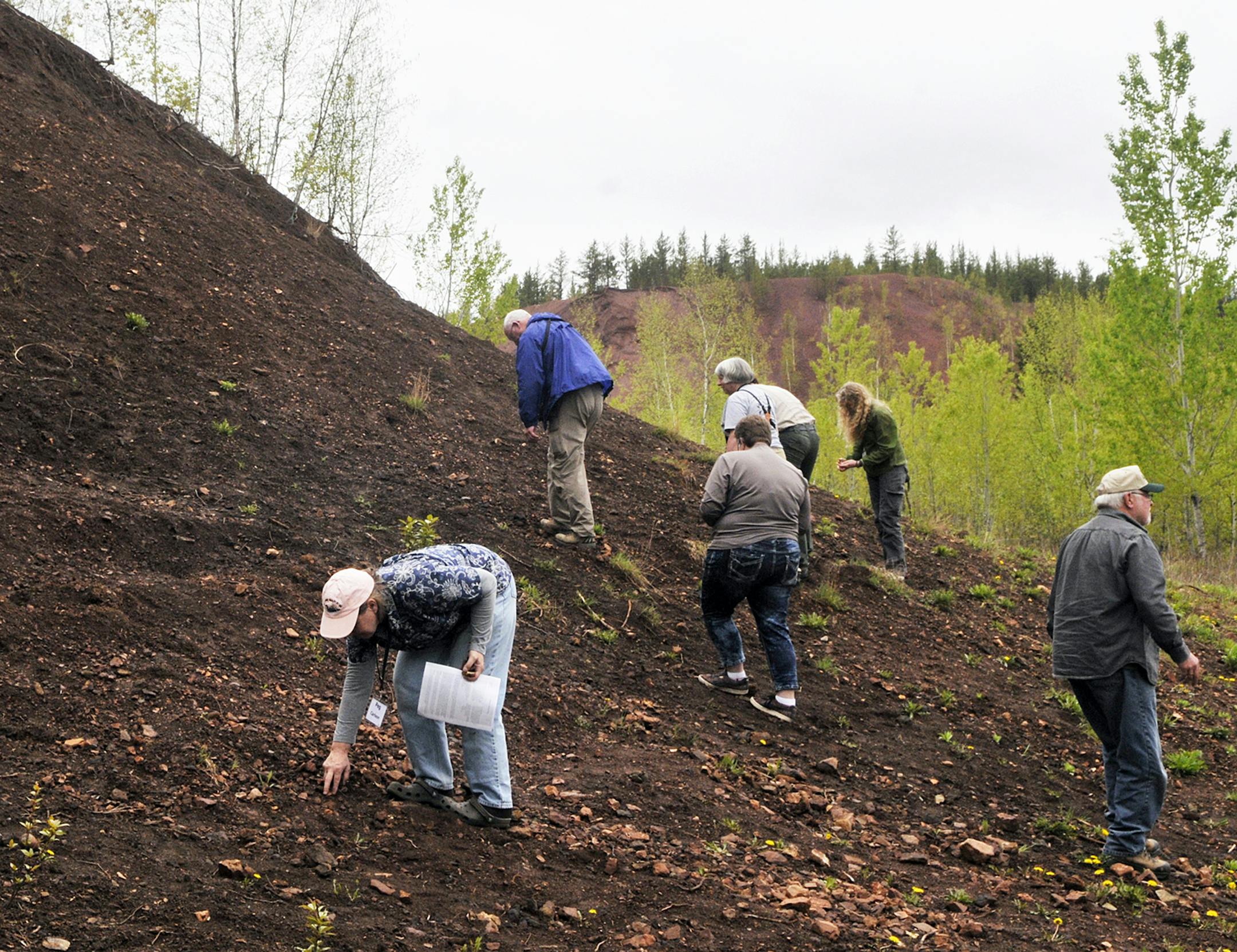
John Westgaard has found more than 80 shark teeth in those discarded piles. A volunteer researcher with the Science Museum of Minnesota, he interacts with visitors while he's on-site this summer seeking more fossils from the Cretaceous Period.


