We bumped slowly in our rental car across a bed of twisted black lava that 17 years ago wiped out a town right here. To the left, between us and the Pacific Ocean, a half dozen property owners have built new homes on top of the barren lava. To the right, one is for sale.
My wife and I parked where the civil defense people told us to and -- wearing the hiking boots and carrying the flashlights and bottles of drinking water they repeatedly recommended for those staying until dark -- walked a half mile to the sea. Clouds moved in and out, occasionally spitting mist on us, and wind whipped white spray off the waves, but the air was warm.
Yellow stripes painted on the black rock marked the trail, which curved between two stands of brush and lauhala trees spared by a flow. We crossed bare rock shaped into weird black ropes and humps, once liquid and now solid. Carefully we stepped across cracks inches wide and a foot or more deep, where ferns had begun to sprout.
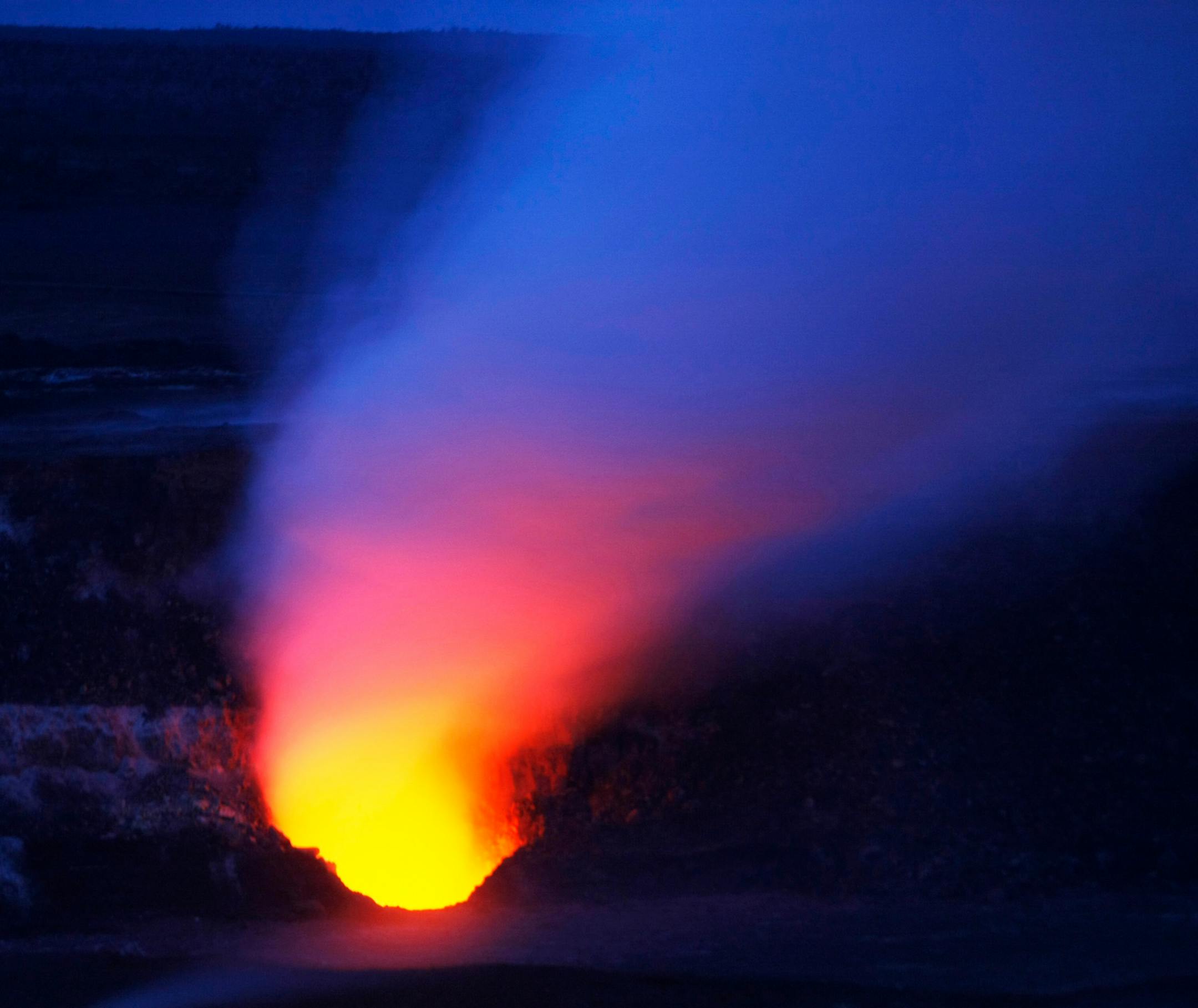
Around a bend, we saw what we had come to the Big Island of Hawaii hoping for: red hot lava pouring into the ocean, spewing glowing globs into the air and billowing steam hundreds of feet high. The sight was a collage of black rock, blue sea, white clouds and a very bright gash of orange.
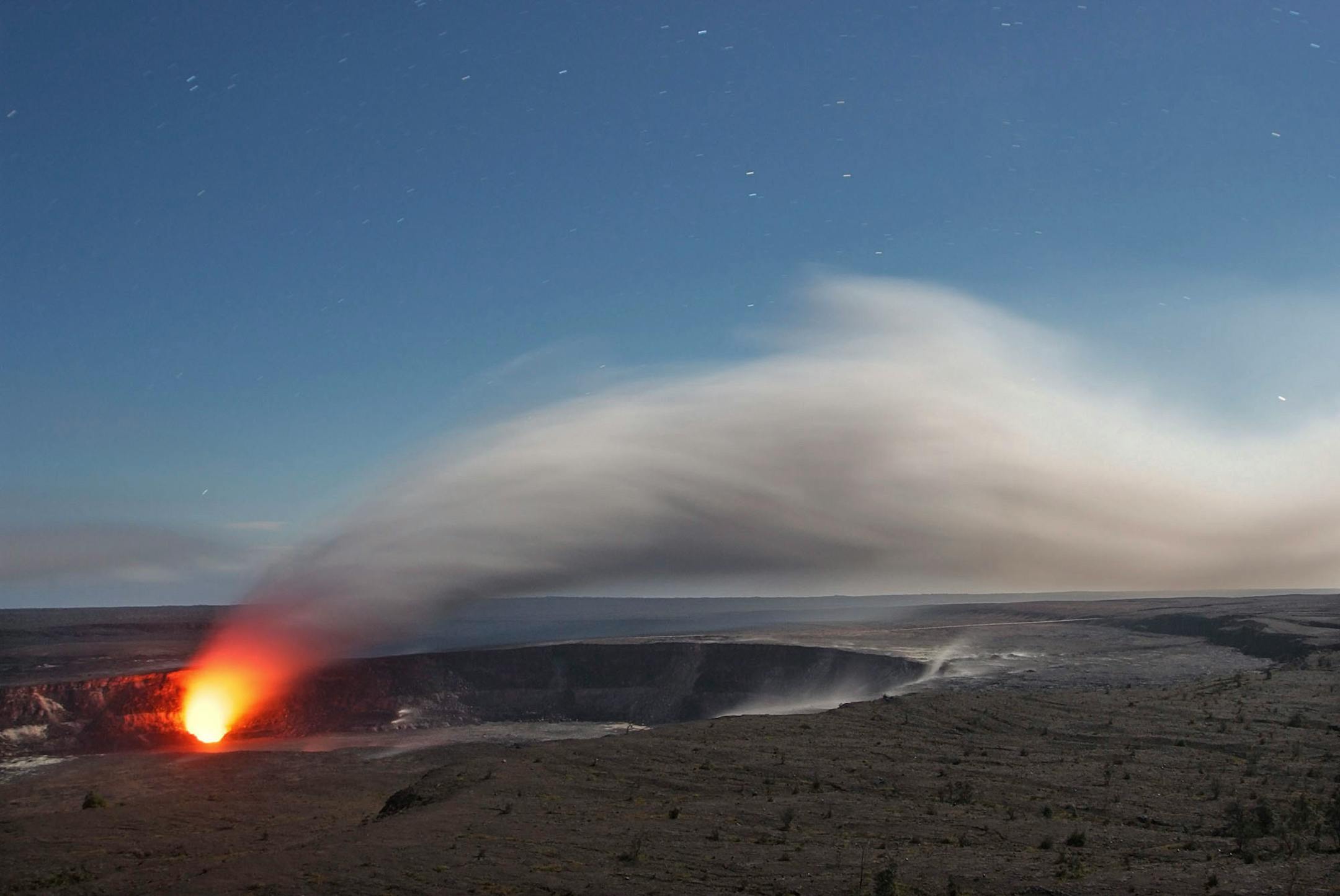
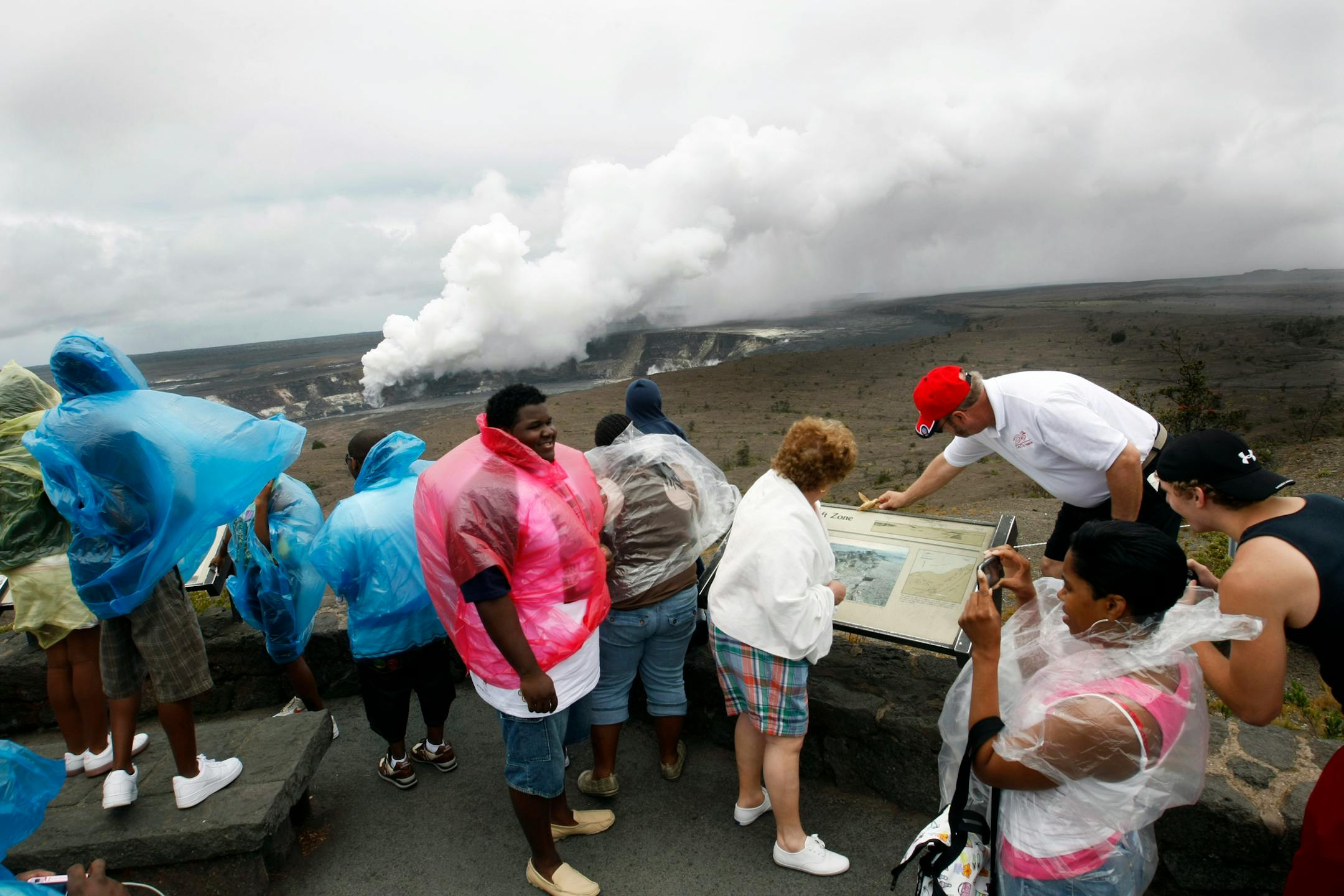
The island is on fire in several places right now, offering a spectacular show that only highlights the intriguing past of this, the youngest of the Hawaiian islands.
Kilauea, Hawaii's most active volcano, has been erupting since 1983, sending flows of lava from its flanks toward the sea. One of those unpredictable flows wiped out the seacoast village of Kalapana in 1990, destroying homes but killing no one.
Later the flows shifted into the Hawaii Volcanoes National Park nearby and then they stopped reaching the sea altogether.
But on March 6, they again began pouring into the ocean, perfect timing for the repeat visit to the Big Island that we had already planned.