
Travel: Hiking with giants

In California's Sequoia National Park, a learning vacation teaches backpackers about great trees, great peaks and great spirits.

April 13, 2008 at 3:00PM
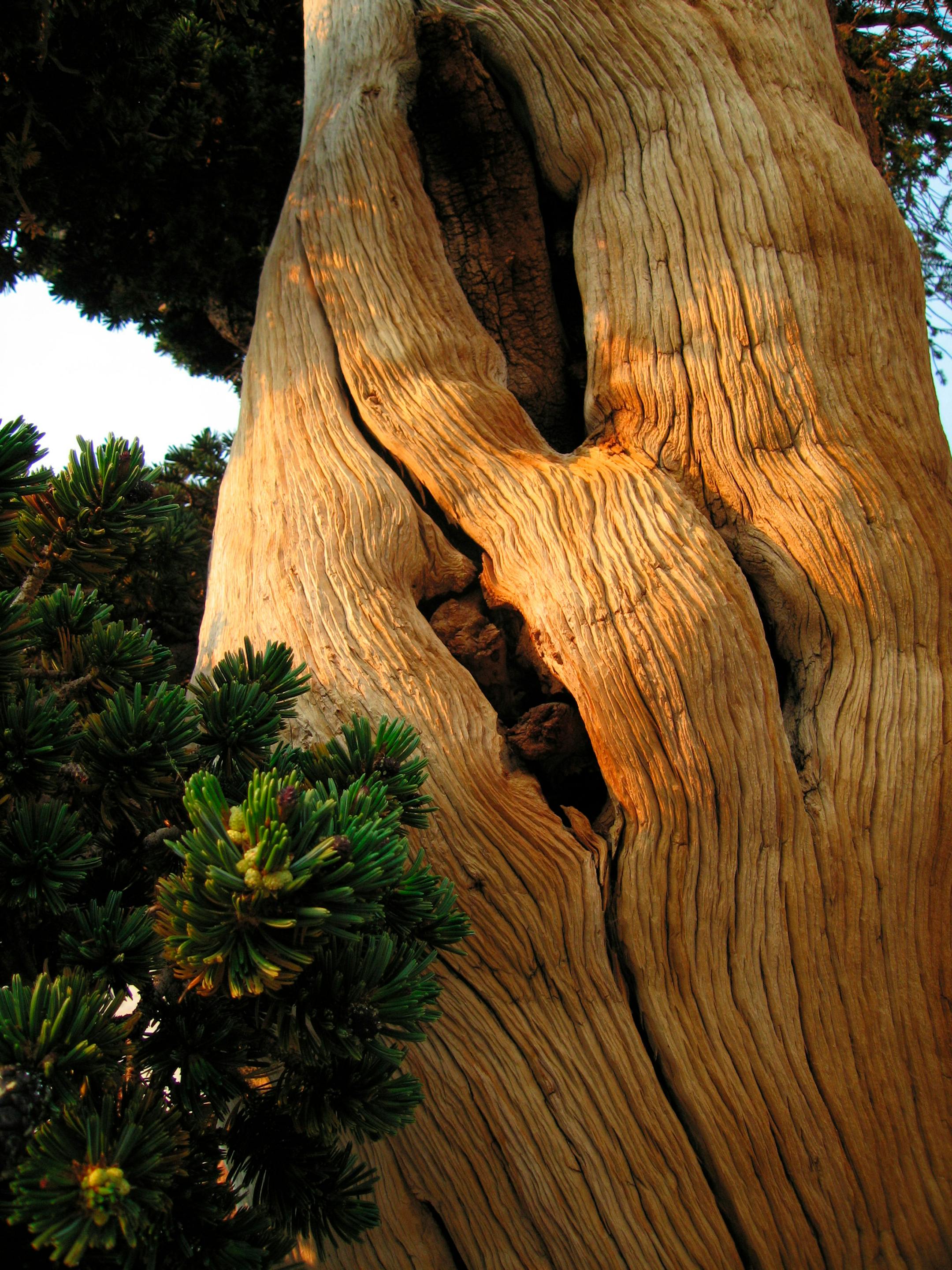
A foxtail pine in Sequoia National Park. Some foxtails and juniper trees in the park are more than 1,000 years old, and sometimes it's only a narrow strip of living bark that's supporting remaining branches on a largely dead trunk.
A foxtail pine, Sequoia National Park. Some foxtails and juniper trees in the park are more than 1,000 years old, and sometimes it's only a narrow strip of living bark that's supporting remaining branches on a largely dead trunk. (Star Tribune/The Minnesota Star Tribune)

Step by step, with a 50-pound pack on my back, I climbed the long switchbacks carved into the rocky mountainside, heading toward Franklin Pass.

Laboring for breath in the thin air, I looked down. Far below, Upper Franklin Lake was a gleaming mirror of the blue sky. We'd started the day camped in the shade of a grove of 1,000-year-old foxtail pines on its shore. Now the trees, as massive and regal as columns in a Gothic cathedral, looked like they'd fit in the palm of my hand.

We were at 11,000 feet, 2 miles above sea level, with several hundred more feet of altitude to gain. It was the second day of a six-day backpack trip in California's Sequoia National Park.

I was a little nervous about how I'd hold up in the week ahead in the High Sierra. My summer's elevation training consisted of twice-weekly sessions walking up and down the only hill near my house -- the 50-footer behind Como Pavilion in St. Paul.

Up ahead, Jim Warner, 70, whistled, sang little snatches of songs and stopped frequently to examine the sparse foliage that grows at such heights. A stout man with a white beard and calves like oak trunks, he was not breathing hard at all.

"Why, look at this, I was just thinking about this Davidson's penstemon, wondering if it was still here," he said, as he squatted down to greet the tiny purple flowers like old friends. "Everything up here is under 20 feet of snow in December. Then it has to survive spring melt, avalanches, rock falls. Hang in there, guys."

Warner, for nearly 20 years the head naturalist for Sequoia and Kings Canyon National Park in California, has been retired for more than a decade, but he seemed to know every marmot, mountain bluebird and penstemon along the trail.

For six days, he'd be leading and teaching our group of six hikers on a personalized tour. It's hard to imagine a better guide to the wonders of the Sierra Nevada. Or a better deal. Like the other five group participants, I'd paid $280 for the trip through the Sequoia Natural History Association.

Intoxicating view

The nonprofit is not unusual; more than 60 such organizations work with and support national parks and monuments; many organize learning vacations like the one I was on. Essentially, I was taking an intensive weeklong ecology workshop in one of the world's most stunning classrooms.

Sequoia preserves some of the Lower 48's most dramatic terrain, including its highest peak, Mount Whitney, at 14,491 feet.

After more than two hours of laborious hiking, we reached Franklin Pass, a narrow saddle ridge dividing two valleys. The tumultuous glory of the Sierra Nevada Mountains, unfolding in ragged waves of stone to the edges of the horizon, eased the pain in my legs. It also helped knowing that the rest of the day's hike would be a long, steady descent.

"Now you can see what this is all about," Warner said, grabbing my arm for emphasis. "Every time I get up here, my spirit soars."

Our trip had started at the end of a dead-end road in the least-visited part of Sequoia -- the Mineral King Valley, which we'd just spent a day and a half climbing out of. Warner now looked back over the valley lovingly.

"This was only added to the park in the '70s," he said, explaining that the valley had narrowly escaped development as a ski resort. "We're lucky it's even here."

An evening lesson

We left Franklin Pass, picking our way across smooth stretches of naked stone and more loose scree before entering the tree line again. At about 3 p.m., we arrived at Little Clair Lake, a pretty alpine pond edged by lodgepole and foxtail pines. Exhausted, I pitched my tent and, like everyone else, took a much-needed nap.

Just before sunset, we primed our tiny stoves and started dinner. Our choices varied, but we all cooked by pouring boiling water over various dehydrated concoctions.

Lu Plauzoles, a college bookstore manager from Santa Monica, Calif., was the most austere member of the group: Every night, he prepared the same home-mixed blend of couscous and dried vegetables. On the other hand, Rick Mitchell, a handyman from Redondo Beach, Calif., used some of his precious cargo space to haul a plastic bladder full of red wine to complement his rehydrated Italian entrees. The group varied in age from 19 to 70. Only one woman was along, but gender is fairly balanced on most journeys, Warner said.

Warner taught us throughout the day, but he reserved evenings for more detailed lectures. One night, it was a dissertation on redwoods and sequoias.

The trees are related, but are significantly different, Warner told us. Sequoias, which can reach 310 feet high and 40 feet wide, grow in groves in California's Sierra Nevada at elevations of 5,000 to 7,000 feet. We had begun our journey among those giants.

Redwoods, which can grow to nearly 370 feet tall and 20 feet across, grow near the coast at lower altitudes and are part of the temperate rain forest. In the arid high country of the Sierra, sequoias must rely on fire to release their oat-flake-size seeds.

"The biggest tragedy in this park's history was the decision early on to put out wildfires -- the ecology here demands fire, not only for seeds, but to create space and light for new trees," Warner said.

In recent years, he said, a policy of controlled burns was helping restore the forests of the park. But in many places, dense undergrowth inhibits new generations of trees.

One windy night

As the lecture ended, the wind picked up. Gusts hammered my tube-shaped, one-man tent all night long. A particularly fierce blast snapped a tent pole. (Here, I bow deeply to the reparative powers of duct tape.)

That turbulent night was the only natural difficulty we faced during the cloudless week. We never saw even one paw print from the park's infamous black bears.

Our most spectacular encounter with wildlife came on the fifth day, when we had our toughest challenge -- a 12-mile hike with a 2,500-foot climb to the top of Sawtooth Pass.

As we approached the pass, I could feel the muscles of my thighs shaking. Every breath of the thin air seemed to give me just enough strength to take the next step upward.

At the top, I dropped my pack and sat on it, exhausted and thrilled. Suddenly, two golden eagles, riding an updraft, glided in front of our eyes, just a few yards from the cliff face. When those eagles soared overhead, something inside of me took flight, too.

During the week, Warner had frequently invoked the spirit of John Muir. In the 1890s, Muir lobbied the government tirelessly to preserve Sequoia and Yosemite so that future generations of Americans could experience the wonder of these wild places.

To Muir, the wilderness held the key to a fulfilled life; to him, being fully human meant being able to experience the natural world.

Earlier in the week, Warner had recited from memory Muir's "Climb the Mountain" passage. Now, at the end of our trip, those words came back to me with their full meaning.

"Climb the mountains and get their good tidings. Nature's peace will flow into you as sunshine flows into trees. The winds will blow their own freshness into you, and the storms their energy, while cares will drop away from you like the leaves of autumn."

Chris Welsch • 612-673-7113

about the writer

about the writer

Chris Welsch, Star Tribune

More from Minnesota Star Tribune

See More
card image
J. SCOTT APPLEWHITE, ASSOCIATED PRESS/The Minnesota Star Tribune

The "winners" have all been Turkeys, no matter the honor's name.

In this photo taken Monday, March 6, 2017, in San Francisco, released confidential files by The University of California of a sexual misconduct case, like this one against UC Santa Cruz Latin Studies professor Hector Perla is shown. Perla was accused of raping a student during a wine-tasting outing in June 2015. Some of the files are so heavily redacted that on many pages no words are visible. Perla is one of 113 UC employees found to have violated the system's sexual misconduct policies in rece