Travel: Alps attitude

Our reporter returns to Salzburg, Austria, to relish a few of her favorite things: mountain lakes, rugged hikes and the company of her family.

For the Minnesota Star Tribune
April 5, 2009 at 4:48AM
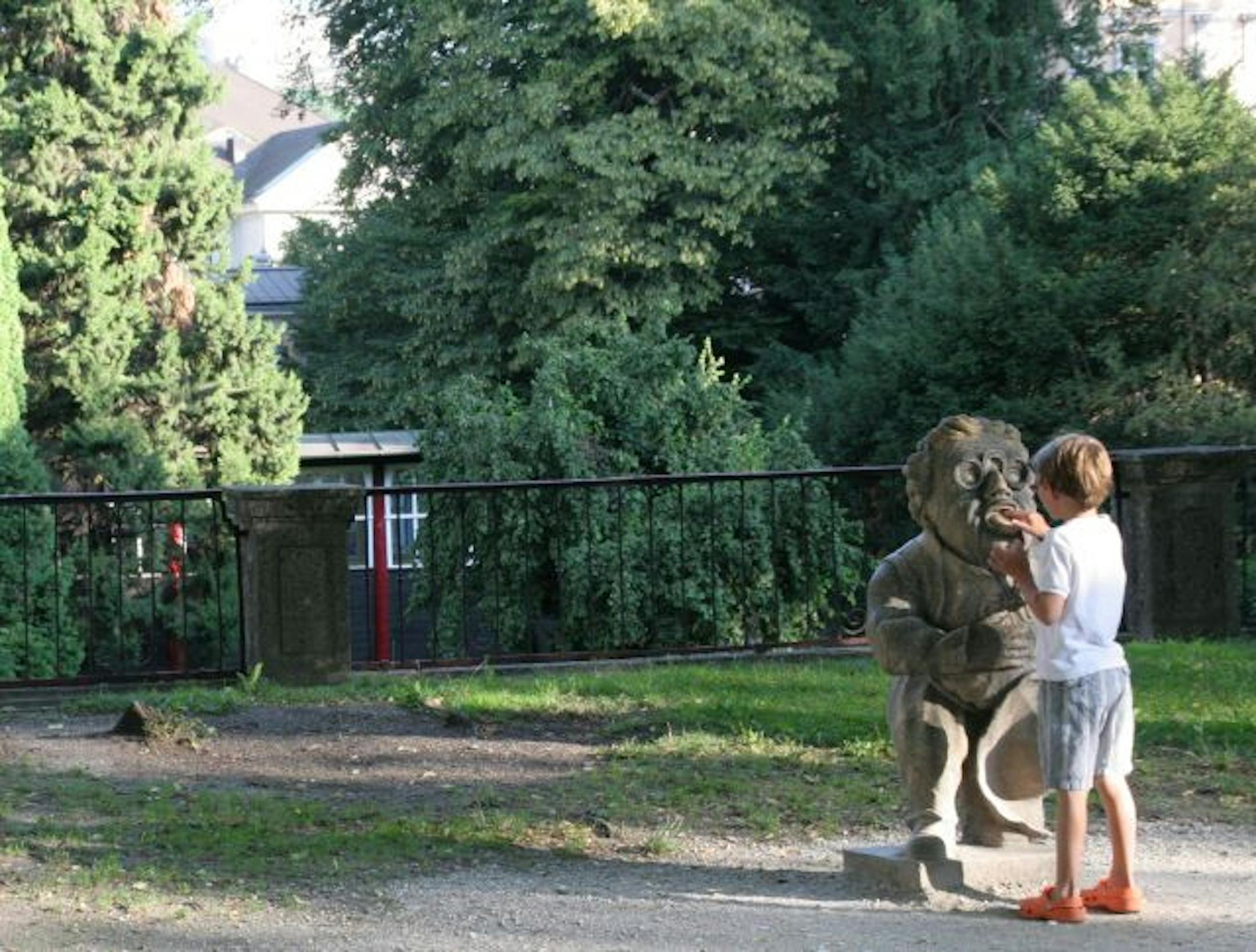
Tucked into the north end of the Mirabell Gardens, the Zwergerlgarten, or dwarf garden, was built by a prince archbishop in 1715. Today, it draws crowds eager to catch a Do-Re-Mi buzz. Photo: Elizabeth Larsen Special to the Star Tribune
Tucked into the north end of the Mirabell Gardens, the Zwergerlgarten, or dwarf garden, was built by a prince archbishop in 1715. Today, it draws crowds eager to catch a Do-Re-Mi buzz. Photo: Elizabeth Larsen Special to the Star Tribune (Star Tribune/The Minnesota Star Tribune)

Halfway into a steep 20-minute hike to the Wartenfels ruins -- a 13th-century former castle perched high above the Salzburg Lake District -- my 4-year-old son, Henrik, declared a sit-down strike. His Crocs bothered him, and he didn't care about a bunch of old stones or a view that soars over miles of emerald pastures toward the rugged awe of the Alps. No, he was going to stay put.

The hike was part of my plan to relive the time when my husband, Walter, my first-born, Peter, and I lived in Salzburg for a year, when life felt like one grand adventure after another. I understood that my family was less nimble, having grown by two. Still, I was eager to return to the dreamy Baroque city and its nearby forested lake region that lived in my memory as a unique combination of music halls decorated like wedding cakes, freshwater beaches, farm animals and lace-curtained windows that opened to let out strains of cello or piano. Unlike the Viennese, who are notoriously frosty toward anyone who is not old enough to smoke, Salzburgers love children. Almost every gasthaus restaurant has a swing set and a sandbox, where the kids play while the adults enjoy another foot-tall glass of wheat beer.

Henrik's attitude threatened to dull my bliss, especially when his 2-year-old sister, Luisa, chimed in, sobbing and begging to be lifted into her baby backpack, which Walter had forgotten.

I looked up the trail, which disappeared into the thickly wooded switchback that had absorbed my 7-year-old son, Peter.

Appropriately shod Austrian families headed toward me, chatting in their sing-songy dialect about the stunning panorama they'd just enjoyed. "Schön," they nodded, employing an adjective that's so overused in this part of the world that it almost sounds like a tic. Beautiful. "Sehr schön."

I glanced at Walter.

"I told you this was going to be a disaster," he said. "They're too young for this." That there was practically a day camp's worth of children navigating their way down the loose gravel path didn't seem to register. At that moment all I could think was that I didn't particularly like my husband or my children or the guy who had invented those stupid plastic clogs that my kids would not take off their feet. How dare they get in the way of my plans for our vacation?

•••
For most Americans, myself included, it's almost impossible to take in the fountains or cobblestone alleys of Salzburg's Altstadt, or old town, without imagining seven previously unruly children singing Do-Re-Mi with a tomboyish young nun. While Salzburgers are more than willing to pump the compositions of native son Mozart -- who apparently hated the town of his birth -- onto the streets, they have a more conflicted relationship to Hollywood's version of their city and culture. "The Sound of Music" bombed when it premiered in Salzburg -- the Nazi subplot probably poked too fresh a wound -- and most Salzburgers I know have either not seen it or are oblivious to its charms.

"I've never seen a dirndl like the one Julie Andrews wore," sniffed Irmgard Delpos, my former German tutor, who having passed the rigorous requirements, now guides English, German and Italian-speaking tourists through her hometown. Captain von Trapp, she informed me, was a dignified man who was horrified when his young second wife rented the family out for singing engagements. And don't get her started on the schnitzel with noodles made famous in the song "My Favorite Things." The classic Austrian dish is served either with boiled potatoes or French fries.

Our boys were similarly unmoved by the film, which meant we could avoid one of the schmaltzy "Sound of Music" tours. That was fine with us because we didn't think any fellow tour mates would want to spend an entire day packed into a minivan with them. Besides, the idea of rushing all over the region to pose in front of a few monuments from a movie seemed too out of step with the culture. Austrians are obsessed with avoiding stress; when we lived there a doctor refused to make a house call -- still considered routine care -- because our apartment was two whole miles from his office. That concern spills over into their abundant vacation time in a concept known as freizeitstress, or free-time stress.

Our schedules demanded that we visit in August, freizeitstress high season due to the tuxedoed opera buffs crowding the Altstadt for the world renowned Salzburg Festival. But 20 minutes away, the gentle rhythms of the lake district were unaltered. We rented a house outside the tiny town of Hof bei Salzburg, near the Fuschlsee, our favorite lake, which floats like an aquamarine in the middle of the woods.

•••

The Fuschlsee has something for everyone. Teens flirt over mini-golf and push each other off the raft at the Fuschl am See town beach, while pensioners prefer the rustic quiet of the Hof beach. The most gorgeous stretch of sand is reserved for practitioners of freikörperkultur, otherwise known as free body culture. Otherwise known as hanging out naked. Politeness mandates that you cannot wear a bathing suit while others are nude, so our family gamely stripped down and delighted in the feeling of the chilly water on our skin. That was until Walter bumped into a former colleague who was still fully clothed.

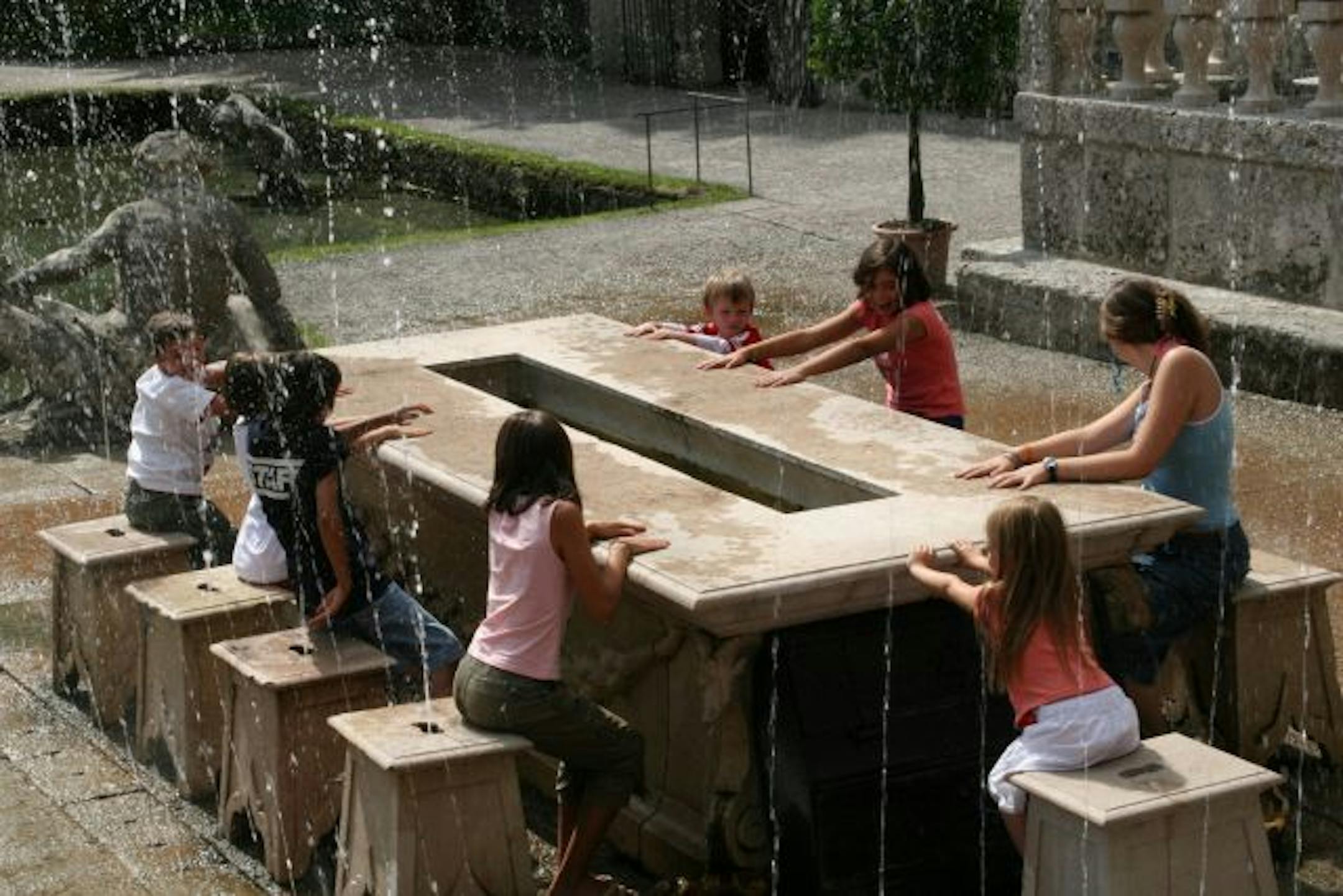
We swam in the mornings and then after lunch would venture into the city or to other local attractions. The boys loved the collections of medieval weapons and armor at the Hohensalzburg Fortress, one of the best-preserved medieval fortresses in Europe. Peter was interested in the descriptions of young Mozart's antics at Mozart's Wohnhaus, the home the composer's family moved to when he was a teenager. Best of all were the trick fountains at Hellbrun Palace. Commissioned by Prince Archbishop Markus Sitticus in the early 17th century to entertain -- humiliate? -- his guests, it's impossible to survive the tour without getting doused.

On some afternoons, Peter and I left Walter and the little ones at the house so that we could try more adventurous outings. In Hallein, a Celtic town 11 miles down the Salzach river from Salzburg, we went on a tour of the salt mines that first made the region rich.

If you overlooked the corny history skits, the tour was a hoot, complete with underground train and boat rides and swoops down the long, polished slides the miners took to work. Tucked into a corner is a lighted nook that contains the remains of "Man in Salt," a miner who died in an accident. Because the surrounding rocks are so saturated in salt, he's well preserved -- and looks fairly traumatized about it. My friend's kids thought he was fascinating, but Peter had nightmares for weeks.

My favorite moment of the trip came when we finally managed to get the children to hit the hiking trails again, this time to the Zwölferhorn mountain near the town of St. Gilgen. After having fought the kids all the way up to Wartenfels -- yes, we got there and the kids loved imagining which parts of the ruins were the dungeons -- Walter and I decided we would take the gondola both ways and stick to an easy walking loop at the top.

The kids groused and we had to stop at one of the ubiquitous guest houses for treats, but they adored the gondola. On our way down, the cable cars ahead of us reminded me of spiders sliding down their threads. The children pointed out the cows munching lazily below and Luisa called out a few "moos."

While it wasn't my idea of a perfect way to experience the mountain, it certainly worked for the kids. And that's when I realized that while I had unconsciously planned this trip as a way to recapture my lost independence, the reason I was back in that special corner of the world actually was to bid that life goodbye.

Elizabeth Larsen is a freelance writer living in Minneapolis.

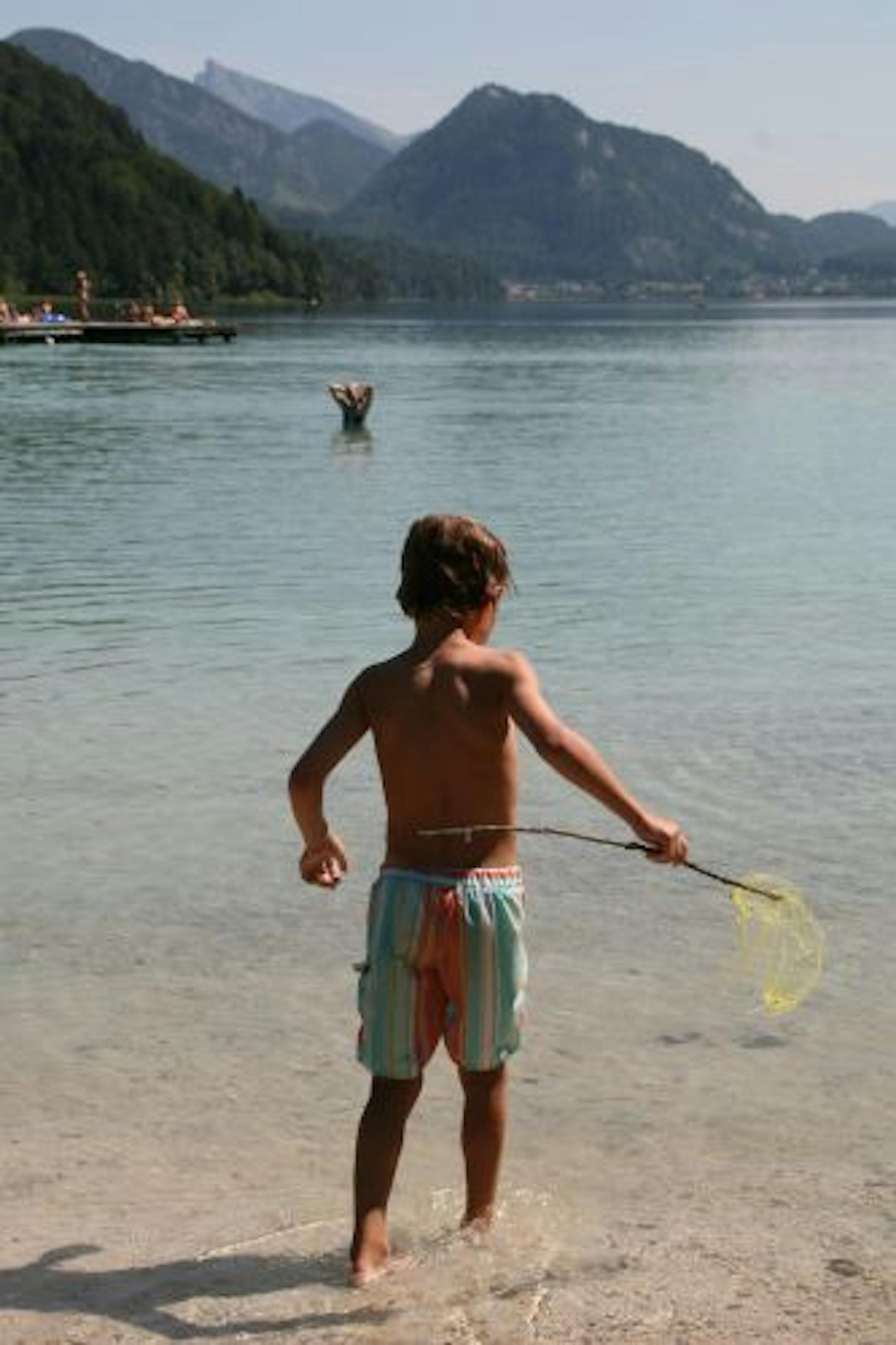
A gorgeous 20 minute drive outside Salzburg, the Fuschlsee is a pristine but chilly alpine lake in the heart of Austria's Salzkammergut region. Photo: Elizabeth Larsen Special to the Star Tribune
A gorgeous 20 minute drive outside Salzburg, the Fuschlsee is a pristine but chilly alpine lake in the heart of Austria's Salzkammergut region. Photo: Elizabeth Larsen Special to the Star Tribune (Star Tribune/The Minnesota Star Tribune)
Just a little 17th Century fun: Prince Archbishop Markus Sittikus like to trick his Hellbrunn Palace guests by turning on the waterworks in the middle of dinner. The palace's mechanical fountains and grottos are one of Salzburg's tourist highlights. Photo: Elizabeth Larsen Special to the Star Tribune
Just a little 17th Century fun: Prince Archbishop Markus Sittikus like to trick his Hellbrunn Palace guests by turning on the waterworks in the middle of dinner. The palace's mechanical fountains and grottos are one of Salzburg's tourist highlights. Photo: Elizabeth Larsen Special to the Star Tribune (Star Tribune/The Minnesota Star Tribune)
about the writer

about the writer

ELIZABETH LARSEN

More from Minnesota Star Tribune

See More
card image
J. SCOTT APPLEWHITE, ASSOCIATED PRESS/The Minnesota Star Tribune

The "winners" have all been Turkeys, no matter the honor's name.

In this photo taken Monday, March 6, 2017, in San Francisco, released confidential files by The University of California of a sexual misconduct case, like this one against UC Santa Cruz Latin Studies professor Hector Perla is shown. Perla was accused of raping a student during a wine-tasting outing in June 2015. Some of the files are so heavily redacted that on many pages no words are visible. Perla is one of 113 UC employees found to have violated the system's sexual misconduct policies in rece