

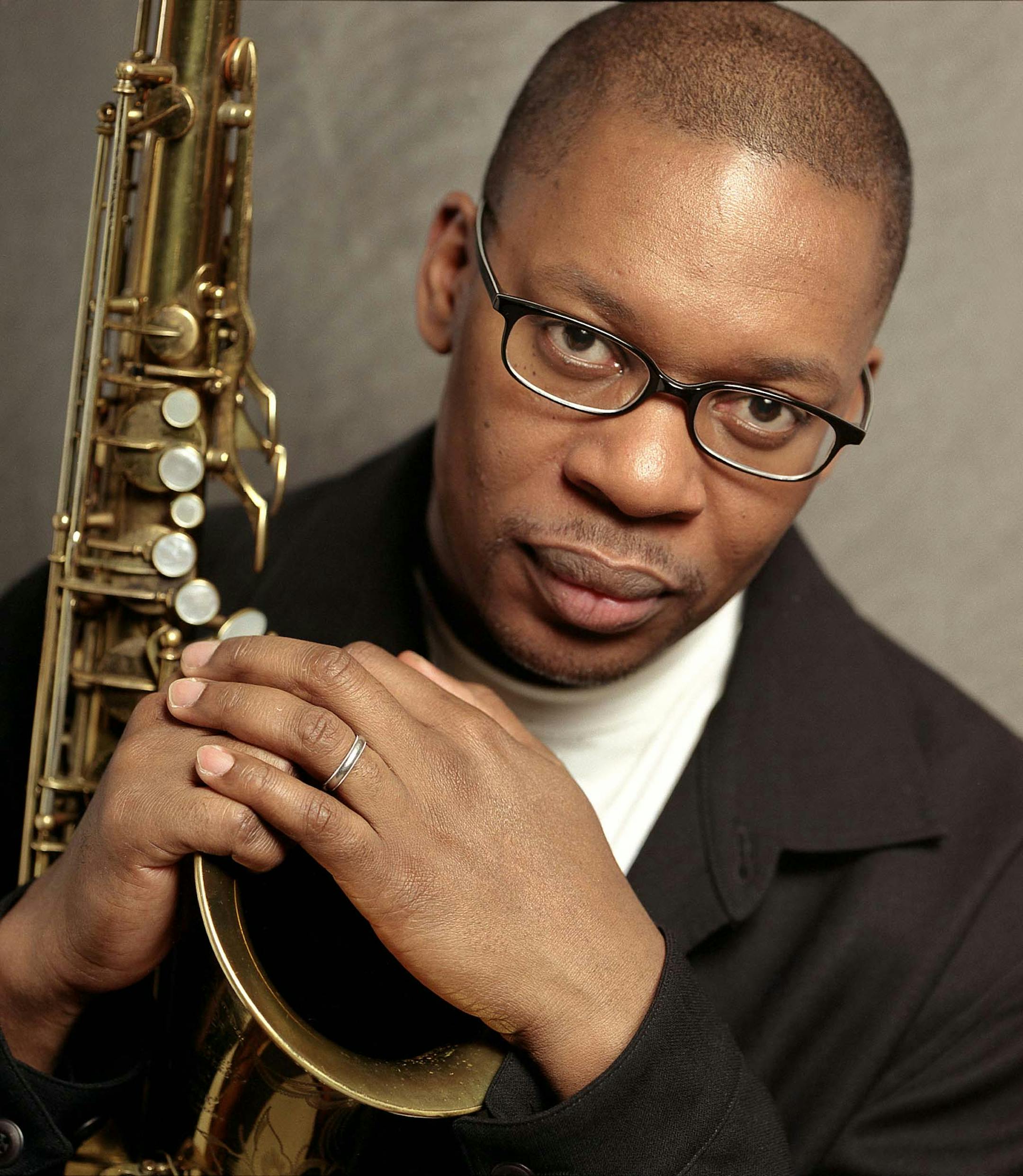
In 1991, when jazz saxophonist Ravi Coltrane first performed in the Twin Cities with a group led by drummer Elvin Jones, his playing was circumspect and sparing. He was embarrassed to be there.
"When Elvin asked me to be in his band, I said no, because I wasn't ready. At that time, I literally had only been playing the saxophone improvisationally for about four years," said Coltrane, now 43, by phone from Iowa, where he was on tour with the quartet he's bringing to Minneapolis on Thursday in a double bill.
But of course it was more complicated than that. Elvin Jones will forever be remembered as the drummer for the John Coltrane Quartet, helmed by Ravi's father, who stands with Charlie Parker as one of the most influential saxophonists in jazz history and who died in 1967.
"I knew Elvin didn't need the distraction of someone with the last name of Coltrane around, especially someone still trying to figure out how to play," Ravi said. "But he said to me, 'I want to help get you ready.' I spent two years with him, moved to New York, did some tours. It was rough and it was liberating. It was an unbelievably beautiful and an unbelievable horrifying experience."
Armed with a realistically modest appraisal of himself, and deploying caution as a virtue, Coltrane did not reveal himself to be embarrassingly callow that night at the Dakota. He has advanced his career and identity with similar aplomb. Mindful that many will never be able to regard him outside the shadow of his father's legacy, he has forged ahead patiently, with a style featuring gusts of emotion more reminiscent of the abrupt wit and bite of Branford Marsalis than the impassioned spirituality of his father, while spooling out increasingly sophisticated phrases that draw comparison to tenor greats Joe Henderson and Sonny Rollins.
After his time with Elvin Jones, Coltrane fell in with a couple of other drummer/mentors, Rashied Ali (the last drummer in the John Coltrane Quartet) and Jack DeJohnette, whom he credits with "opening me up. There was a different energy that I got with Jack." Another key figure was alto saxophonist Steve Coleman, who showed Coltrane how jazz scholarship can lead to innovation.
"He goes deep and then he says, 'I am now going to personalize those things for my present-day situation.' He'd point things out to me -- say, 'I got this from a Chano Pozo record' -- and show how he borrowed this thing from that source, and it got me excited. I love the music of the '40s, '50s and '60s and the '70s, too, but I was worried about sounding like other people. Steve showed me how to study the methods; not just what they produced, but deeper -- how they got there. Emulate that, the process and the stuff underneath, and see where it takes you."
Coltrane also grasped that the process would take him further if undertaken with a stable working ensemble. His quartet, with bassist Drew Gress, drummer EJ Strickland and pianist Luis Perdomo, is entering its sixth year together and is in the final stages of completing its second record.


