

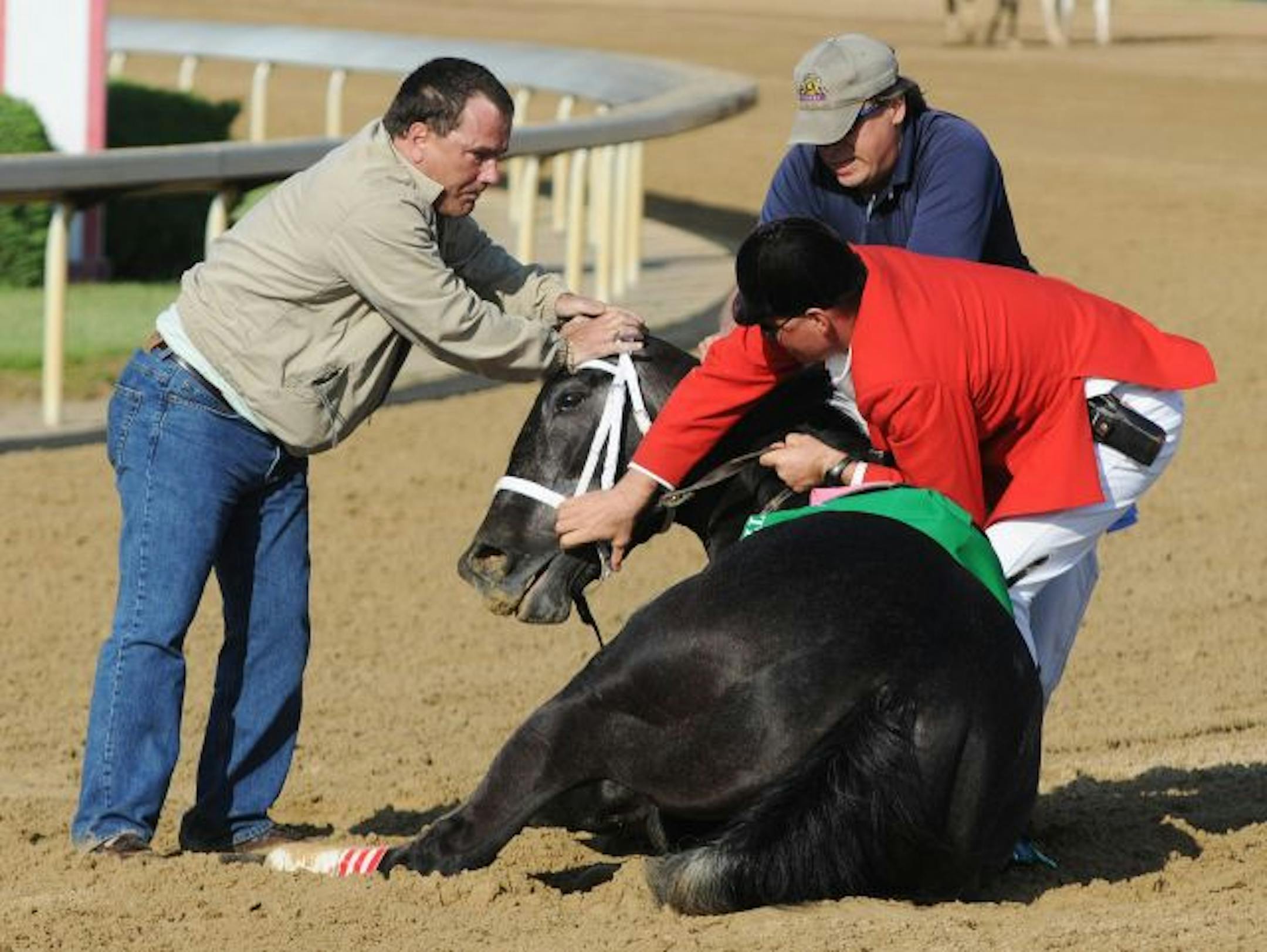
First came Barbaro, the 2006 Kentucky Derby winner who broke a hind leg in the opening strides of the Preakness and was euthanized eight months later. Then came Eight Belles, the filly who collapsed after finishing second in last year's Derby and died on the track.
Those very public deaths turned the whispers for reform into full-blown shouts. As racing prepares for its greatest and most widely viewed spectacle, Saturday's Kentucky Derby, some of its leaders have continued to work toward meaningful solutions. Discussion initiated by tragedy has given rise to action -- but it will require a sustained, widespread effort for racing to overcome the toxic effects of greed and recklessness.
Earlier this month, Derby host Churchill Downs became the first American racetrack to be certified by the National Thoroughbred Racing Association's Safety and Integrity Alliance. An equine veterinarians' group is advocating greater support for horses' safety and welfare. Most states with pari-mutuel racing have banned the use of steroids within 30 days of a race. "I think anything we can do to show the public that we're taking every precaution we can, to ensure the safety of everyone, is very good for everyone involved in the game," said trainer Todd Pletcher, whose Derby candidates include Dunkirk and Advice. "All participants involved have an obligation to try to do the very best we can to minimize [risk].
"The industry as a whole is certainly more aware of trying to be safer. There's inherent risk in any athletic endeavor where injury is possible. But I think as an industry, we've made real improvements."
Among the advances made in the past year:
• The NTRA Safety and Integrity Alliance was formed last fall as a means of establishing uniform national standards for racing. To earn accreditation, a track must follow guidelines in five areas: injury reporting and prevention, creating a safe racing environment, care and placement of retired racehorses, safety research and medication rules.
Requirements include programs to retrain horses for second careers, comprehensive drug testing both in and out of competition, pre- and postrace veterinary exams and mandatory postmortems of horses who died from on-track injuries.
• Churchill Downs and several other racing organizations have provided start-up funding for a racing surface testing laboratory, which will conduct research and performance testing to determine how to make track surfaces safer for horses.


