Tracking Ebola threat from Africa to Texas

From Guinea to Dallas, how the Ebola virus first landed in the United States.

Los Angeles Times
October 11, 2014 at 10:02PM
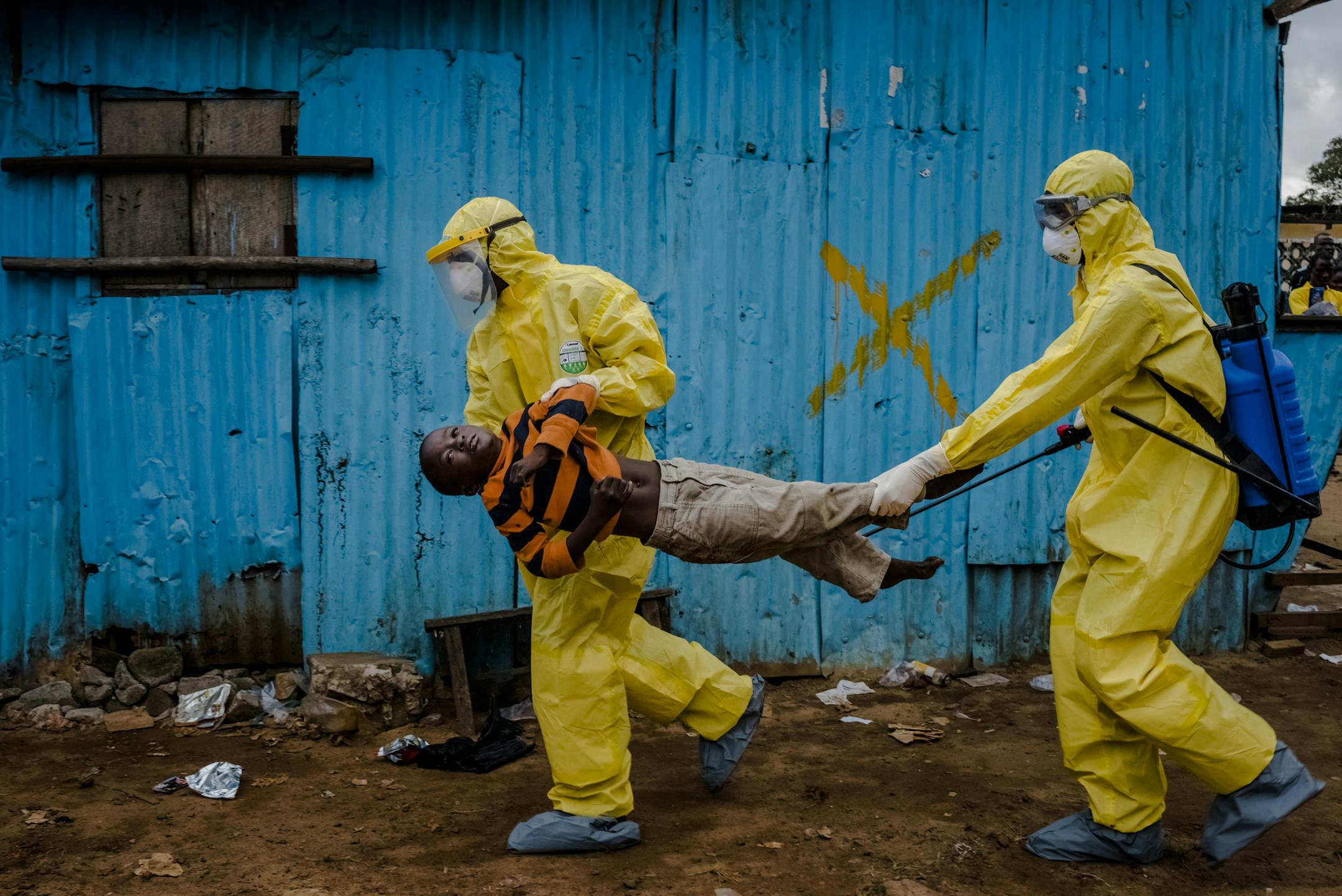
Medical staff carry James Dorbor, 8, suspected of having Ebola, into a treatment facility in Monrovia, Liberia, Sept. 5, 2014. Ebola — the reality and the hysteria over it — is having a serious economic impact on Guinea, Liberia and Sierra Leone, three nations already at the bottom of global economic and social indicators. (Daniel Berehulak/The New York Times)
An 8-year-old boy suspected of having Ebola was carried into a treatment facility in Monrovia, Liberia, last month. The illness mysteriously began popping up in more locales in western Africa. Tens of thousands more there could fall ill before the outbreak is brought under control. And now the virus could travel to any part of the world by plane. (The Minnesota Star Tribune)

MONROVIA, Liberia — It began in a village deep in the forests of southeastern Guinea, when a 2-year-old boy named Emile developed a mysterious illness.

Nothing, it seemed, could stem the child's fever and vomiting, and he died within days. A week later, the illness killed his 3-year-old sister, then his mother, grandmother and a house guest.

The grandmother consulted a nurse before she died. Friends and family gathered for her funeral, and soon the illness was spreading to other villages and towns.

Local health officials were alarmed, but it would take nearly three months from the boy's death in December to identify the culprit: the dreaded Ebola virus. By then, it had reached Guinea's bustling capital, Conakry, and cases were suspected across the border in Liberia and Sierra Leone.

In June, the international aid agency Doctors Without Borders, one of the leading responders on previous Ebola outbreaks, warned that the virus was already out of control. But the World Health Organization disagreed. Doctors said they were told to avoid causing panic. Not until August did the WHO concede that the worst Ebola outbreak on record had become an international health emergency. By then, the deadly tide had reached Nigeria, Africa's most populous nation, and casualties were arriving in the United States and Europe.

Ebola's journey from the quiet village of Meliandou, through crowded, steamy, trash-strewn slums and on to Dallas with the arrival of Thomas Eric Duncan from Liberia, who died Wednesday, was a product of unfortunate geography, ramshackle health systems, and a combination of misunderstanding, denial and fear. But there were also missed opportunities and questionable decisions that now add up to nearly 4,000 dead and a caseload that is doubling about every three weeks.

The United States, Britain, France and other world powers have rallied, committing hundreds of millions of dollars and thousands of personnel to the effort to contain Ebola in West Africa. But the response is still far short of the nearly $1 billion effort that the United Nations says will be needed to get ahead of the epidemic.

Tens of thousands more could fall ill before the outbreak is brought under control, the WHO has warned. It may already be too late to keep Ebola from becoming endemic to the region — and as of now the virus could show up anywhere in the world, when the next Thomas Eric Duncan steps off a plane.
Mortality is near certain

Ebola is among the deadliest known viruses, with no specific cure and mortality rates that can reach 90 percent. Until now, it was mostly found in isolated rural communities, where it killed its victims so quickly that it didn't have the chance to spread widely.

This outbreak is different. It struck where the porous borders of Guinea, Liberia and Sierra Leone converge, in a deeply impoverished and highly mobile population that moves frequently among the countries to visit relatives, go to markets — or attend funerals.

Recent previous Ebola outbreaks, in 2012 and early 2013, took place thousands of miles away, in the Democratic Republic of Congo and Uganda. How it reached the continent's western region is not known. Scientists suspect the virus spends most of its time in fruit bats. Ebola can also infect apes and has been known to move into humans when they hunt or butcher infected animals. The same risk could apply to handling infected bats, which are also hunted in West Africa.

It was, perhaps, only a matter of time before the virus found its way onto the hands of a crawling toddler. Once the boy became ill, his bodily fluids could infect others, becoming more dangerous as his symptoms worsened. "Alarm bells might have gone off had any doctor or health official in the country ever seen a case of Ebola," the WHO said in a recent retrospective on the outbreak.

But no one had — and they had neither the training nor equipment to avoid infecting themselves and other patients. Doctors, nurses and midwives began falling ill and dying.

In its early stages, Ebola's symptoms are similar to any number of tropical diseases. When cases began to appear at the hospital in Gueckedou, the town where Emile's grandmother went looking for help before she died, doctors suspected a more familiar culprit: cholera.

The hospital ran tests on nine samples; seven came back positive for cholera, the WHO said. But these patients all had fevers, which is not generally associated with the disease. Could it be malaria? The symptoms still didn't add up.

As the mysterious illness began popping up in more locales, the local health authorities sought the help of foreign professionals, including the WHO and Doctors Without Borders.

Some began to suspect Lassa fever, a viral disease endemic to West Africa that can also produce bleeding.

Deeply worried, Doctors Without Borders officials forwarded the results of a medical investigation to Dr. Michel Van Herp, an epidemiologist with the group and one of the world's leading experts on hemorrhagic fevers. He suspected Ebola.

At the time, there were no labs in Guinea equipped to test for the virus. So blood samples had to be flown to the Pasteur Institute in France. On March 20, Van Herp's hunch was confirmed.

Three days later, the WHO published an official notification of a "rapidly evolving" Ebola outbreak in Guinea with 49 cases reported, including 29 deaths.

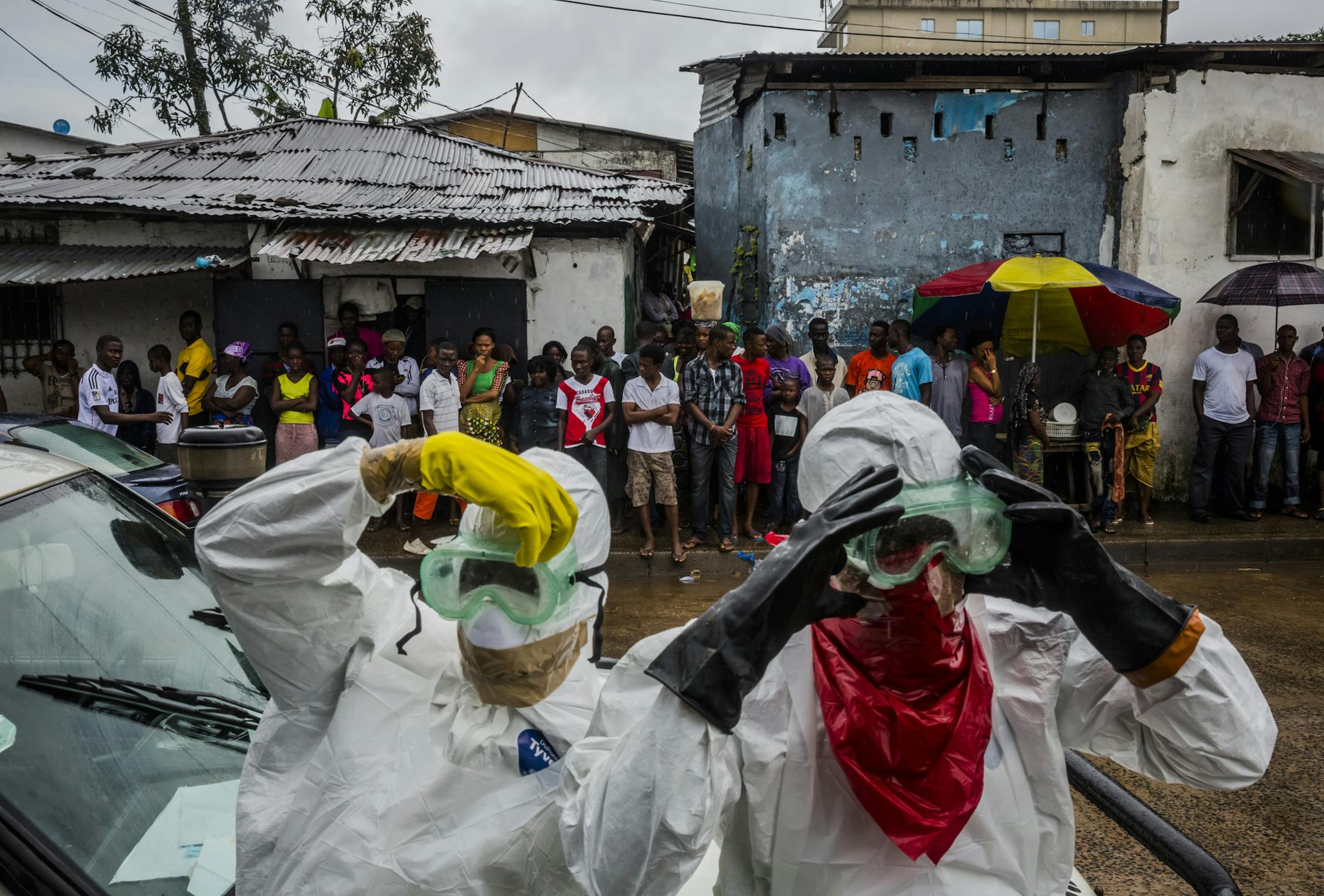
By this time, the WHO said, it had already shipped supplies of personal protective equipment to Conakry and had activated a state-of-the-art center to track the outbreak. Experts deployed by the WHO, Doctors Without Borders, the U.S. Centers for Disease Control and Prevention and others started to arrive within days

There is no Ebola vaccine to contain an outbreak. Public health officials can only isolate the victims, and then track down their contacts and monitor them for 21 days, to see whether they develop symptoms. These methods have been effective in the past. But by this time, there were hundreds of contacts to trace.

Doctors Without Borders had to temporarily suspend operations in some Guinean villages when hostile groups of men began blocking the way, sometimes pelting them with rocks. Last month, a team dispatched by the Guinean government to the village of Womme to educate residents about Ebola was sent fleeing into the forest when a mob attacked, news reports said. Eight members, including officials and journalists, were killed and their bodies stuffed into latrines.

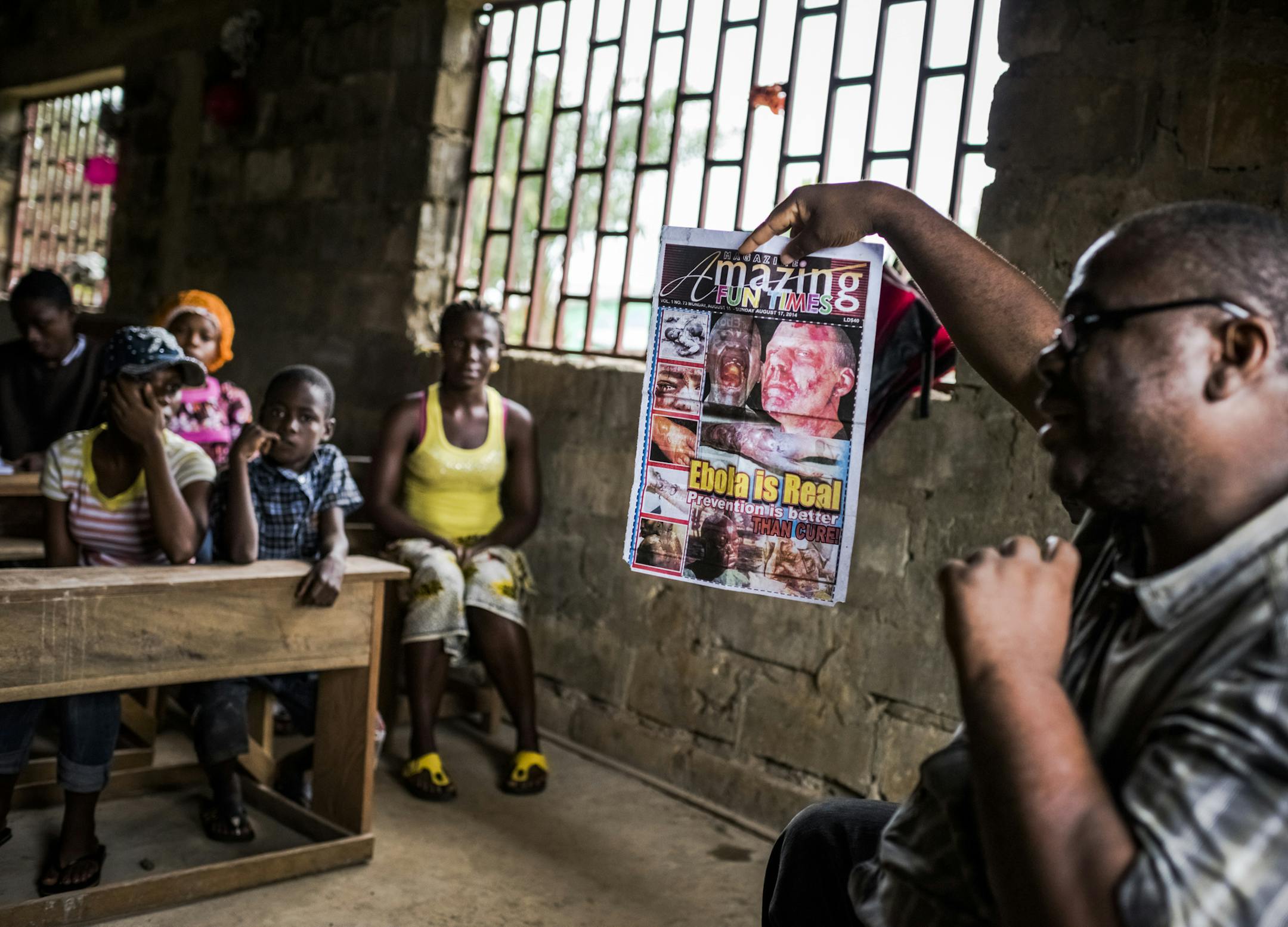
Public messaging wasn't helping. "Ebola is very serious, it destroys family and nation quick quick quick," read one poster in Liberia.

"That kind of message doesn't inspire patients to seek care, because it removes any hope that they might get better," said Sean Casey of the International Medical Corps. When people did seek treatment, there weren't enough beds. Only a few new patients were allowed in each morning — to replace those who died in the night.

Duncan's good deed exposed him

Among those turned away was a desperately ill, pregnant 19-year-old in the Liberian capital of Monrovia. With her was Duncan. He helped take her to the hospital, and then carry her back into her house, where she died a few hours later.

Two American missionaries who contracted the virus while working at a Monrovia hospital were fighting for their lives. Dr. Kent Brantly and Nancy Writebol, like a colleague who fell ill after them, would make full recoveries, after receiving experimental treatments that may have helped and follow-up care in the U.S.

So many health care workers have died in the outbreak that some hospitals have closed because the surviving staff members and patients are too afraid to go in. The result is that even treatable diseases such as malaria are now claiming lives. How many, no one knows. Their victims simply disappear.

To the experts at Doctors Without Borders and a few other organizations, it was clear early that this outbreak was different. The Geneva-based group issued its first public warning on March 31, saying the "unprecedented" geographic spread was greatly complicating the response.

For months, it lobbied behind closed doors to get regional governments and international health authorities to acknowledge what seemed obvious to its experts: The outbreak was out of control and would need far more resources than they could muster on their own.

But when the organization said as much publicly on June 23, it was criticized for doing so. "People were saying, 'Look … you are fueling the panic. It's not good,' " said Brice de le Vingne, the group's operations director. "We met resistance at many levels, including the WHO."

Officials at WHO acknowledged a difference of opinion. "I don't think we ever said we don't want to cause a panic, but I don't think we agreed that things were out of control, either," said Daniel Epstein, a spokesman.

It would be another month before the caseload started to climb exponentially, he said. By then, the virus was racing through Monrovia, a densely packed city of more than 1.3 million people.

Airlines and transportation companies refused to service the affected countries, making it increasingly difficult to bring in supplies and personnel. Bodies were left in the streets for days because there weren't enough teams in biohazard suits to collect them. Soon people would be buying forged death certificates in a bid to get loved ones a "decent" burial.

In the midst of the chaos, a Liberian Ministry of Finance official with U.S. citizenship ignored medical advice and boarded a flight from Monrovia to Lagos, Nigeria, on July 20. During the trip, he became violently ill. He died five days after landing in Lagos. Soon, another man would evade surveillance in Guinea and flee by road to Senegal, becoming that country's first and only Ebola case.

As the caseload continued to grow, Dr. Margaret Chan, the WHO's director-general, convened an emergency committee of experts, which on Aug. 8 declared the outbreak a public health emergency of international concern, finally triggering a worldwide hunt for resources.

The next month, the U.N. Security Council unanimously approved a resolution declaring Ebola a threat to international peace and security, and calling on member states to urgently send help. But it was late. "The disease got out of hand, and everyone came in after that," said Tolbert Nyenswah, Liberia's assistant health minister.

Virus flies to United States

If relatives of Marthalene Williams hadn't insisted that she had malaria, their Paynesville neighbor, Thomas Eric Duncan, might not have helped carry her into a taxi or accompanied them as they searched the capital for a hospital or clinic that would take her.

Four days later, on the afternoon of Sept. 19, Duncan arrived at Monrovia's airport to catch a flight to the United States, beginning with a connecting flight to Brussels. Like all travelers exiting the Ebola zone, Duncan had his temperature taken by a Liberian official who had been trained by CDC experts. Duncan's temperature was an unremarkable 97.3 Fahrenheit.

He filled out a form crafted by the CDC and Liberian authorities to alert them to potential Ebola cases. It asks travelers whether they have had contact with people who might have Ebola.

It's not known whether Duncan suspected Williams had Ebola, but health officials in Liberia say he did not disclose his encounter with her. He was waved onto the jet, and then spent several hours on a layover at the Brussels airport.

Duncan then flew out on United Flight 951, and eventually arrived in Dallas on Sept. 20.

The 42-year-old Liberian died 18 days later at Texas Health Presbyterian Hospital in Dallas.

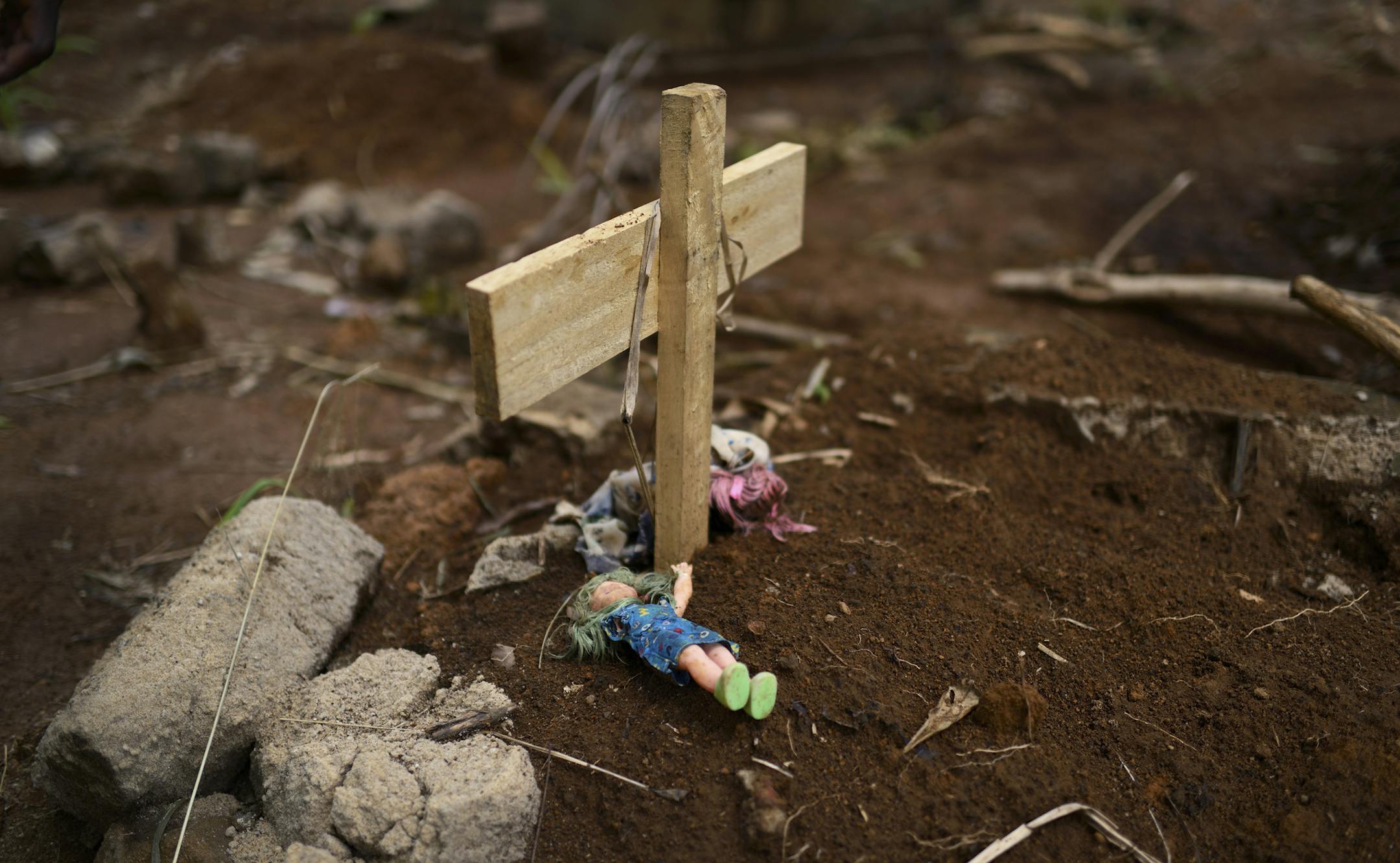
The grave of a Marian Sebay, a nurse and victim of Ebola, at King Tom Cemetery, adjoining a slum called Kolleh Town by its residents, in Freetown, Sierra Leone, Sept. 21, 2014. On Sunday, the government was wrapping up an ambitious national lockdown in an attempt to fight the epidemic, having ordered Sierra Leone’s citizens to stay home for three days to receive warnings about Ebola, and soap from volunteers. (Samuel Aranda/The New York Times)
The grave of a nurse and victim of Ebola in Freetown, Sierra Leone. (The Minnesota Star Tribune)
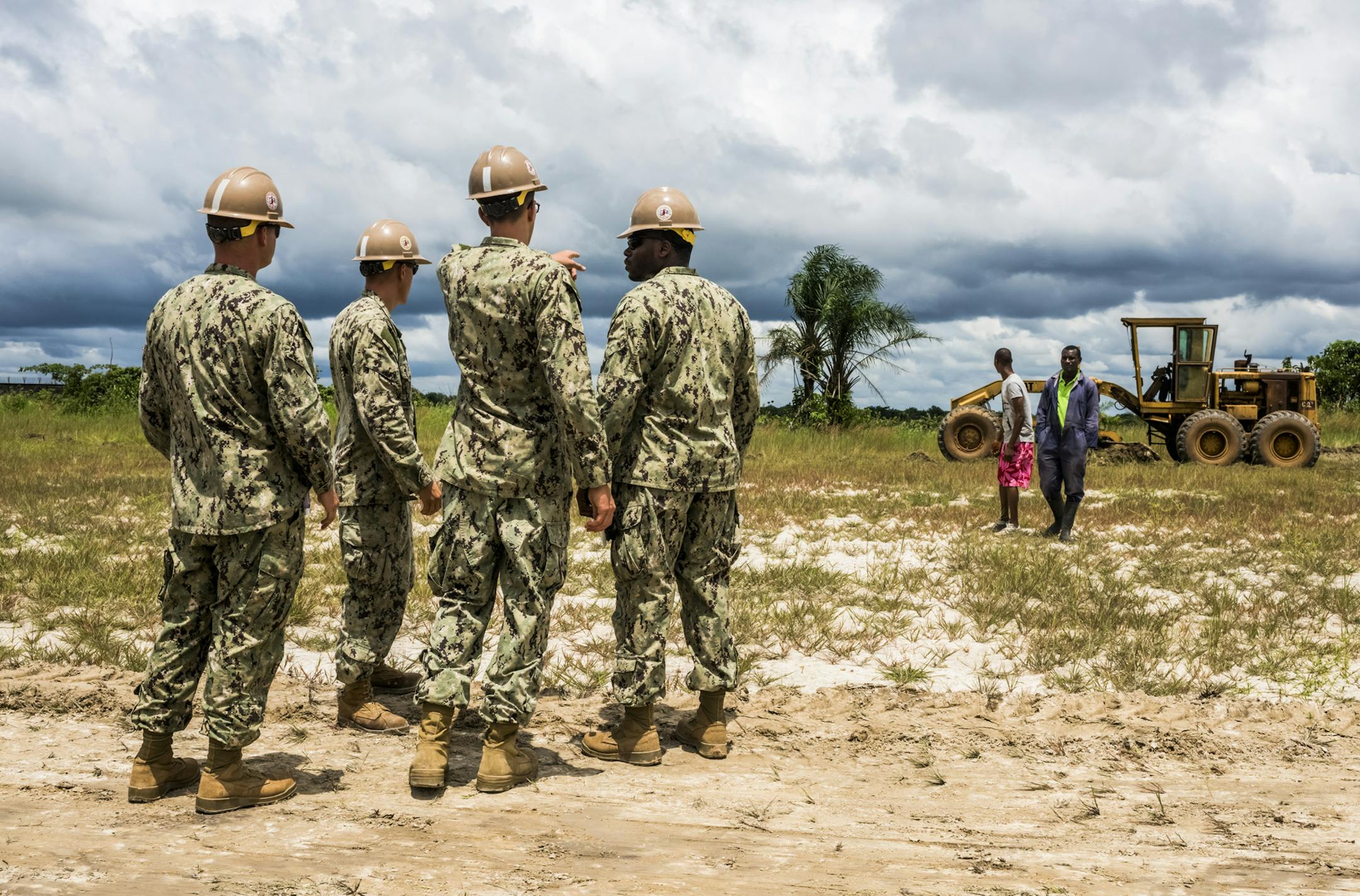
A team of U.S. Navy engineers prepares the ground for a 25-bed medical facility for Ebola patients they are building next to the Roberts International Airport in Monrovia, Liberia, Sept. 27, 2014. Two weeks after President Barack Obama announced that time was running out in the fight to stem the epidemic, the American treatment centers planned here in the center of West Africa’s Ebola crisis are still a long way off. (Daniel Berehulak/The New York Times)
Left A team of U.S. Navy engineers prepared the ground for a 25-bed medical facility for Ebola patients in Monrovia, Liberia. American treatment centers are slow to be built in the center of the crisis and too small to handle huge patient loads. (The Minnesota Star Tribune)
Dr. Mosoka Fallah, an epidemiologist and immunologist, speaks with residents during a neighborhood Ebola training session in Monrovia, Liberia, Aug. 30, 2014. Fallah, who grew up in Monrovia’s poorest neighborhoods before studying at Harvard, has been crisscrossing the capital in an effort to win the cooperation of residents who are deeply distrustful of the government and its faltering response to the deadliest Ebola epidemic ever recorded. (Daniel Berehulak/The New York Time
Left Dr. Mosoka Fallah, an epidemiologist and immunologist, talked with residents about Ebola in Monrovia. Fallah, who grew up in Monrovia’s poorest neighborhoods before studying at Harvard, has tried to counteract deep distrust of the government and its faltering response. (The Minnesota Star Tribune)
Eric Gweah, 25, grieves as he watches members of a Red Cross burial team carry the body his father, Ofori Gweah, 62, a suspected Ebola victim, in a riverside area called Rock Spring Valley in central Monrovia, Liberia, Sept. 18, 2014. Ofori Gweah had endured Ebola’s telltale symptoms for six days, his family took him to treatment centers twice, only to be turned back. So many Ebola victims are dying at home due to a severe shortage of treatment centers in Monrovia, and many of
Left Eric Gweah, 25, grieves as he watches members of a Red Cross burial team carry the body his father, Ofori Gweah, 62, a suspected Ebola victim, in a riverside area called Rock Spring Valley in central Monrovia, Liberia, Sept. 18, 2014. (The Minnesota Star Tribune)
A burial team, one of six crisscrossing Monrovia, prepare to remove the body of Lorpu David, 30, in Monrovia, Liberia, Sept. 18, 2014. “We came here for the husband last week, we’re back today for the wife, and maybe next week we’ll be back for the children,” said one body collector, Alexander Nyanti. With the severe shortage of treatment centers, many apparent Ebola patients are dying at home, often infecting family mem
Above A burial team prepared to remove the body of a victim in Monrovia. “We came here for the husband last week, we’re back today for the wife, and maybe next week we’ll be back for the children,” said one body collector. (The Minnesota Star Tribune)
about the writers

about the writers

Alexandra Zavis

Robyn Dixon

Molly Hennessy-Fiske

Monte Morin

More from Minnesota Star Tribune

See More
card image
J. SCOTT APPLEWHITE, ASSOCIATED PRESS/The Minnesota Star Tribune

The "winners" have all been Turkeys, no matter the honor's name.

In this photo taken Monday, March 6, 2017, in San Francisco, released confidential files by The University of California of a sexual misconduct case, like this one against UC Santa Cruz Latin Studies professor Hector Perla is shown. Perla was accused of raping a student during a wine-tasting outing in June 2015. Some of the files are so heavily redacted that on many pages no words are visible. Perla is one of 113 UC employees found to have violated the system's sexual misconduct policies in rece