
Tour does the Wright thing

Gems of mid-century modern architecture will be featured on tour.

April 14, 2010 at 3:42PM
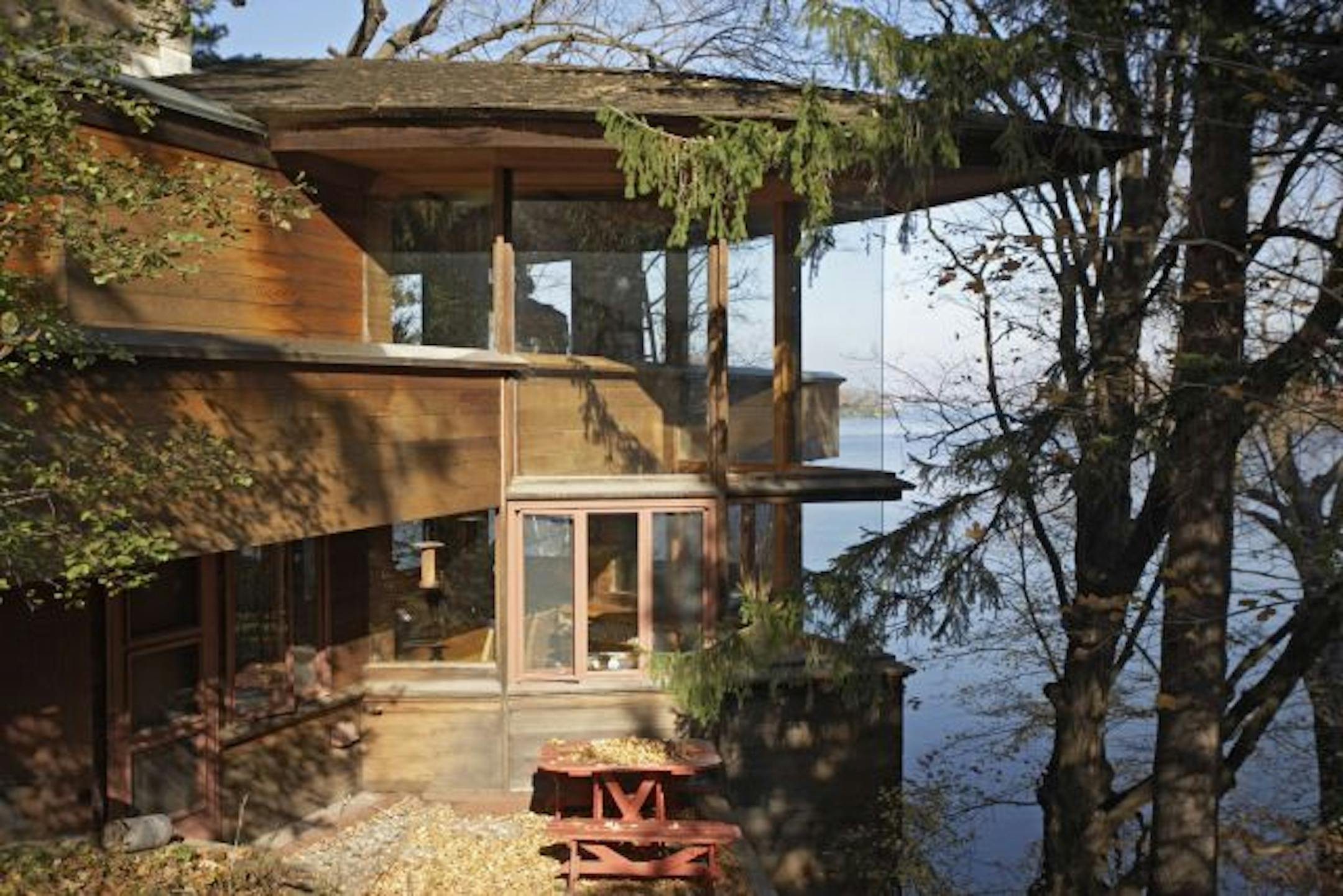
Frank Lloyd Wright's chief draftsman John Howe designed this canoe-shaped house on Lake Minnetonka in the 1960s. "When you're inside, you feel like you're outside," said architect Tim Quigley.
Frank Lloyd Wright’s chief draftsman John Howe designed this canoe-shaped house on Lake Minnetonka in the 1960s. “When you’re inside, you feel like you’re outside,” said architect Tim Quigley. (Karen Melvin Photography/The Minnesota Star Tribune)

If you appreciate the clean lines and open spaces of mid-century modern design, here's a rare chance to see some of the most noteworthy examples in the Twin Cities.

Eight houses and one church will be featured on an all-day bus tour (May 1) organized by the Frank Lloyd Wright Building Conservancy. "These are all private homes that haven't been open since the tour here 10 years ago," said architect Tim Quigley, of Quigley Architects, who's a member of the conservancy board.

Three of the homes were designed by Wright himself; the others are the work of his colleagues, proteges or other prominent mid-century modern architects influenced by his style.

Minnesota was not a hot bed of Wrightian design. The legendary architect did many more homes in Illinois and Wisconsin, his native state. "But there is more Wright here than most people have any idea," Quigley said.

At one with nature

On a hill overlooking Lake Minnetonka, sits a glass-walled home with a distinctive shape that evokes a canoe. It was designed by Frank Lloyd Wright associate John Howe. "He was the pencil in Wright's hand, his chief draftsman," said architect Tim Quigley. "He did the beautiful renderings that Wright often gets credit for."

In 1967, Howe left Taliesin (Wright's Wisconsin studio) and set up shop in Minneapolis. Two years later, he was tapped to design the unusual glass-enclosed lake home for Dr. Robert and Kathryn Goodale. The home is extraordinary for its marriage of interior and exterior spaces, Quigley said. "When you're inside, you feel like you're outside. You're one with the hill, one with the lake. It's totally Wrightian."

Art of the design

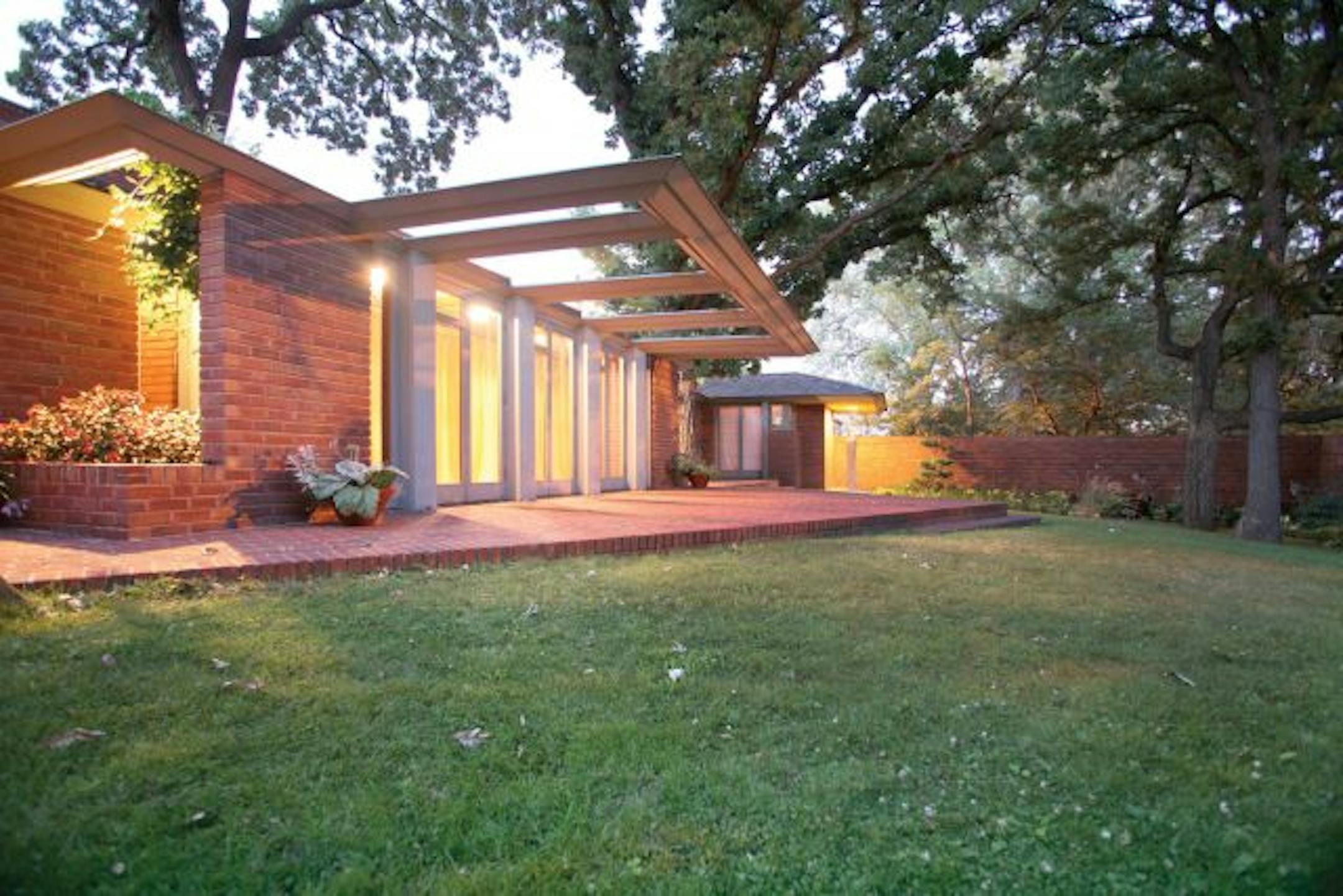
Architect Philip Johnson is best known for his Glass House, which featured a wide-open interior, encased completely in glass, with a solid cylinder at the center, where the bathroom was located. Minnesota has a Johnson house that is "the inverse" of the Glass House, according to architect Quigley. "It's a brick box with a glass insert at the center, for plants. It's like looking into a greenhouse."

Johnson designed the home in the early 1950s to accommodate the art collection of its original owner, who was director of the Minneapolis Institute of Arts. Johnson was a disciple of modernist architect Ludwig Mies van der Rohe, who popularized the "less is more" mantra, and the house in Orono reflects that minimalist aesthetic. In recent years, the house was restored by former owners Mike and Penny Winton. Current owners Robert and Carolyn Nelson have continued the restoration.
Wright's second act

In the early 1930s, Frank Lloyd Wright was one of the most renowned architects in the world, but he wasn't getting a lot of work, at least in the United States. Scandal and tragedy had taken the shine off his once-brilliant career. Wright had run off with a client's wife, alienating his customer base. Then a servant torched part of Taliesin, and murdered Wright's mistress, her children and several employees. Wright tried to rebuild, but Taliesin was facing foreclosure.

Then, a University of Minnesota professor's wife read Wright's autobiography and approached him about building a home in Minneapolis' Prospect Park neighborhood. That house, built for Malcolm and Nancy Willey in 1934, launched Wright's second career building "Usonian" homes.

Intended to interpret Wright's Prairie School architecture for the middle class, the one-story homes were modest in size, with an open combined kitchen/living space that was ahead of their time.

"That was a pivotal house for Frank Lloyd Wright," said architect Tim Quigley. "It was his first Usonian house and the first one he did with a band of students."

Like its creator, the Willey house fell on hard times. An absentee owner turned it into rental housing for students. Later, it sat vacant. "It was a true mess," Quigley said, until the current owners, Steve and Lynette Sikora, came to the rescue. They restored the house to its original condition and added the built-in furniture that Wright had originally designed for it. Now, according to Quigley, "It's splendid."

Kim Palmer • 612-673-4784

The first of Frank Lloyd Wright's "Usonian homes" is located in Prospect Park near the University of Minnesota.
The first of Frank Lloyd Wright’s “Usonian homes” is located in Prospect Park near the University of Minnesota. (Star Tribune/The Minnesota Star Tribune)
Architect Philip Johnson designed this house in Orono to accommodate its original owner's art collection.
Architect Philip Johnson designed this house in Orono to accommodate its original owner’s art collection. (Star Tribune/The Minnesota Star Tribune)
about the writer

about the writer

Kim Palmer

Reporter, Editor

Kim Palmer is editor/reporter for the Homes section of the Star Tribune. Previous coverage areas include city government, real estate and arts and entertainment 

See Moreicon

More from Minnesota Star Tribune

See More
card image
J. SCOTT APPLEWHITE, ASSOCIATED PRESS/The Minnesota Star Tribune

The "winners" have all been Turkeys, no matter the honor's name.

In this photo taken Monday, March 6, 2017, in San Francisco, released confidential files by The University of California of a sexual misconduct case, like this one against UC Santa Cruz Latin Studies professor Hector Perla is shown. Perla was accused of raping a student during a wine-tasting outing in June 2015. Some of the files are so heavily redacted that on many pages no words are visible. Perla is one of 113 UC employees found to have violated the system's sexual misconduct policies in rece