
Tolkkinen: My rural son’s life is so different from my Twin Cities childhood

His country upbringing is wonderful, but will it prepare him for the world’s diverse backgrounds and experiences?

Columnist Icon
The Minnesota Star Tribune
September 23, 2025 at 9:32PM
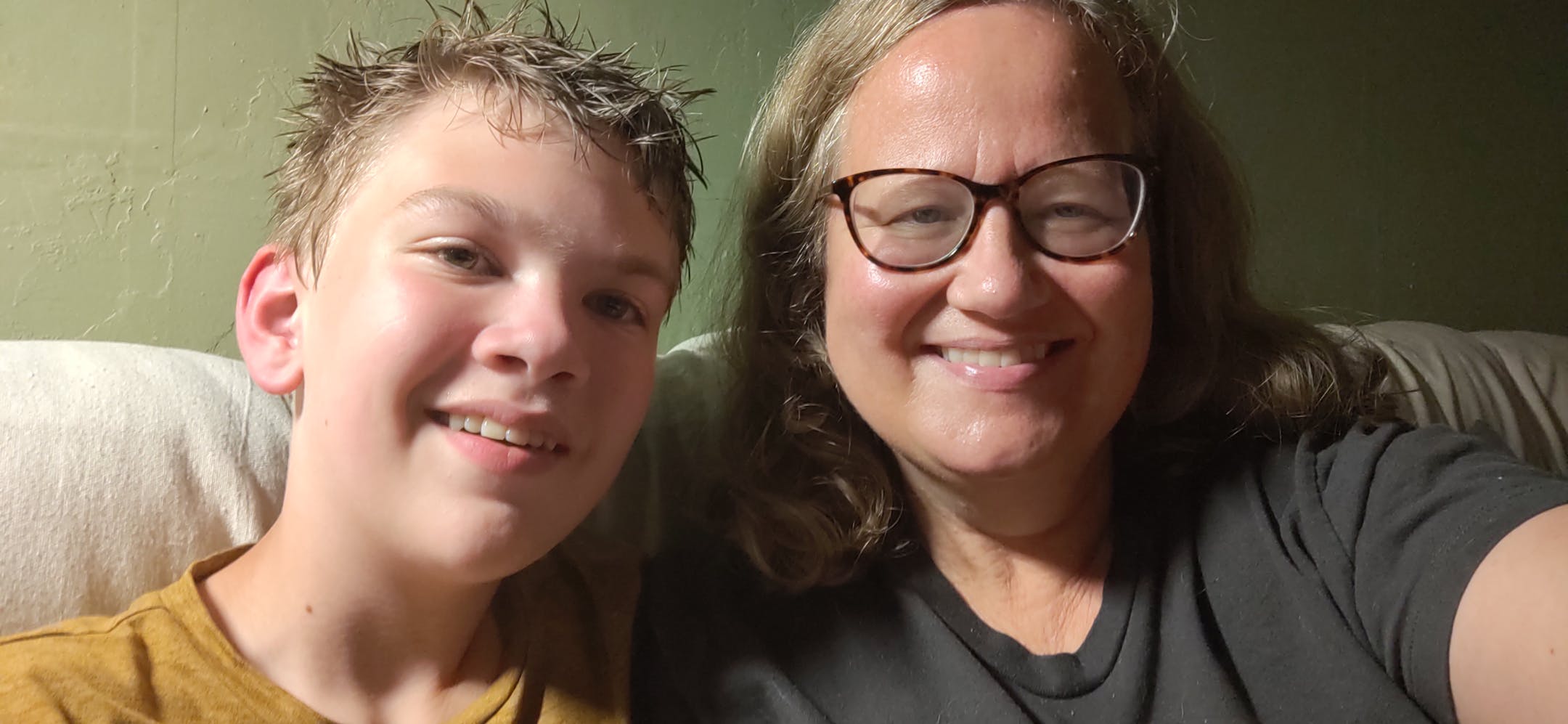
Columnist Karen Tolkkinen, who grew up in the Twin Cities in the 1970s, is raising her son in rural Minnesota. He just turned 13. (Karen Tolkkinen/The Minnesota Star Tribune)

CLITHERALL, MINN. - Our only child turned 13 this weekend.

He tells us it’s just a number. But adding “teen” to your age is a milestone. You leave elementary school for junior high, start paying adult prices and micro-dancing in the school gym. If you’re on a farm, odds are you’ve already started driving a tractor.

Here we are, a 1970s city girl raising a Gen Z country boy with the help of my country-born husband. Friends, we are living proof that the rural-urban divide can be spanned.

Thirteen years ago, our son arrived three weeks early at the Fergus Falls hospital. His vitals weren’t great and he needed a neonatal intensive care unit, which Fergus Falls doesn’t have. It turns out there are NICUs in Duluth, St. Cloud, Rochester and the Twin Cities area. Fargo, too, but Fargo was full that night.

After recovering from the birth, I joined him nearly two hours away in St. Cloud. He stabilized quickly and we soon took him home. We were lucky. Other rural families facing longer NICU stays, not so much. Rural populations can’t support a NICU.

The lack of nearby care was eye-opening, underscoring that there’s an entire world beyond reach of city amenities.

As our son grew, doctors urged us to start getting him dental care. We quickly learned that it wasn’t so easy. Many local dentists didn’t accept our coverage at the time, which was Medicaid, and we couldn’t afford to pay out of pocket. Living in rural Minnesota can make it difficult to find a full-time job with private insurance, and children pay the price. The 15 Minnesota counties with the highest rate of children on Medicaid in 2023 were all rural, with the highest rate, 45%, found in Mahnomen County. By contrast, 22.4% of children in Hennepin County were on Medicaid, the lowest percentage in the state.

Only children in rural places can have a hard time finding playmates. In a city, you might live within walking distance of a playground or in a neighborhood with other kids. But our nearest neighbor is a half-mile away and childless. For a while, our son played with two Guatemalan boys who rode his bus and lived within a mile, the self-proclaimed King of Bread and his brother, the self-proclaimed King of Broccoli (they wanted to be kings of something!). Sadly, their family moved away a year ago.

The nearest Scouting unit is 20 miles away from our home. We brought our son a couple of times until one evening the instructors had the kids turn pop cans into cookstoves and one exploded in a kid’s face and singed his eyebrows. We quietly quit going.

One of the good things about living where we do is that our son has had good, caring teachers and small class sizes. One year, if memory serves, there were only 14 students in his class.

The downside? Rural schools can’t offer the number of electives offered in urban schools. A seventh-grade student in the Wayzata public schools, my alma mater, can choose from interior design, dance, or forensics, among many other options. My son’s school doesn’t even offer seventh-graders a foreign language, having mostly eliminated its Chinese program last school year.

The gulf between rural and urban starts early.

I grew up walking to Sunset Hill Elementary School in Plymouth, but rural kids tend to have long school-bus rides. Our son’s bus ride takes about 45 minutes one way, and from what we’ve gleaned, is full of rubber band wars, snack trading, and schoolhouse gossip.

The bus trip is nothing, though, compared with the one students take from the Northwest Angle to Warroad Public schools. Now that is a trek. I visited once and learned that from sixth grade on up, students who live in the Angle go to school some 80 miles away in Warroad. That means they have to cross the international border twice in the morning and twice coming home. By the way, those kids often have to cross roadless areas by boat or snowmobile just to reach the bus stop.

Those parents never have to worry about their kids chasing a ball into the street. I never have, either. There’s really no street where we live. Just a gravel road with a few cars a day and a really long driveway. When our son would get mad at us and threaten to run away, we’d remind him about the coyotes. He never got past the front door.

Truthfully, I worry about four-wheelers more than coyotes. Kids die in four-wheeler wrecks. Every time our son drives cross country to his grandparents’ land, I remind him to be careful. And he is. You can’t avoid all risk; you have to measure it and he’s a careful kid, not one to endanger his neck for a momentary thrill.

Our son has seen calves birthed, held day-old chicks, and driven four-wheelers and tractors. He’s gone fishing and duck hunting and helped haul hay bales off the field, all common rural experiences.

I do wonder how he’ll fare as he continues to grow into manhood. How well his isolated, rural upbringing will prepare him for the greater world with its diverse backgrounds and experiences. How well it will help him find his life’s work.

Or, maybe I’ve got it all wrong. Like any kid with internet access, he spends too much time on a screen. Maybe playing Minecraft will help him out more than a class on forensics. Anyway, it may help him bond better with his peers.

about the writer

about the writer

Karen Tolkkinen

Columnist

Karen Tolkkinen is a columnist for the Minnesota Star Tribune, focused on the issues and people of greater Minnesota.

See Moreicon

More from Greater Minnesota

See More
card image
Jp Lawrence/The Minnesota Star Tribune

The Minnesota State Patrol said the driver and passenger in one vehicle weren’t wearing seatbelts.

card image