

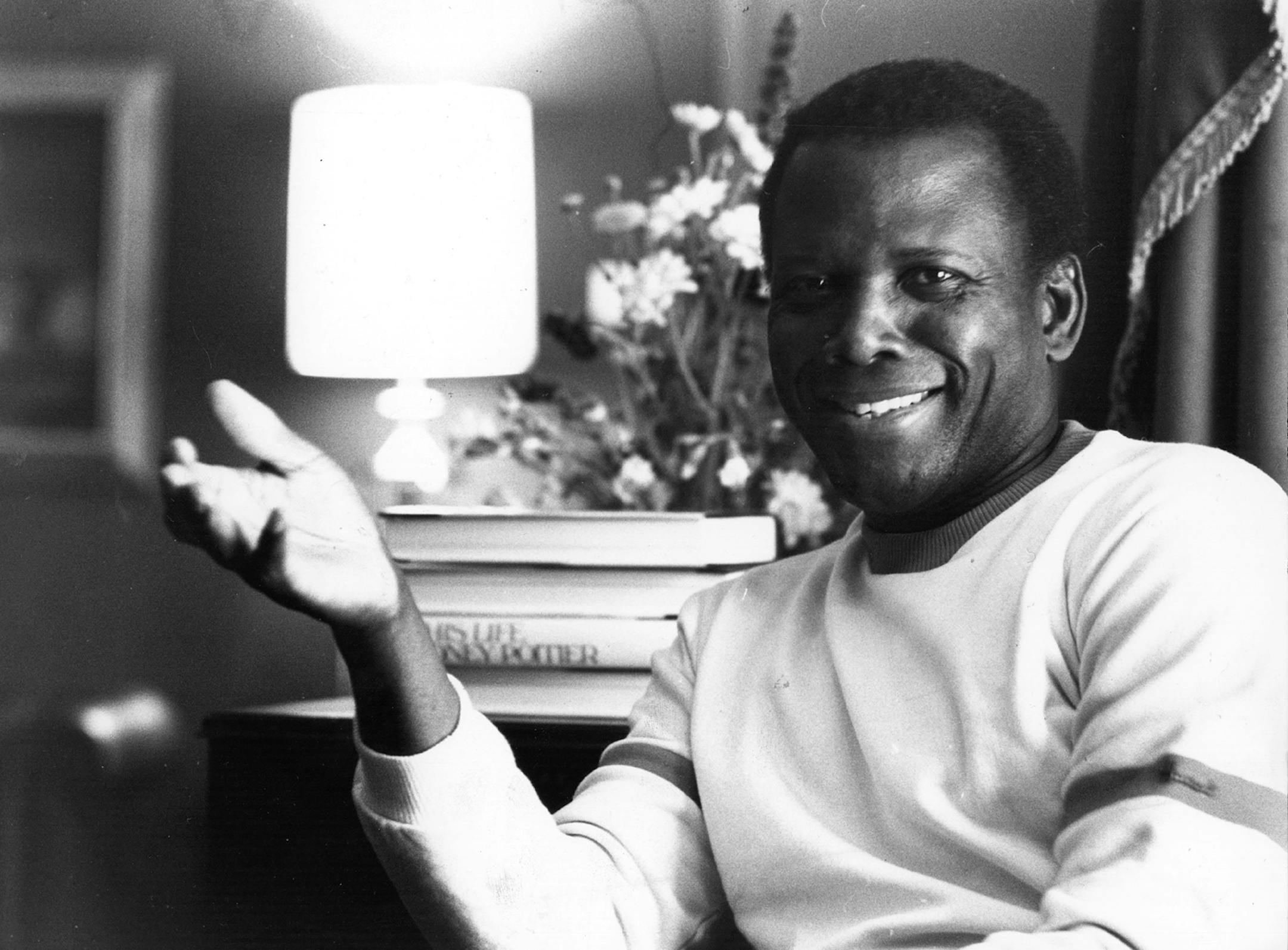
The first time Sidney Poitier walked into the room, I stopped talking. I think I might've even held my breath for a few seconds, afraid my inhaling would draw too much attention. Felt like we all did.
It was the set of the 1996 made-for-TV sequel "To Sir, With Love II," and no one had to tell any of us young actors what it meant to be in the room with THE "Mr. Thackeray."
Prior to that day I had seen the 1967 original a half-dozen times, but the first Sidney Poitier movie I ever saw was 1975's "Let's Do It Again." We kids watched because we loved "Good Times," and both John Amos and Jimmie Walker, who played James and J.J. in the sitcom, were in it.
My mother wanted to watch Sidney, who with the Rev. Martin Luther King Jr. were the only non-family members whose pictures hung on our wall. In addition to loving his movies, my mother is from the Greenwood, Miss., area — not far from where Emmett Till's body was found — and remembers Sidney along with Harry Belafonte going there to help with voter registration in the 1960s.
My mother participated in similar efforts and, like the two of them, encountered the KKK. Needless to say, when I told her I had been cast in "To Sir," she was more excited than I was. She didn't get the chance to meet him, but I did ask Sidney if he would speak to her on the phone and he happily obliged.
After he introduced himself, her scream was so loud he initially had to hold my cellphone a few extra inches away from his ear. I sheepishly looked down, wondering if he had already regretted his decision. Instead, he spent the next 10 minutes telling her how much he enjoyed working with me and that I carried myself on set with dignity. He ended by congratulating her on the job she had done raising me. I'm tearing up a little just thinking about how much that conversation means to her still, more than 25 years later.
I have a lot of stories from weeks on set with Sidney, who died on Thursday, but what I hold closest to my heart is how generous he was with his time — and not just on that day but during the entire shoot. My character, Archie, was a secondary one, but I had a fair number of scenes with him. During breaks, I would ask questions about the scene and he usually answered them with a question, encouraging me to find the answers within myself. Occasionally, I would catch myself on set just watching him, caught somewhere between admiration and disbelief.
One day, I told him that while in college I played Walter Lee Younger, the role in "A Raisin in The Sun" that he immortalized on Broadway and in the movie. As we talked about the complexity of the character, Sidney told me that the way I portrayed Walter Lee then would be very different when I got a little older. At the time, I thought I understood what he was saying, but it really wasn't until I had reached my 30s and had a son of my own — like Walter Lee — that the deeper meaning behind those words materialized for me.


