

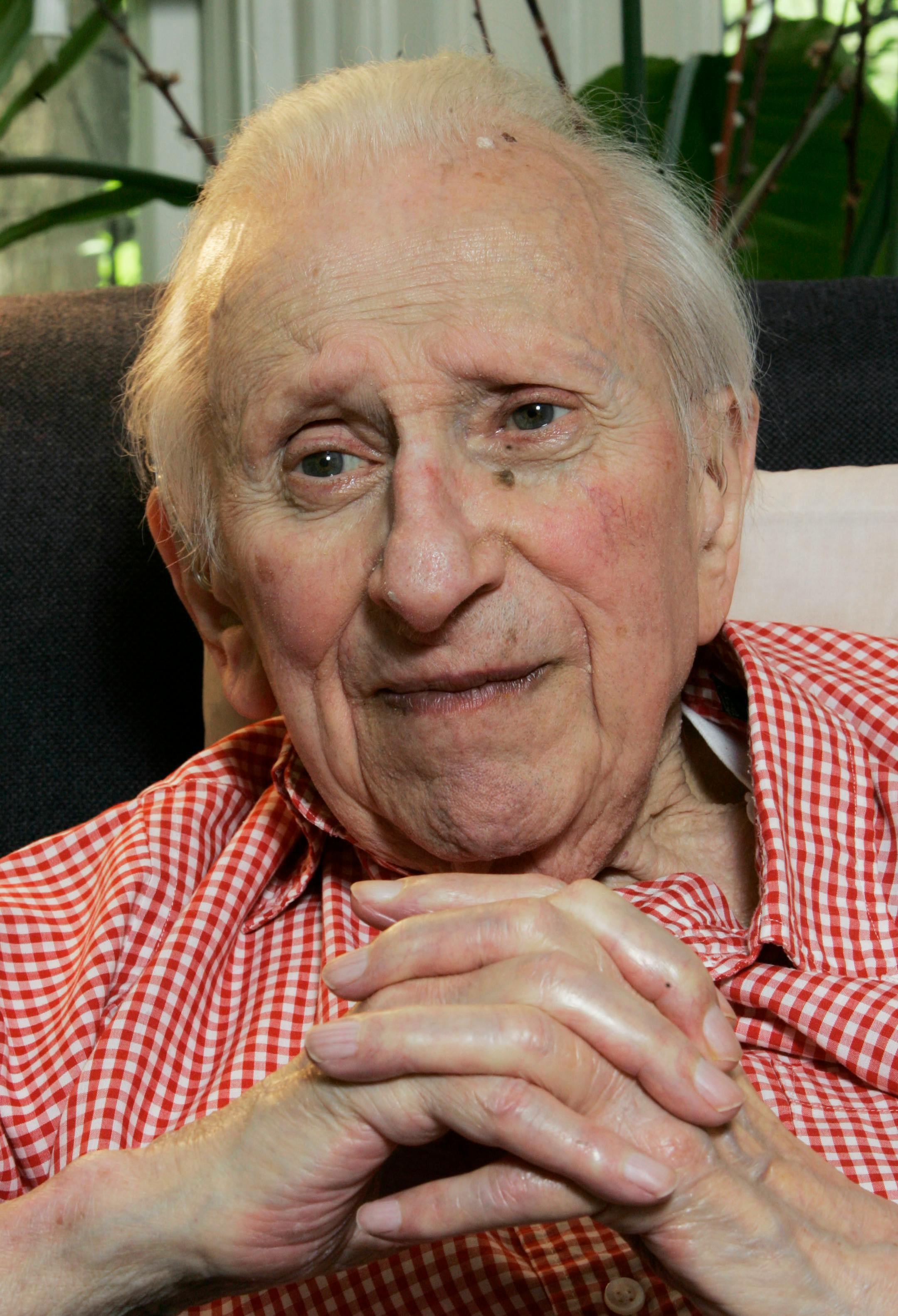
At 94, Studs Terkel has earned the right to ramble, and his memoir "Touch and Go" -- the title refers both to a Dylan Thomas poem and to the medical reality of being 94 -- does indeed ramble, but in a peculiarly successful way.
It's a ravishingly nostalgic book, encompassing both the legendary and the forgotten, categories that interest Terkel equally.
Terkel opens his book with his hair being tousled by Natasha Rambova, the wife of Rudolph Valentino, a beautiful woman who he seems to think might have had something going with his father.
That his father was a men's tailor by profession raises questions about how they got to know each other in the first place, but Terkel regards the moment and the suggestive glances that accompanied it as a starting gun. He doesn't stop to analyze, just describes and moves on.
Terkel's parents were Russian, from Bialystock. He describes their misalliance with dry wit: "These two were not born to be a vaudeville team." But this is not a book written with blood on the floor left over from life's struggles, but rather a series of mostly wry, vividly rendered episodes, some obviously written, others obviously talked, that combine to form a viable sketch of a furiously busy life.
Terkel passed the bar exam, but never practiced law. Variously, he's been an actor, a disc jockey, a sportscaster, a political commentator, a jazz critic, a TV personality, an oral historian. Basically, he's an entertainer with a moral compass.
Terkel is an old Popular Front guy, a hard-core FDR lefty, so of course he got blacklisted. His rather elegant way of putting it is, "During the blacklist, you're not working for a time, you start thinking maybe you ain't got something you thought you had. ... I spent a lot of time at home, reading, listening to music. The FBI would come by once in a while to see me. They always came in pairs."
Terkel hit paydirt in the '70s with his oral histories "Working," "The Good War" and "Hard Times," among others. They're simplicity itself -- Terkel talking to interesting, ordinary people who went through life and kept their eyes and minds open. Cumulatively, Terkel's work forms an unyielding insistence on the value of the single human life.


