

Q: What causes ice dams on roofs, and how can I prevent them?
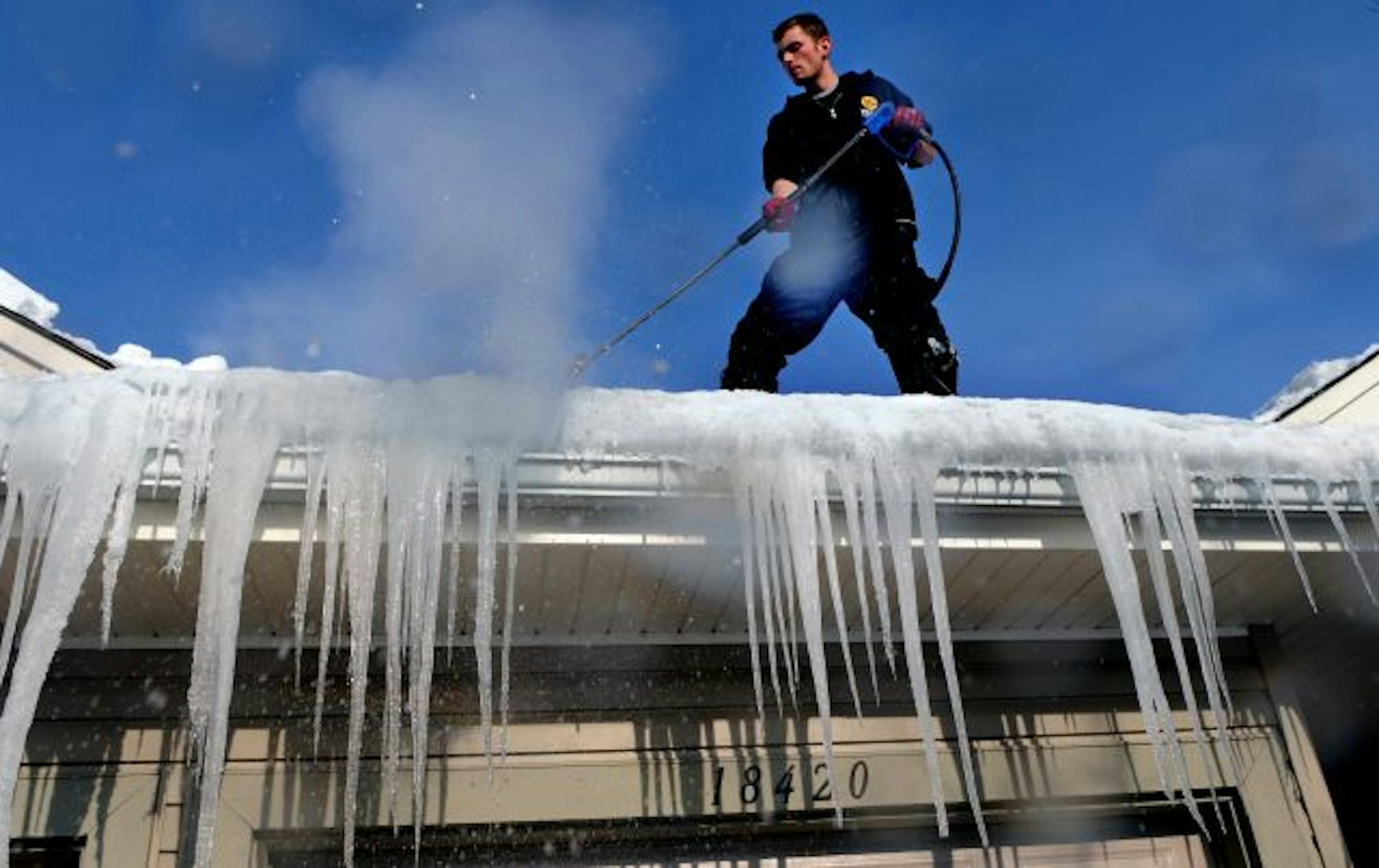
A: Those long icicles hanging from your roof may evoke a winter wonderland, but they're often associated with destructive ice dams.
Ice dams form at a roof's edge and in gutters when melting snow refreezes and can't drain off the roof. The dams prevent gutters and downspouts from filtering water away from your home, causing even more of a backup and a larger ice dam.
Heat, ironically, is a major cause of ice dams. When too much heat escapes through the attic, it can melt snow on the roof. The melted snow then refreezes at the roof's edge because that area of the roof isn't receiving attic heat.
Water that collects behind an ice dam can seep through your roof and into your attic and walls, creating structural damage, mold and other problems. Water refreezing beneath shingles causes roof damage.
Homes with lower-pitched roofs are more prone to ice dams, since it's easier for water and snow to glide off steeply pitched roofs.
Highly rated roofing and insulation service providers say that ice dams are difficult to remove, so the best idea is to take action to keep them from forming.
The main way to prevent ice dams is to reduce the amount of heat escaping through the attic by making sure the attic is sufficiently insulated and appropriately ventilated.


