

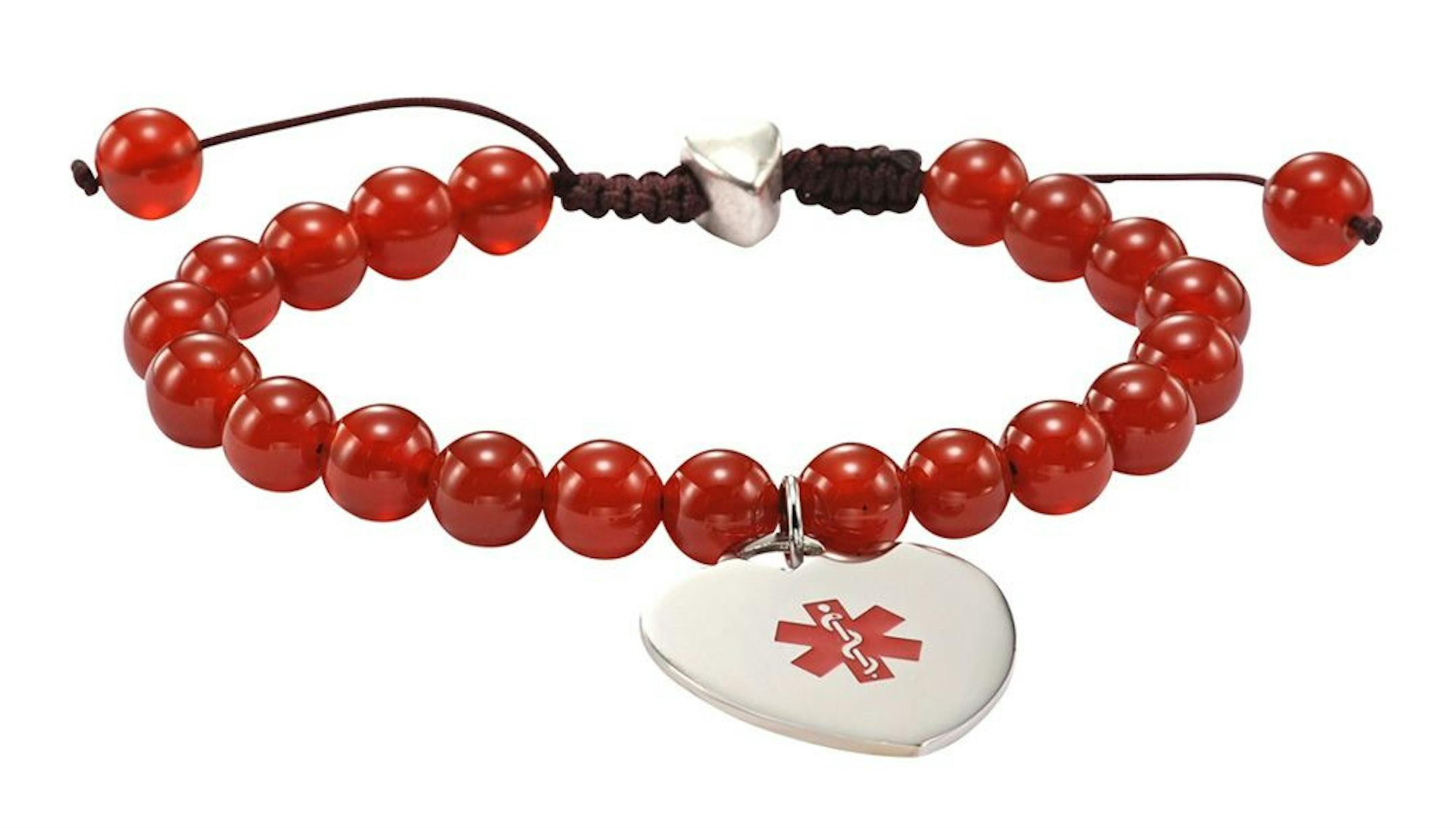
After Eileen Smith's Type 2 diabetes was diagnosed four years ago, she went in search of a medical ID bracelet to wear in case she suffered a hypoglycemic episode away from home.
She bought a standard bracelet at a drugstore, but it broke. Upscale medical jewelry made of gold was too expensive. So Smith, of Kansas City, Mo., was excited to discover Lauren's Hope, which sells affordable medical costume jewelry that is, importantly, pretty.
"The people who wear [medical jewelry] are often people who don't have very pretty lives," said Smith, 56.
Her not-so-pretty routines include taking insulin shots four times daily. Her medical alert bracelet, which has red garnet stones and gold beads, helps boost her morale, she said.
To combat the stigma that dissuades some people from wearing lifesaving medical jewelry, several companies sell stylish bracelets, necklaces and watches that look like regular jewelry but for a symbol -- usually the Star of Life or Rod of Asclepius -- alerting health professionals to a medical condition.
Jeweler Rogers and Hollands recently announced that its retail stores (including three in the Twin Cities) will sell medical ID bracelets from Abbe Sennett Design. They use Swarovski crystals and other semiprecious gems to jazz up customized plates describing a penicillin allergy or heart condition (www.medicalidfashions .com).
Some jewelry does more than that. The nonprofit MedicAlert Foundation, for example, has a phone number and code engraved on its jewelry so responders can call to learn more about medications, emergency contacts and other details.
The more complex a person's condition, the more important it is for the jewelry to link to a support system where responders can access additional information, said Dr. Alfred Sacchetti, chief of emergency services at Our Lady of Lourdes Medical Center in Camden, N.J.


