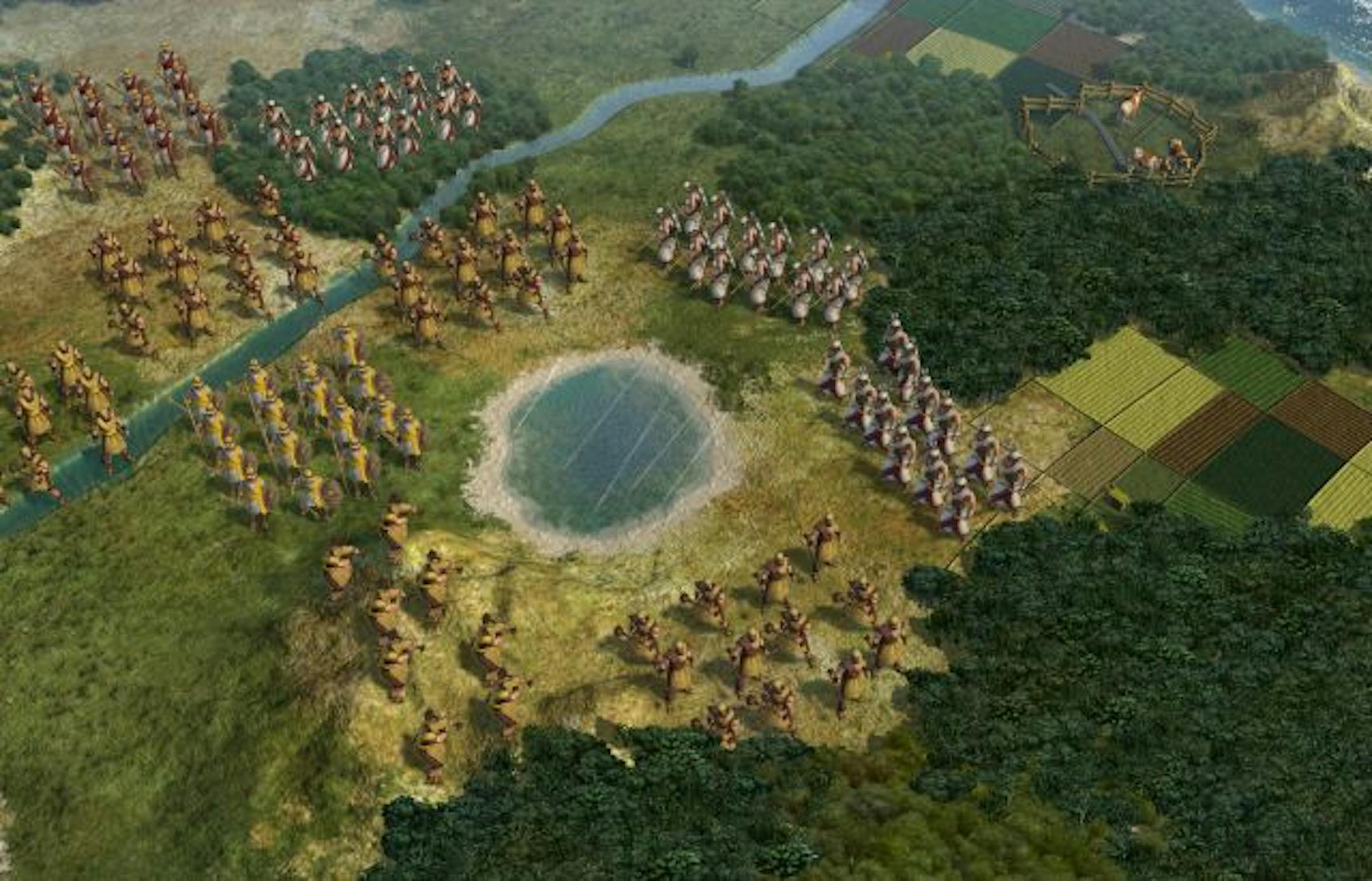
Comparing Sid Meier's "Civilization V" with contemporary strategy games is entirely pointless.
Imagine if "Modern Warfare" had come out alongside "Quake II." There is simply nothing comparable out there, not least because the strategy genre has become the province of indie developers and niche publishers.
"Civilization V" is a towering, AAA release with millions of dollars' worth of polish in an era where questionably localized Russian titles are all that strategy gamers have to tide them over for months at a time. It's also a delightfully fresh take on a formula that has been slowly iterated on for more than two decades.
The heart of the "Civilization" fantasy is unchanged. You still manage cities, developing them from rude collections of mud huts into gleaming modern metropolises. Vast armies and armadas are again at your command, waging global war for conquest, defense or resources with everything from spears to nukes. The land must still be worked, the primordial wilderness tamed through your people's sweat and blood.
Your ultimate goal is yours to choose: Diplomatically unite the people of the world under your benign leadership, launch a viable colony ship into outer space, conquer the globe through force of arms or create a glorious utopia through enlightened civility.
The game's genius lies in the way that developer Firaxis has aggressively chopped the number of decisions that a player has to make during the course of a game while taking away almost none of the meaningful ones.
A perfect example is the new concept of "embarking" units and removal of transport ships. In previous games, you'd build separate transport units, load your armies onto them and send them across the ocean to land on foreign shores. As your military got larger, managing this became extremely cumbersome. The concept of land units being vulnerable and slow while embarked -- the entire point of transport units -- is perfectly replicated by "Civilization V's" system of allowing armies to move across water on their own, albeit slowly and defenselessly.
Firaxis applied this sort of critical examination to legacy systems across the board. Some remained nearly unchanged, such as constructing improvements like farms and windmills on your land. Others were scrapped entirely, like "Civilization IV's" religion system. Many others survived in altered forms.