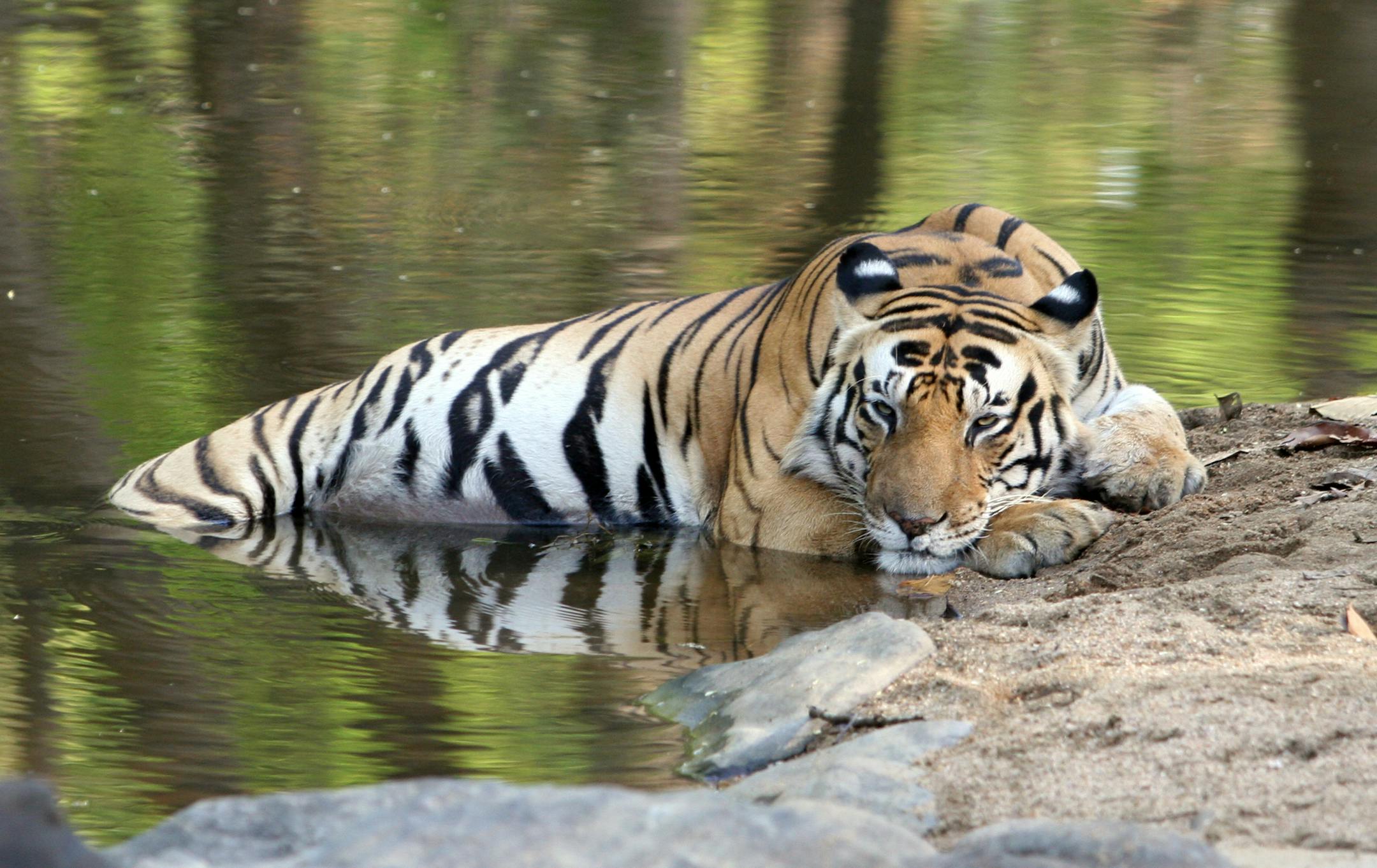
On a chilly and misty February morning in Bandhavgarh Tiger Preserve, guide Hatsy Rathore pulled our open-air safari vehicle to the side of the road, cut the motor and signaled for silence. I sat motionless, ears filtering bird song and peacock calls, listening for the telltale danger bark of a monkey or chital deer. Moments passed. Bundled in blankets, we strained to decipher movement through dusty, dense foliage.
Several chattering monkeys dropped from the trees and stared at us — safari in reverse.
"Monkey on the ground, tiger not around," sighed Hatsy as he restarted the engine.
Bandhavgarh Tiger Preserve, in the central Indian state of Madhya Pradesh, is believed to be home to more than 50 Bengal tigers, some of the last survivors of a once seemingly unlimited population in India. Over the past decades, human encroachment and illegal poaching have decimated the population of these magnificent cats, rendering India's national animal an endangered species. Now likely fewer than 1,900 remain in the entire country, according to reports by National Geographic, the World Wildlife Fund and the Indian government itself.
I'd come with my husband, David, our daughter, her Indian fiancé and members of his family to this remote part of India with two missions. To meet our new extended family, far from India's chaotic cities. And to spy the elusive, powerful Bengal cat; this would prove the more difficult task.
A handful of safari vehicles jounced over the rough track and pulled up beside us. The drivers consulted one another in Hindi. Where were they most likely to find tigers for their guests? I surveyed the other would-be tiger spotters: GoreTex-clad westerners hoisting cameras with giant lenses and Indian families bundled in jackets and woolen scarves staring curiously at us.
Safari drivers seem to work in a fluid state of cooperation and competition, each seeking tiger-spotting success for their clients. They verbally sparred, waiting for the next to make a move. Finally Hatsy convinced the drivers to head one way, then turned sharply in the opposite direction and gunned the engine. Hot water bottles, supplied in the predawn chill by our thoughtful hosts, sloshed against our bellies as Hatsy maneuvered over roads consisting of rocks and ruts.
Until 2012, it was possible to spot tigers from the back of an elephant. The park maintained five elephant/naturalist teams, capable of traveling off-track deeper into the jungle. Hatsy pulled up to the elephant stables, where just two dusty gray beasts remain under the care of park rangers. We arrived to see them lumber heavily into the woods on patrol, and I wished that we could be aboard.