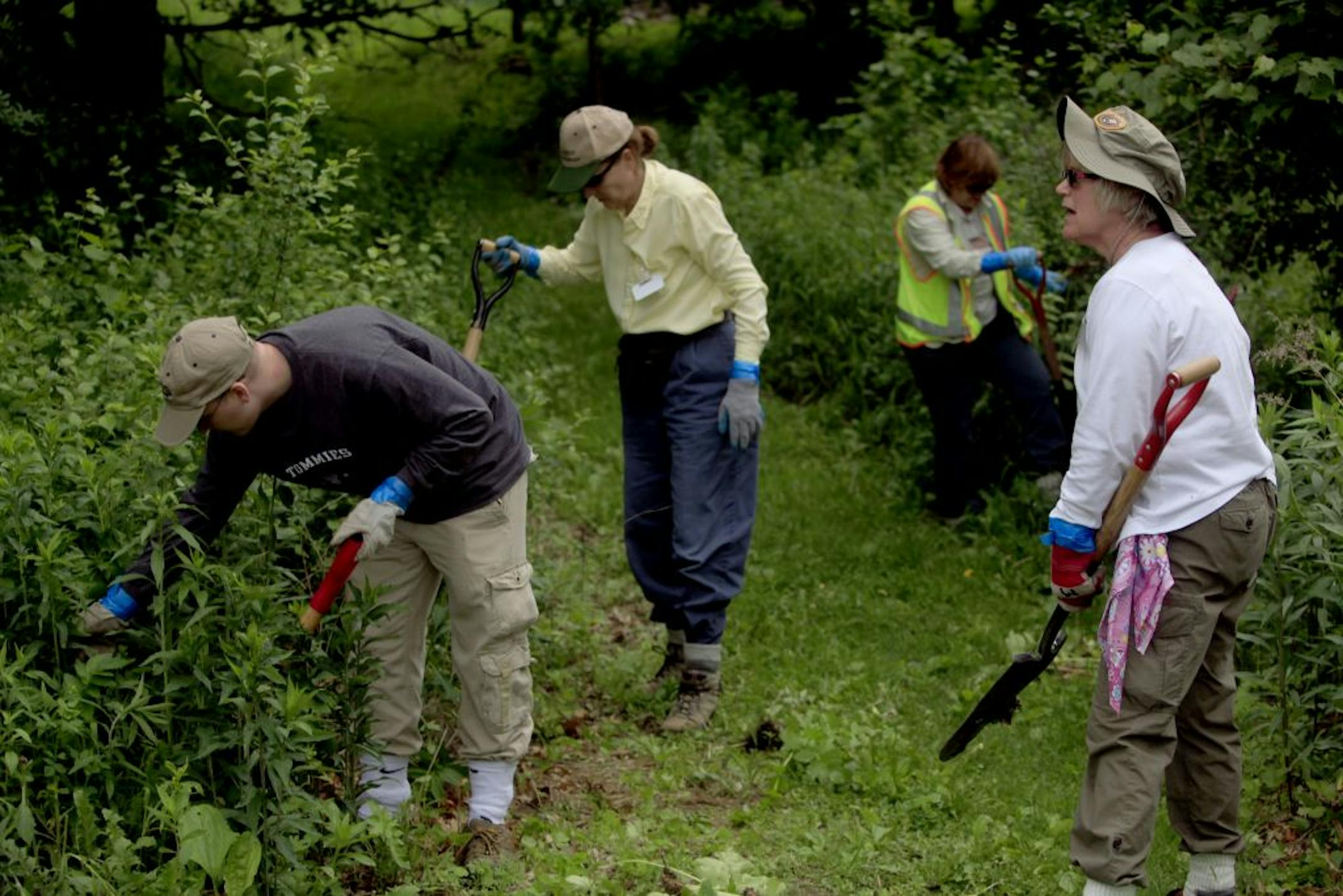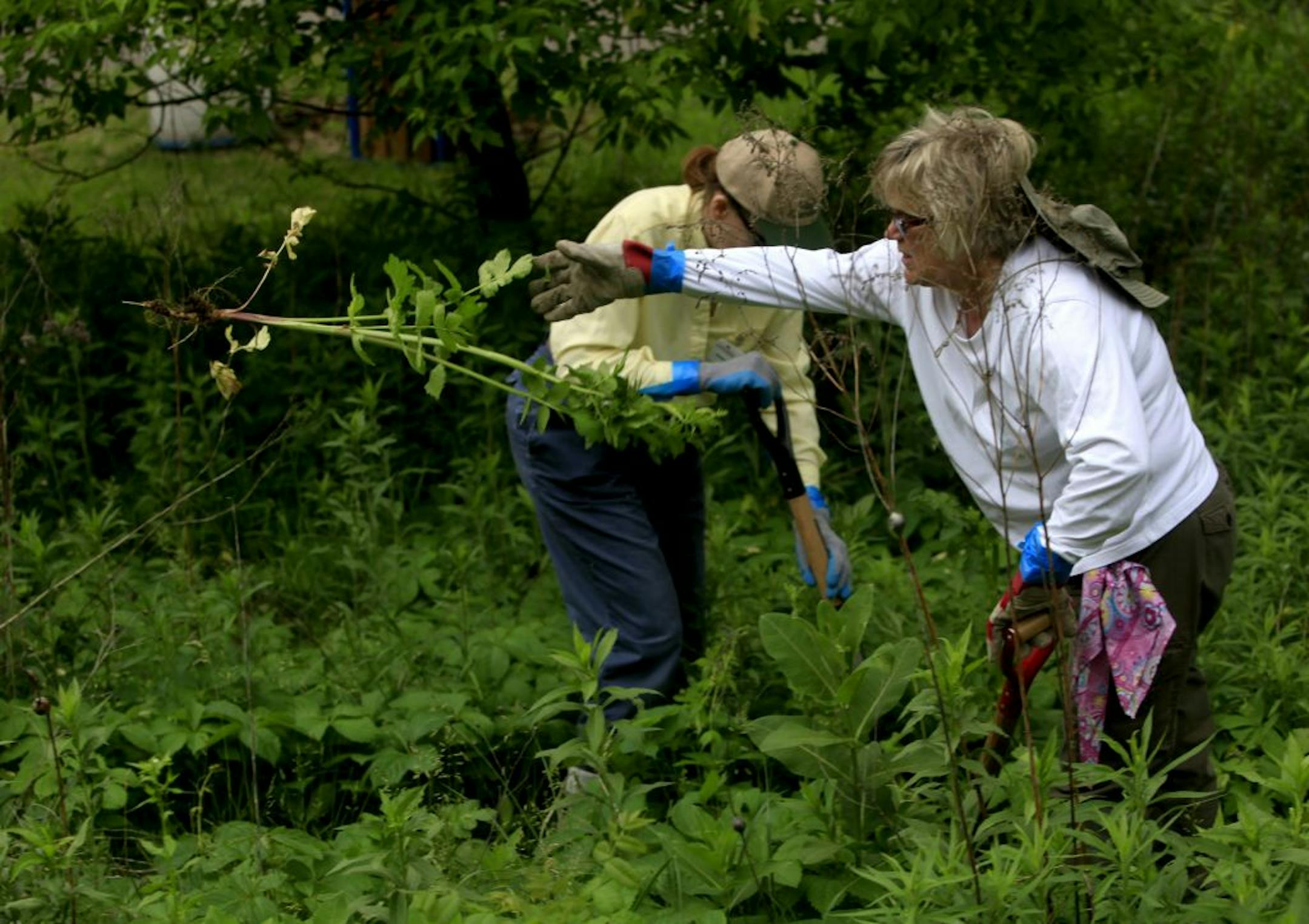
It was a warm, sunny afternoon -- T-shirt and shorts weather. But the volunteers at a Maplewood nature preserve were girded for battle: long pants tucked into their socks, long sleeves with wrists wrapped with tape to protect the sliver of skin between glove and cuff.
Armed with shovels, they set off in pursuit of a noxious foe: wild parsnip, an invasive plant with sap so potent it can cause third-degree burns.
"I have a scar from last year," said leader Carole Gernes, pulling back her glove to reveal a fading reddish mark on her hand. "Watch out, Jan! There's one right by your head," she cautioned, as volunteer Jan Willkom backed dangerously close to a tall plant crowned with an innocent-looking froth of yellow flowers.
The hardy crew at the Applewood Neighborhood Preserve are members of the Invasive Plant Patrol, a pilot program of about 30 trained volunteers who prowl parks and open spaces in Maplewood and a wetland in Ramsey County. Gernes, a naturalist at Maplewood Nature Center and coordinator of the Ramsey County Cooperative Weed Management Area, recruits the volunteers, trains them in how to identify and eradicate new invasive species, sends them e-mail alerts and collects the data they report back to her.
They love plants enough to destroy them -- at least the aggressive ones that threaten to crowd out other species.
"It isn't just aesthetics," said Mary Beth Pottratz, a master naturalist from Minnetonka. "There's a critical need for biodiversity. If we lose the native plants, we lose the insects that used to be supported by native plants, and then we lose the birds and frogs that were supported by the insects."
Growing concern
Invasive plants have been around for a long, long time, but their spread is increasing, according to Gernes.