

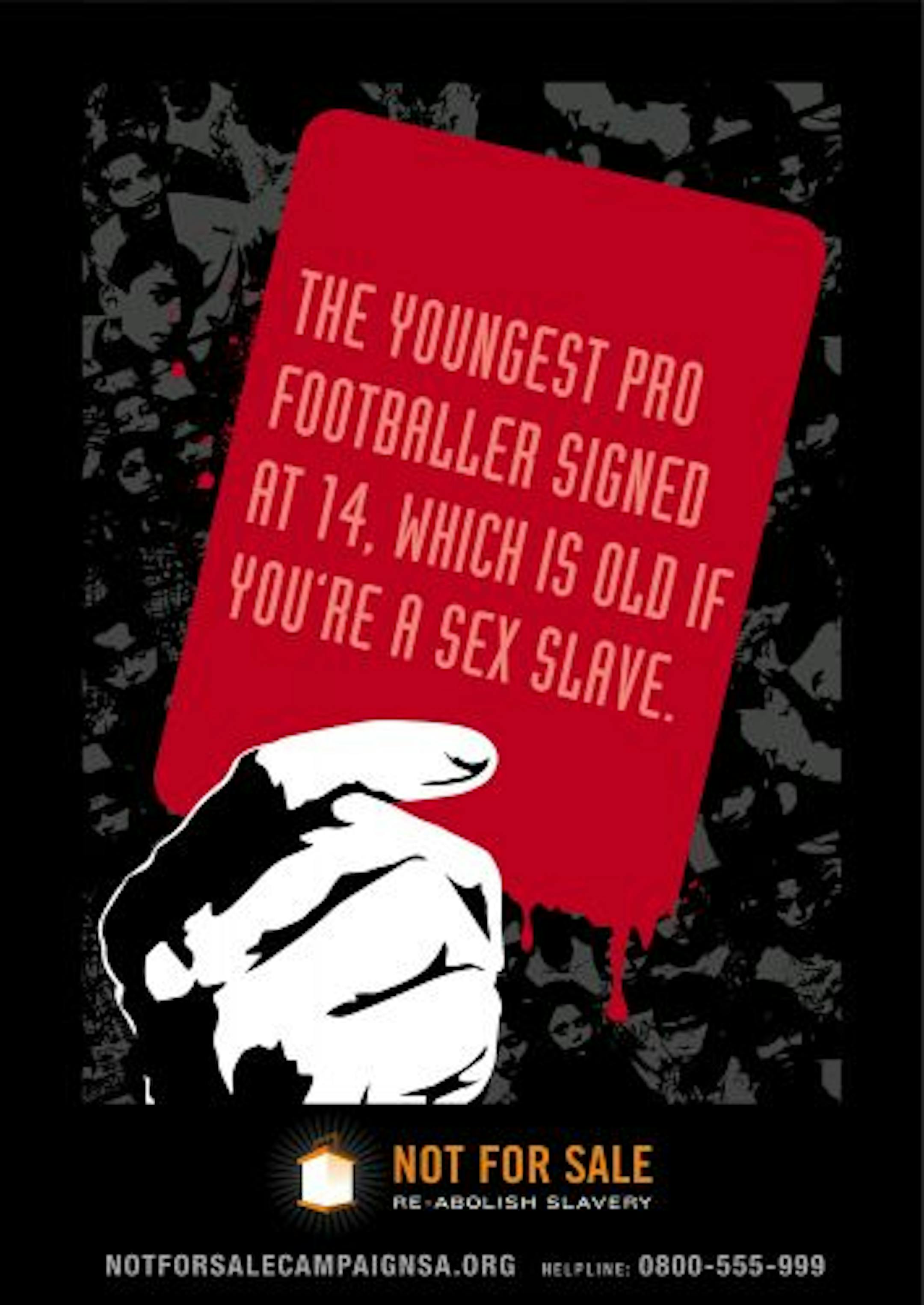
Vuvuzelas, the loud trumpets that soccer fans are bleating with abandon, aren't the only items making noise at the 2010 World Cup in South Africa. More than 10,000 two-sided "red cards" are being handed out to fans to publicize a reality that's far from fun and games: human trafficking.
The cards, as well as fliers, posters and a large billboard in Capetown, were created pro-bono by Minneapolis-based Martin/Williams agency on behalf of a growing international nonprofit called Not For Sale (www.notforsale campaign.org).
In soccer, a red card signals the ejection of a player who has seriously violated the rules. In life, the facts about modern human-trafficking are sobering: The U.S. Department of Health and Human Services reports more than 30 million slaves worldwide; 80 percent are female. Half are children.
While most are forced into the sex trade, many others labor under lock and key, everywhere from China to Latin American to ... Minnesota?
Yes, Minnesota. Danette Buskovick, a statistician with the Minnesota Department of Public Safety, knows of at least 37 adults and two children who have been victims of labor trafficking in Minnesota restaurants, nail salons, hotels and homes.
Another man, from Guatemala, was promised a green card and an opportunity to become a legal citizen. When he arrived, he was instead "sold for $800" to a dairy farmer in southern Minnesota.
"I'm quite concerned that we don't have a good handle on this in our state," Buskovick said, adding that the issue is being addressed by a statewide human trafficking task force. "We know it's happening, but it's a very hidden problem."
Minnesota is also a leader in the fight to abolish modern slavery. Not For Sale co-founder, Mark Wexler, 29, grew up in the Twin Cities. While a student at the University of San Francisco, he met David Batstone, author of "Not for Sale: The Return of the Global Slave Trade and How We Can Fight It."


