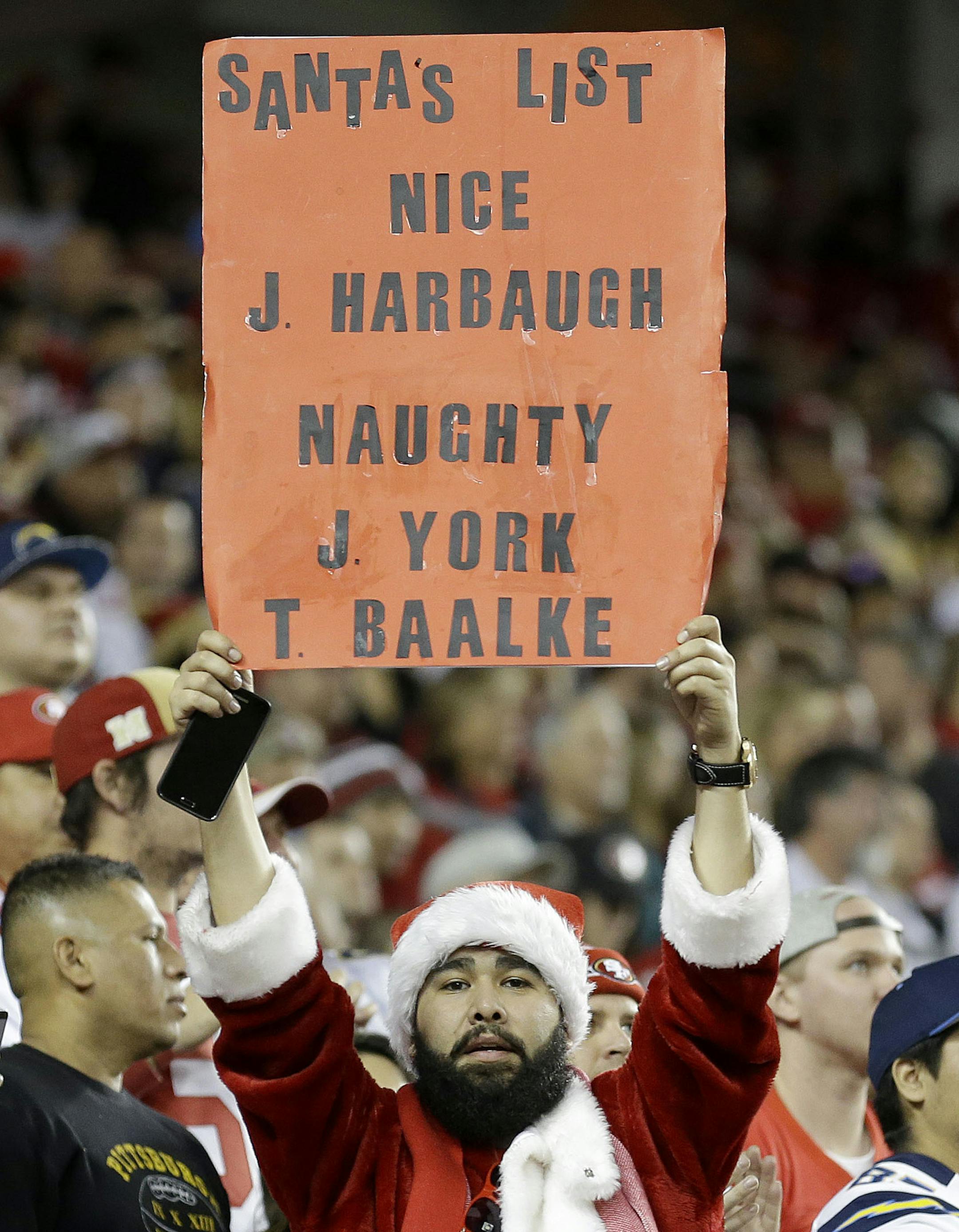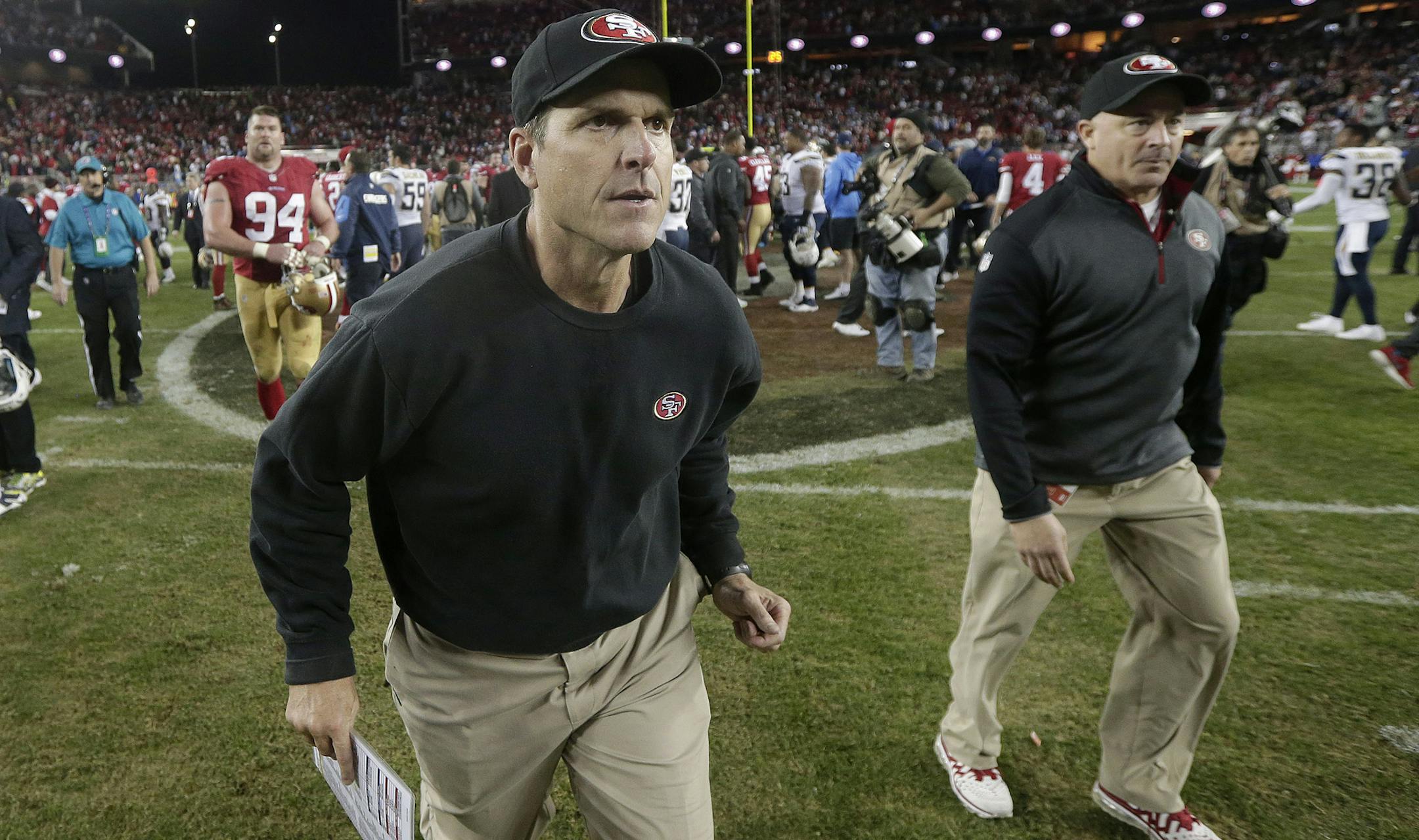
SANTA CLARA, CALIF. – The San Francisco 49ers are expected to part ways with Jim Harbaugh, their headstrong but highly successful coach, soon after Sunday's season finale. The Oakland Raiders, who once traded away a charismatic, ambitious young coach, are among the candidates to be on the receiving end this time — if Harbaugh chooses to stay in the NFL.
How do you trade a coach? It's more complicated than trading a player, which explains why it has happened only a handful of times in the modern era, albeit involving some of the biggest names in coaching — Gruden, Bill Belichick, Bill Parcells and Dick Vermeil, to name a few.
It's such tricky process that the 49ers might have to fire Harbaugh if they can't swing a deal — or if he refuses to play along. (He would have to sign off on any deal and might not be in the mood to make things easy on his bosses.)
Harbaugh won like crazy, especially over his first three seasons when the team went 36-11-1 and reached three NFC title games and a Super Bowl.
But along the way he has clashed with 49ers CEO Jed York and General Manager Trent Baalke, who have apparently concluded Harbaugh-induced headaches now outweigh the victories.
Harbaugh has one season remaining on a five-year deal that pays him $5 million per year. But, strange as it sounds for a coach getting pushed out of town, he's also in position to earn a significant raise.
This is where it gets complicated. Unlike most NFL players, head coaches under contract have veto power when it comes to their trade destination. It's essentially a two-step process: 1. The two teams need to agree on compensation. 2. The new team would need to work out a contract with the coach (whose current contract doesn't generally get shipped over).
Both parts of the equation are high stakes. Harbaugh will be operating with substantial contract leverage because Michigan has reportedly offered the former Wolverines quarterback a six-year deal in the $48 million range. There is no protocol for compensation between an NFL team and a college team.