

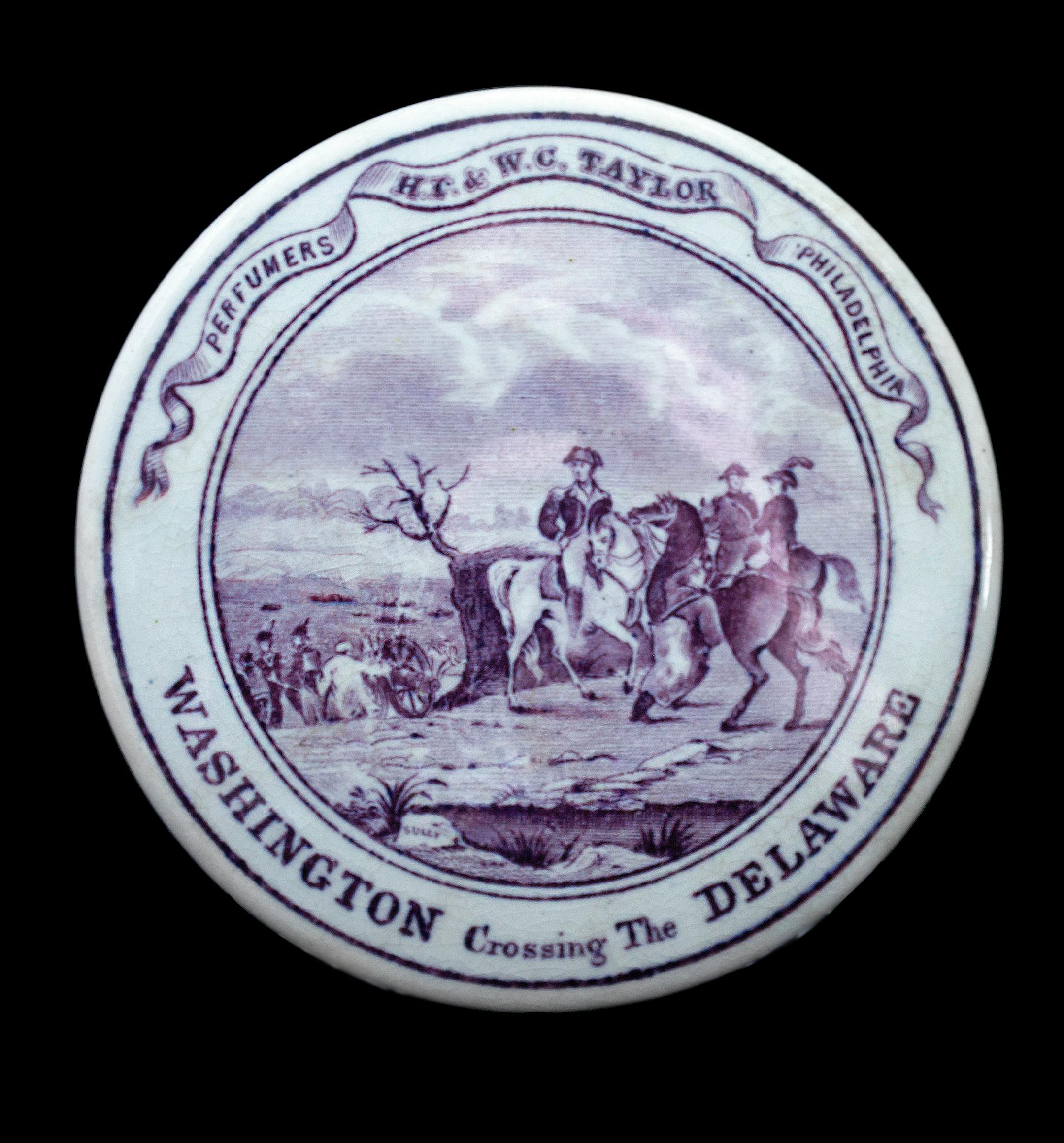
This is not a plate. It is the lid to a ceramic pot of the type that held bear grease, shrimp paste, cold cream, shaving cream, toothpaste, potted meat, beef marrow, salves and many other cosmetics and foods that would have fit into the small, 3- to 4-inch-diameter pots.
The pots were used in England and later, in the United States, from about 1840 to 1910. The pot lids were most often decorated with black and white transfer patterns advertising the contents of the pot. Collectors today pay premium prices for lids with multiple colors.
Of course, the matching container bases also are wanted. Prices at a recent auction ranged from $144 for a Jules Hauel Saponaceous Shaving Compound lid to $4,500 for a different brand of shaving compound, Wright's Gold Medal, with a lid picturing a man shaving.
Some pot lids were made with patriotic decorations or ads for a store with no mention of contents.
There are about 40 times more English than American pot lid designs, so prices for American examples are higher.
A lid with a purple transfer design labeled "Washington Crossing the Delaware" and the name of a Philadelphia perfumer sold for $3,218.
Sewing machine
Q: I have a White Rotary sewing machine in a Martha Washington style cabinet. It is an electric model, and I am trying to establish an approximate date of manufacture. I am also wondering if there are any old manuals available.
A: In 1858, at age 22, Thomas H. White invented a very small single-thread sewing machine. He obtained a patent, started White Manufacturing Co. in Templeton, Mass., and began making the New England Sewing Machine. It sold for $10. In 1866, he moved the company to Cleveland. The name was changed to White Sewing Machine Co. in 1876 and more improved sewing machines were developed. The popular White Family Rotary model was introduced in the 1890s and was made in updated versions until the 1950s. From the mid-1920s through the 1950s, White was the main supplier of sewing machines to Sears Roebuck & Co. The company merged with Husqvarna Viking in the 1960s.


