

Remember that queasy feeling you got as a kid, traveling too far in the back seat of the car, right before you begged Mom to open the door so you could puke?
Brace yourself.
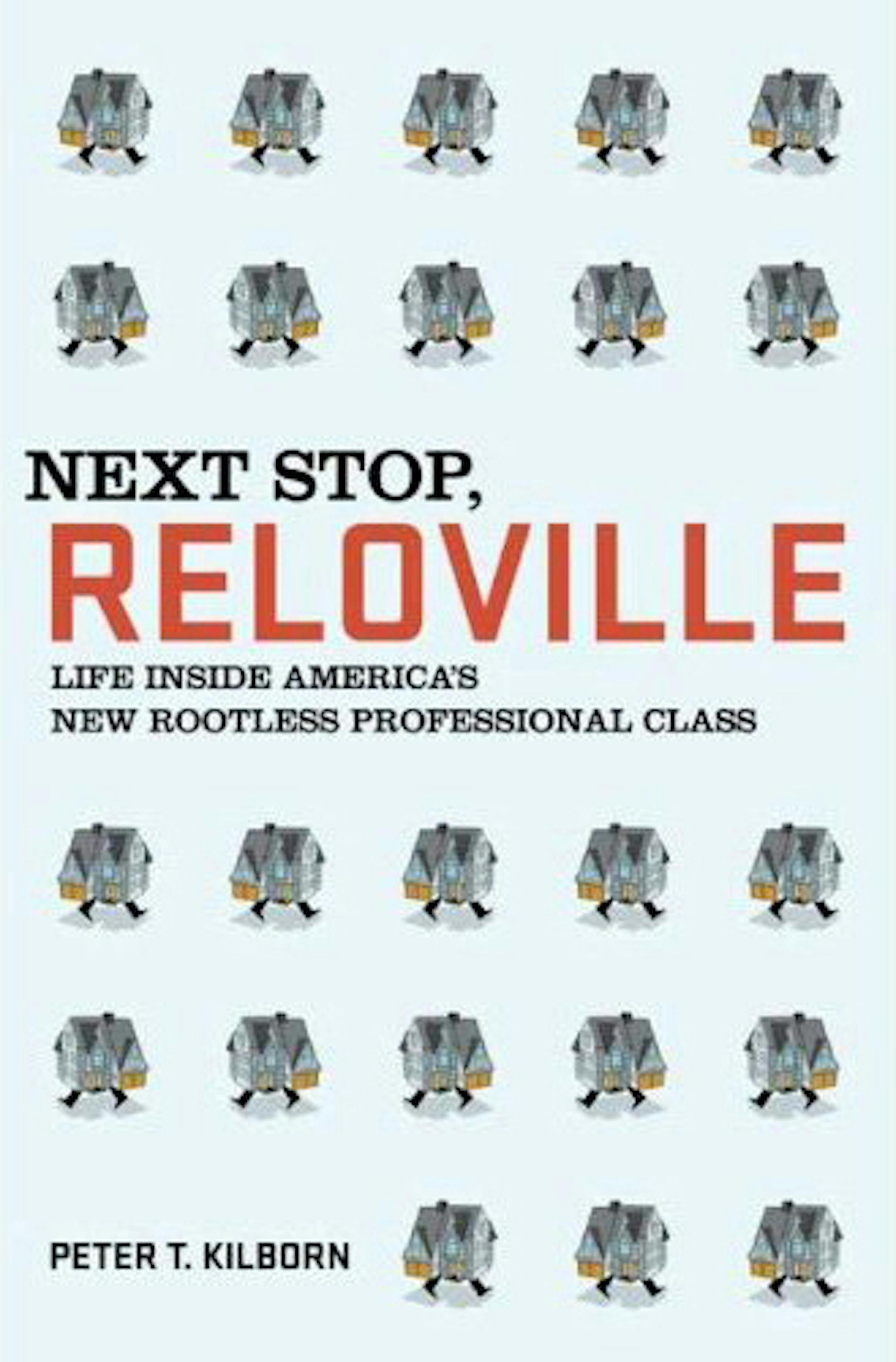
"Next Stop, Reloville" is an extraordinary account of people who can't stay put, who sacrifice community and friendship and stability and roots for the next promotion, the next raise, the next move, which they believe takes them one step closer to the top.
These (mostly) men and their "trailer wives" (who follow complacently behind) and their sullen children (who may need tutors in the new place) call themselves "Relos" (REE-los) and often cluster in what the author calls Relovilles. These are suburban boomtowns, mostly in the South. (He mentions only one north of Chicago -- the St. Paul suburb of Woodbury -- and he doesn't pay it a visit, spending most of his time in Alpharetta, Ga., and Plano, Texas.) All are new towns, largely without centers, history or tradition, without old-timers, where everybody is from somewhere else, just arriving or just leaving.
You will meet many Relos. They say heart-wrenching things about their lives. And the author, a former New York Times reporter who was shuffled around a bit, too, says harshly honest things about them, like this:
"Wherever they go, they don't belong. ... Relos don't know where their funerals will be or who might come." And "They can tell you the way to the airport but not to City Hall."
Of one Reloville subdivision he writes: "Bermuda grass lawns as trim as a diamond salesman's fingernail, with tidy boxwoods and azaleas propped on sculpted pillows of pine straw mulch, surround stiff haughty houses aligned like formations of Nazi troops."
Yet Kilborn has a deep empathy for these corporate gypsies. At their core, he says, "is a faith in open horizons and a willingness to risk losing ground to gain ground. ... They are an affluent, hard-striving class. They inflate the American Dream and put it on wheels." But in pursuit of power and influence, they lose the simple staples that generations of human beings have leaned on for meaning.


