

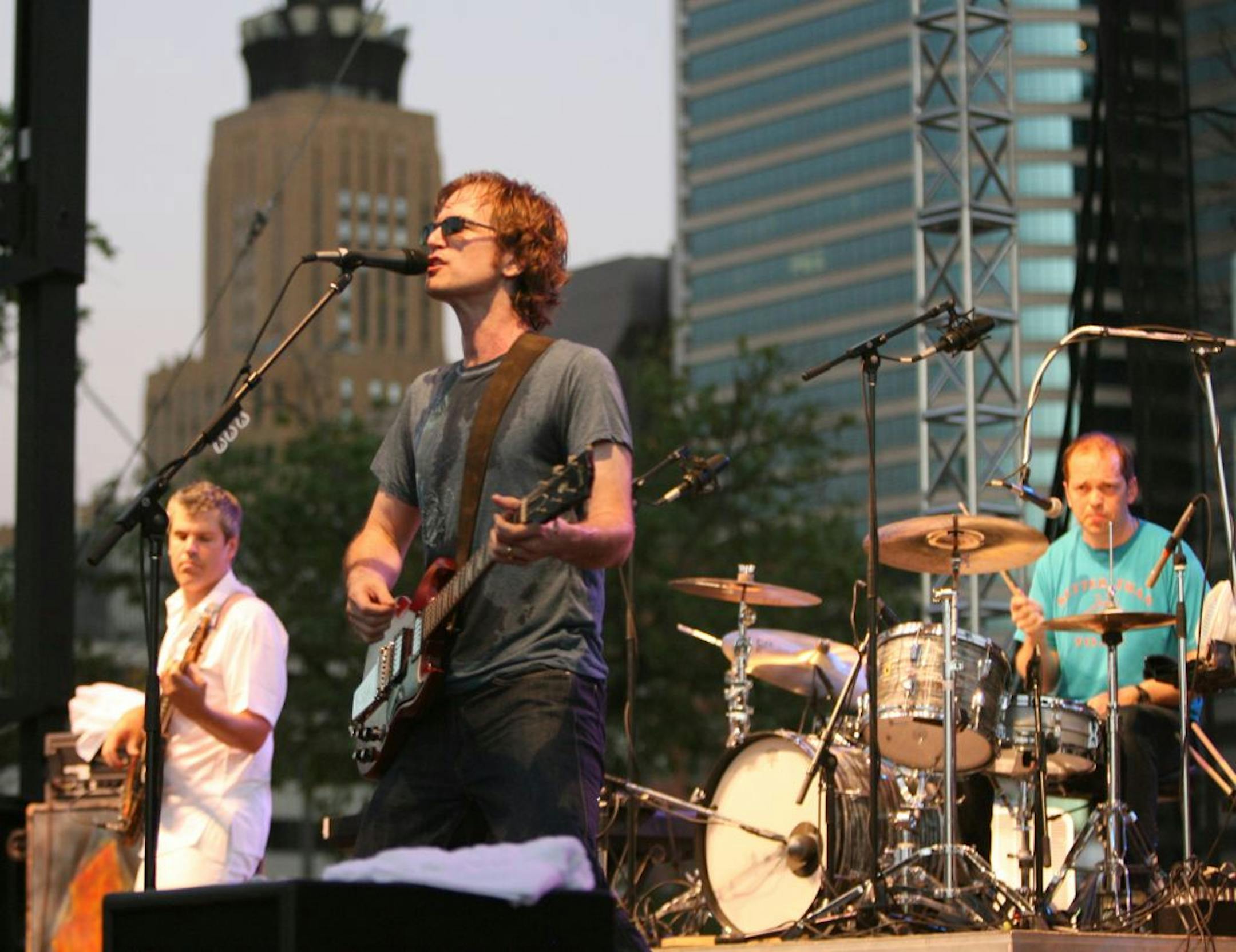
Friday's MN Music On-A-Stick concert at the State Fair -- the first all-Minnesotan grandstand show in 26 years -- features two distinct eras of local musicians: the '80s/'90s players in Semisonic and the Jayhawks, and the more recent stars Dessa, Jeremy Messersmith and Lucy Michelle & the Velvet Lapelles, all of whom started in the mid-'00s.
Since people often compare today's Twin Cities music scene with the heyday of the '80s and early '90s, we thought this would be a good chance to compare the state of things then and now.
RECORD LABELS
John Munson, Semisonic: "There was a certain hipness factor about being on a label. But you needed them, no question, because no band ever had the money to pay for their own LP manufacturing. That was part of the hustle then."
Dessa: "At first, we [Dessa's Doomtree crew] always thought the next step to success was getting a record contract, even though we didn't know what exactly a label would do for us. I'm not going to lie and say we've had people pounding on our door, but if they were, it would take a hell of a lot to convince us to sign now."
RECORDING
Marc Perlman, the Jayhawks: "We spent about three months working in the studio on [1992's] 'Hollywood Town Hall,' and it was painstaking. But like a lot of bands when they start out, we didn't really know what we were doing in the studio."
Jeremy Messersmith: "I'd love to spend a month in a real studio. That would be one benefit of being with a record label. They'd pay for that. I usually just pay the [cheaper] weekend rate on a studio and work on the parts where everyone in the band needs to be playing together. Then I'll work on everything else at home. A decent home-studio setup only costs about $5,000."
TOURING
Perlman: "We started like every other band: You buy a van, sleep on floors and finance it with your day jobs. Even after we signed to Def Jam and were playing to more people, we were still logging so many miles, and it was such a grind."
Dessa: "Doomtree can do it in a 15-passenger van and make it work. We overcrowd the hotel rooms to save money. I always have to sleep with [DJ/producer] Lazerbeak. A lot of it depends on what goes down at the merch table.


