

The setting is a library — a series of sturdy stacks and a central bookcase that rises as a cathedral over the playing space. Instantly, Joe Stanley's clean and lovely design tells us how Walking Shadow Theatre Company intends to tell the sprawling adventure of "The Three Musketeers."
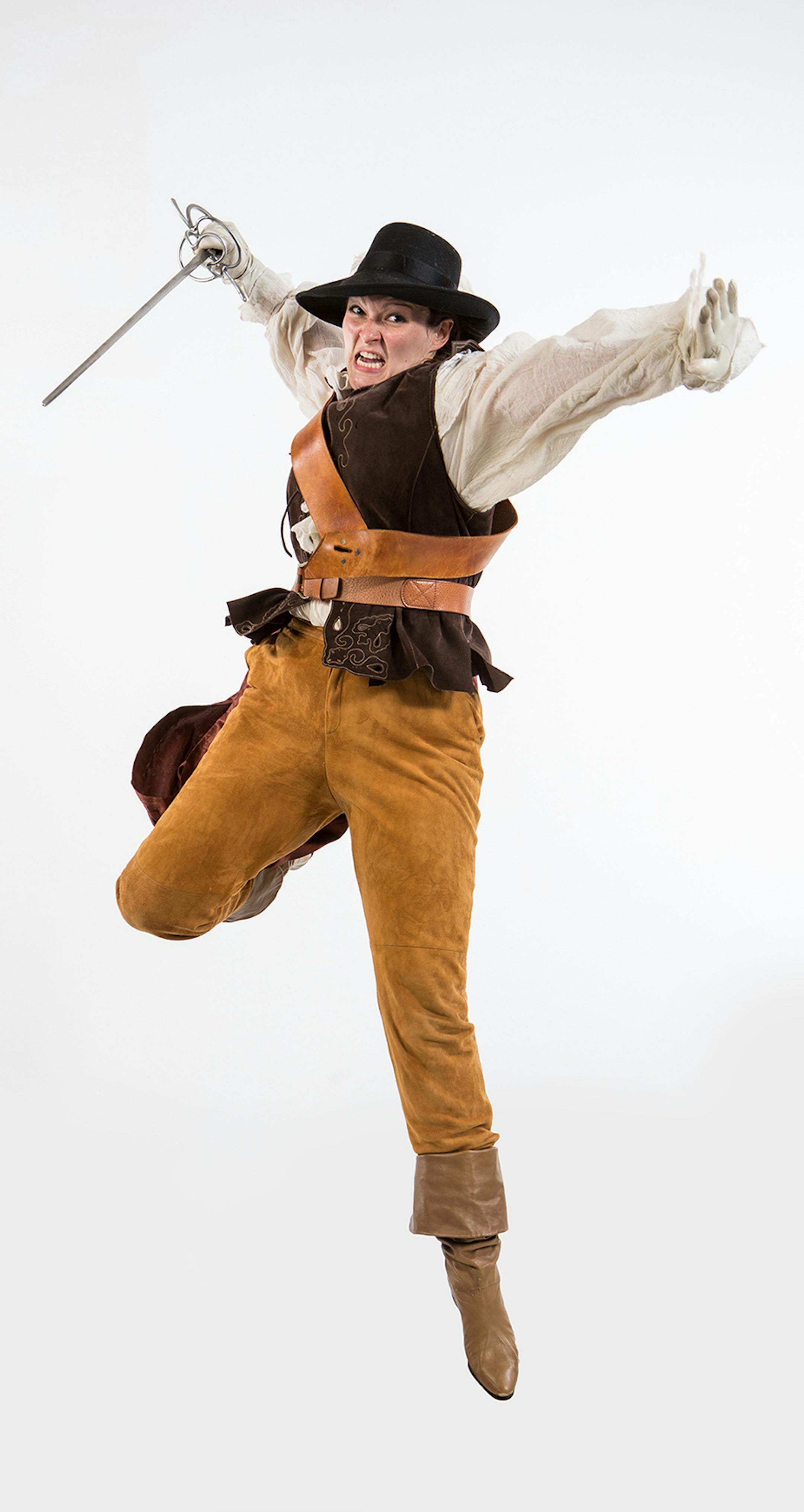
Playwright John Heimbuch's adaptation, which opened Saturday at the Guthrie Studio, is an account of Alexandre Dumas's 17th-century French heroes — stitched together by narration and played out by characters who sneak about the many levels of Stanley's set. Staircases become ships gliding across the English Channel, for example.
Heimbuch's gambit in wrestling a 600-page novel into the theater has a certain wisdom. How do you express such a sprawling story? Cinema has the tools for all of this in quite literal representations. Opera allows for grand emotion to soar and sweat through a well-wrought aria.
Straight theater, on the other hand? Even with the accoutrement of sound work (excellent, by composer Michael Croswell), dynamic lighting schemes (Karin Olson) and period costumes by E. Amy Hill, Walking Shadow's "Musketeers" does not break the chains of Dumas's plot machinations, and Heimbuch's narrative too often has us listening rather than watching.
The story is d'Artagnan's. Actor Bryan Porter lacks the flair and charisma necessary to float a tale of a young Gascogne who wants to join the legendary Musketeers but finds himself caught in intrigues that involve powerful villains.
As the Musketeer Athos, Shad Cooper has a strong command of nobility and no-nonsense decency. He clearly is the leader of the pack. Nate Cheeseman as Porthos and Ross Destiche as Aramis are handsome, but leave no lasting impression.
Tony Brown is slippery and conniving as Cardinal Richelieu, the puppet master of Casey Hoekstra's simpering king. Aeysha Kinnunen confidently delves into the delicious deceit of Milady de Winter — who stirs the play's chicanery — and Dan Hopman shuttles between two distinctly different roles deftly and humorously.
Heimbuch's script and Amy Rummenie's direction cast a modern wit on the play — winking ironies and sly asides that add humor and levity. They also serve, however, to take us out of the story on occasion.


