
The world in 2018, by the Economist

December 25, 2018 at 5:40AM
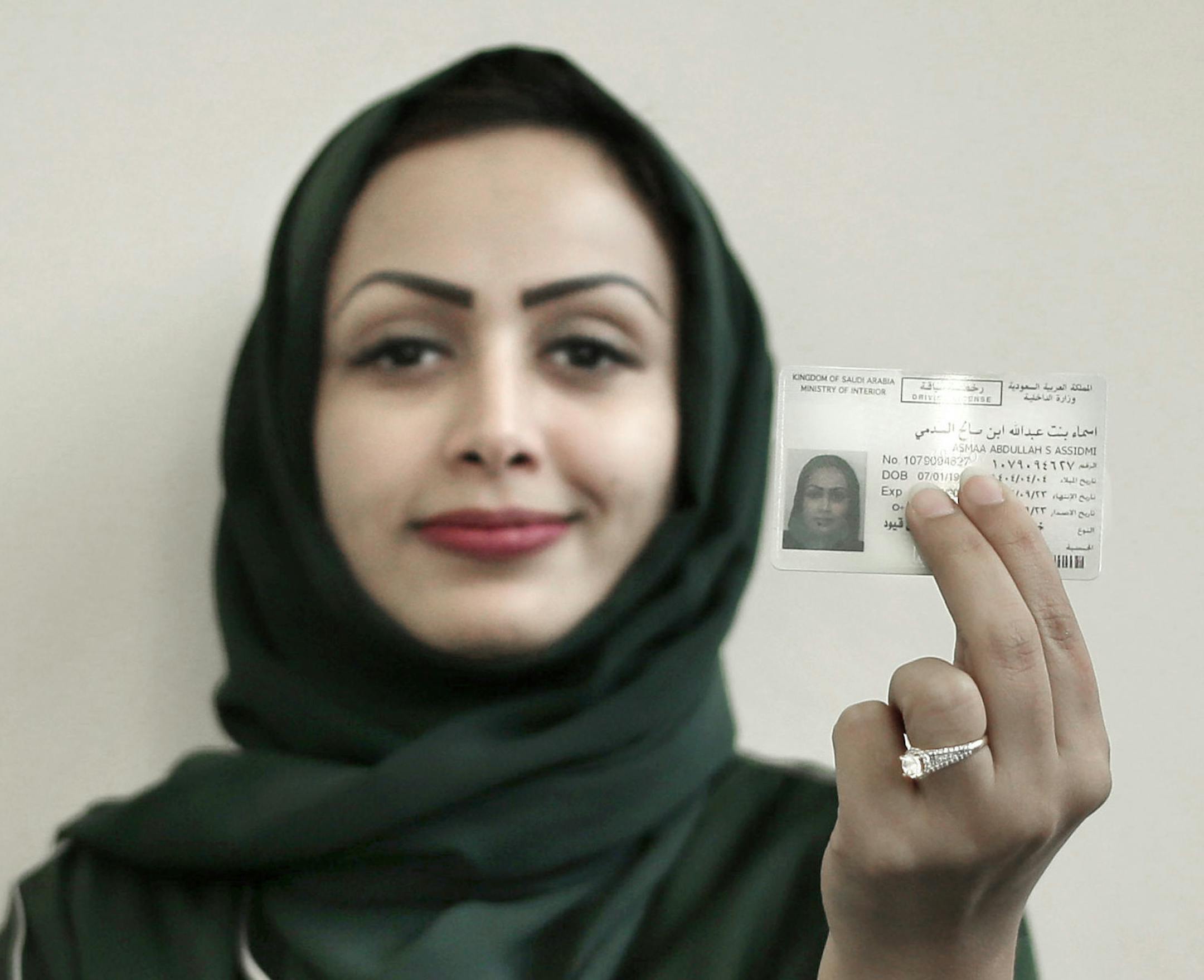
FILE - In this June 23, 2018 file photo, 34-year old Asmaa al-Assdmi poses for a photograph holding her new car license at the Saudi Driving School inside Princess Nora University in Riyadh, Saudi Arabia. Saudi women are on the roads and steering their way through busy city streets freely for the first time after years of risking arrest if they dared to get behind the wheel. (AP Photo/Nariman El-Mofty, File) ORG XMIT: NM214
In June, 34-year old Asmaa al-Assdmi posed for a photograph holding her new driver’s license in Riyadh. (The Minnesota Star Tribune)
The world in 2018, by the Economist

World's two biggest economies duke it out

The U.S. and China started a trade war, the world's worst such dispute in decades. America imposed tariffs on $250 billion worth of Chinese products; China responded with tariffs of its own. America also slapped duties on steel imports from Europe, Canada, Mexico and elsewhere, infuriating its allies. Donald Trump intervened on national-security grounds to scupper a $117 billion bid from Broadcom, a chipmaker with ties to Southeast Asia, for Qualcomm. It would have been the biggest-ever tech merger. There was one de-escalation: The U.S., Canada and Mexico struck a deal to update NAFTA.

In another dysfunctional year at the White House, Rex Tillerson was sacked as secretary of state, as was Jeff Sessions as attorney general, both after the president had publicly undermined them. Jim Mattis quit as secretary of defense. The investigation by Robert Mueller, the special counsel, into Russian influence in U.S. elections rumbled on, laying charges against some of Trump's former aides. A voter backlash against Trump propelled the Democrats to win the House of Representatives in the midterms, though the Republicans increased their majority in the Senate.

The messy spectacle of Brett Kavanaugh's confirmation hearings to the Supreme Court polarized U.S. politics even further.

After a year of tortuous Brexit negotiations, Theresa May and the European Commission agreed on a deal for Britain's withdrawal from the European Union, but Britain's Parliament has not approved the agreement.

Facebook came under intense pressure to rein in fake news and protect user data. The revelation that Cambridge Analytica, a political consultancy that had worked on Donald Trump's campaign in 2016, had obtained information on 87 million Facebook users through a third-party app shook the company to its core.

A large number of prominent chief executives left their jobs or announced their departures. The list includes Vittorio Colao at Vodafone, Indra Nooyi at PepsiCo, Paul Polman at Unilever, Martin Sorrell at WPP and Dieter Zetsche at Daimler. John Flannery was ousted at General Electric, as was John Cryan at Deutsche Bank. Carlos Ghosn was dismissed from Nissan for alleged misdeeds. The carmaking industry lost another giant with the death of Sergio Marchionne, Fiat Chrysler's boss.

Elon Musk stood down as Tesla's chairman, but remains chief executive, after tweeting that he intended to take the company private, a move that fell foul of regulators. The electric-car maker at last hit its production targets.

The world watched as 12 boys and their soccer coach trapped in a flooded cave in Thailand were rescued in a complex operation involving thousands of people.

In Syria, the regime of Bashar Assad used chemical weapons again, killing scores of people in Douma, the last rebel stronghold in Eastern Ghouta.

Saudi Arabia lifted a ban on female drivers and allowed cinemas to open for the first time in decades. But these small liberalizing steps were overshadowed by the arbitrary locking up of feminists, plutocrats and many others. Jamal Khashoggi, a journalist, was killed and dismembered by Saudi operatives in a consulate in Istanbul.

Xi Jinping confirmed his grip on power in China by promoting more of his allies to top positions.

Brazil and Mexico elected populist leaders. In the year's other big elections, Colombia took a conservative turn when it elected Iván Duque as president. With the main opposition candidate barred from running, Vladimir Putin was easily re-elected as Russia's president. Pakistan received a new prime minister in Imran Khan. Malaysians ousted the increasingly corrupt party that had ruled their country since independence in 1957. And Zimbabwe's election was won by ZANU-PF, sans Robert Mugabe.

The crisis of socialist mismanagement in Venezuela deepened, speeding up a mass exodus of its hungry and disenfranchised people.

The war in Yemen ground on. The U.N. warned that Yemen was on the brink of a famine, with up to 14 million people at risk of starvation.

A former pupil went on a rampage at his high school in Florida on St. Valentine's Day, killing 17 people. Eleven Jews were killed by a gunman at a synagogue in Pittsburgh, America's worst-ever anti-Semitic attack.

Stock markets appeared to be heading for their worst year since the financial crisis. Many leading indexes are set to end the year below where they started. The bitcoin bubble burst.

about the writer

about the writer

More from Minnesota Star Tribune

See More
card image
J. SCOTT APPLEWHITE, ASSOCIATED PRESS/The Minnesota Star Tribune

The "winners" have all been Turkeys, no matter the honor's name.

In this photo taken Monday, March 6, 2017, in San Francisco, released confidential files by The University of California of a sexual misconduct case, like this one against UC Santa Cruz Latin Studies professor Hector Perla is shown. Perla was accused of raping a student during a wine-tasting outing in June 2015. Some of the files are so heavily redacted that on many pages no words are visible. Perla is one of 113 UC employees found to have violated the system's sexual misconduct policies in rece