

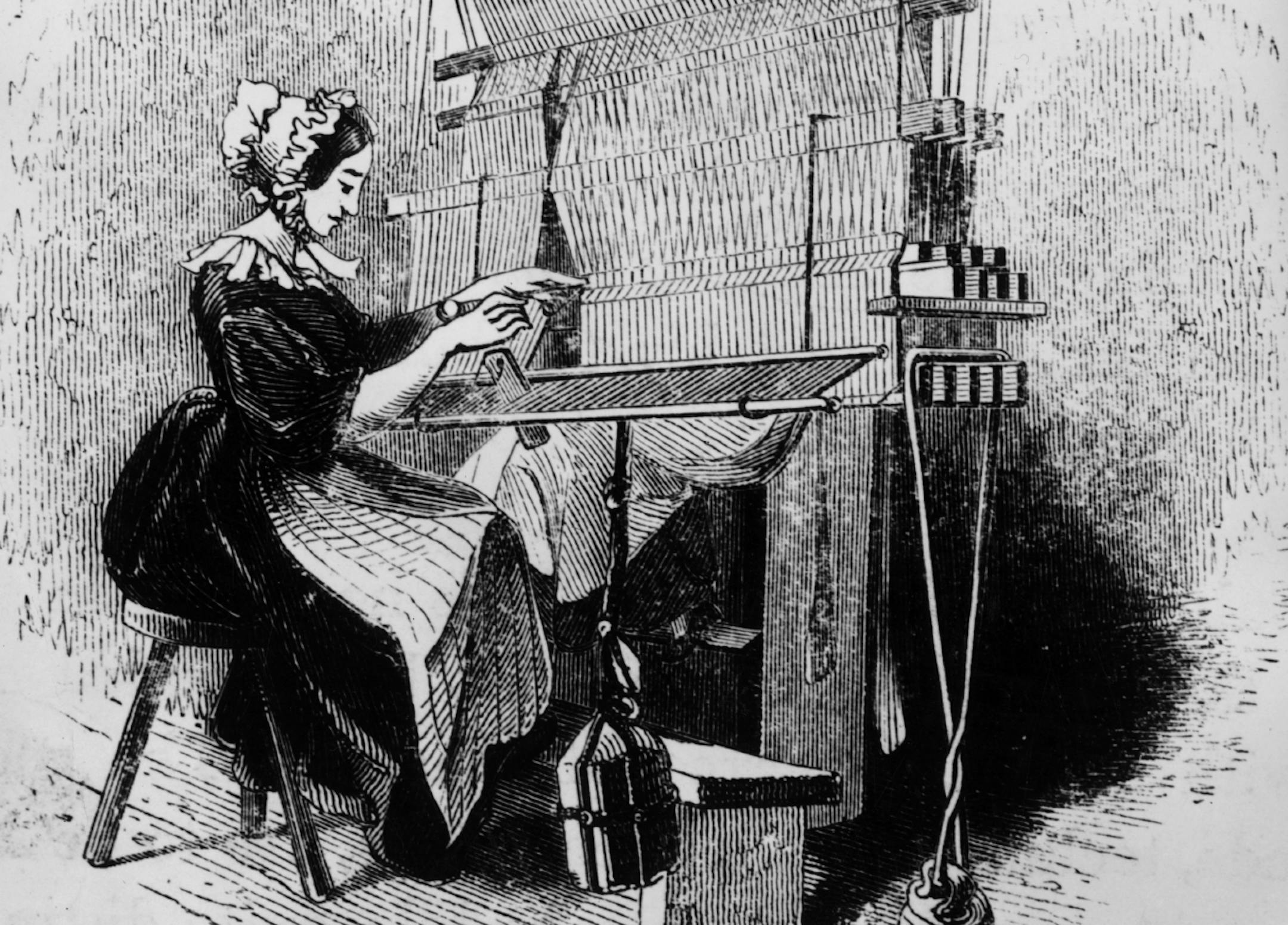
Innovation has always cost people their jobs. In the Industrial Revolution artisan weavers were swept aside by the mechanical loom. Over the past 30 years, the digital revolution has displaced many of the midskill jobs that underpinned 20th-century middle-class life. Typists, ticket agents, bank tellers and many production-line jobs have been dispensed with, just as the weavers were.
For those of us who believe that technological progress has made the world a better place, such churn is a natural part of rising prosperity. Although innovation kills some jobs, it creates new and better ones, as a more productive society becomes richer and its wealthier inhabitants demand more goods and services. A hundred years ago, one in three American workers was employed on a farm. Today less than 2 percent of them produce far more food. The millions freed from the land were not consigned to joblessness, but found better-paid work as the economy grew more sophisticated.
Optimism remains the right starting point, but for workers the dislocating effects of technology may make themselves evident faster than its benefits. Even if new jobs and wonderful products emerge, in the short term income gaps will widen, causing huge social dislocation and perhaps even changing politics. No government is prepared for it.
Why be worried? It is partly just a matter of history repeating itself. In the early part of the Industrial Revolution, the rewards of increasing productivity went disproportionately to capital; later on, labor reaped most of the benefits. The pattern today is similar. The prosperity unleashed by the digital revolution has gone overwhelmingly to the owners of capital and the highest-skilled workers. Unemployment is at alarming levels in much of the rich world, and not just for cyclical reasons. In 2000, 65 percent of working-age Americans were in work; since then the proportion has fallen, during good years as well as bad, to the current level of 59 percent.
Worse, it seems likely that this wave of technological disruption to the job market has only just started. From driverless cars to clever household gadgets, innovations that already exist could destroy swathes of jobs that have hitherto been untouched.
Until now the jobs most vulnerable to machines were those that involved routine, repetitive tasks. But thanks to the exponential rise in processing power and the ubiquity of digitised information ("big data"), computers are increasingly able to perform complicated tasks more cheaply and effectively than people. Clever industrial robots can quickly "learn" a set of human actions. Services may be even more vulnerable. Computers can already detect intruders in a closed-circuit camera picture more reliably than a human can. By comparing reams of financial or biometric data, they can often diagnose fraud or illness more accurately than any number of accountants or doctors. One recent study by academics at Oxford University suggests that 47 percent of today's jobs could be automated in the next two decades.
The number of digital startups has exploded. Just as computer-games designers invented a product that humanity never knew it needed but now cannot do without, so these firms will no doubt dream up new goods and services to employ millions. But for now they are singularly light on workers. When Instagram, a popular photo-sharing site, was sold to Facebook for about $1 billion in 2012, it had 30 million customers and employed 13 people. Kodak, which filed for bankruptcy a few months earlier, employed 145,000 people in its heyday.
The problem in part is one of timing. Google now employs 46,000 people. But it takes years for new industries to grow, whereas the disruption a startup causes to incumbents is felt sooner. Airbnb may turn homeowners with spare rooms into entrepreneurs, but it poses a direct threat to the lower end of the hotel business — a massive employer.


