

Saying that Australians are casual doesn't begin to cover it. They are master artists whose craft is the "no worries" vibe, the same way the French work in pastry, the Swiss work in chocolate and the Japanese work in karaoke.
Which is why it shouldn't have been a surprise to step into the wheelhouse of the Murray Princess and find the captain, kicked back with biker shades on, steering the 950-ton vessel up the twisty, shallow River Murray with his right foot.
Nor should it have been a shock that for our port stop one night, we tied up to a seemingly random tree.
Think "Heart of Darkness" without, well, the darkness.
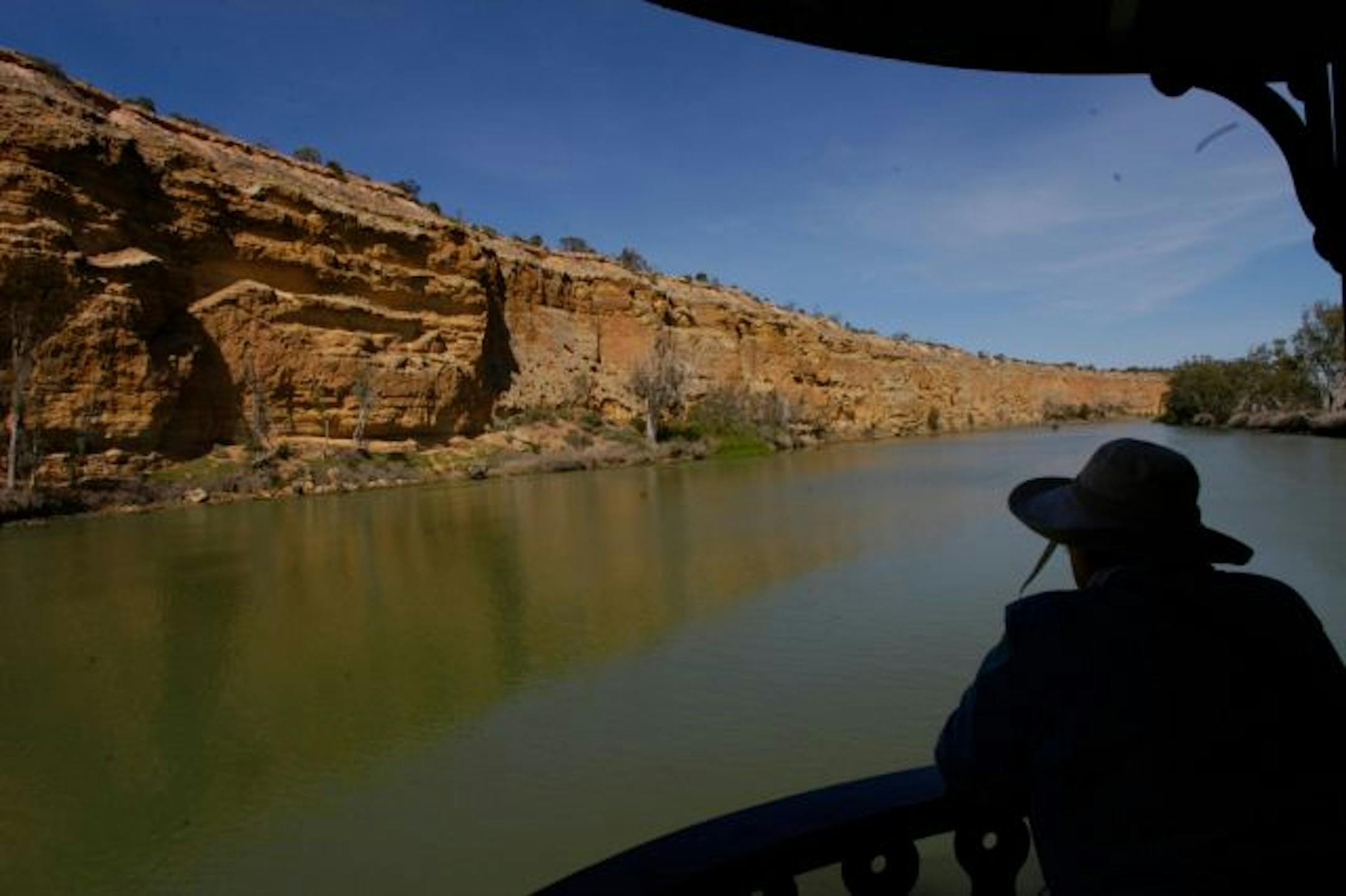
The Murray is the ultimate lazy river, a 100-million-year-old ribbon of green that winds 1,470 miles through South Australia, Victoria and New South Wales, passing farms, aboriginal homelands, red gum forests, holiday cottages, arid scrub and towering ochre-colored limestone cliffs festooned with snow-white cockatoos. The scenery prompted an American writer in the 1890s to compare it favorably to the mighty Mississippi. (The guy was Samuel Clemens who, it turns out, knew more than a little about rivers and riverboats.)
The river and its surroundings make up a widely overlooked region (except among Aussies) that offers the jaw-dropping, terrible and sun-burnt beauty of Australia, but without the endless drive to Uluru or Darwin that would give a long-haul trucker pause, or the expense of a second or third flight to the Great Barrier Reef.
Traveling by 1800s-style paddlewheel riverboat, the landscape not yet overrun by tourists drifts by so languorously, it seems at times as if the natural wonders of Oz pick up and come to you. A pretty good spot to have no worries.
We left on a Monday from Mannum, a riverside hamlet 51 miles east of Adelaide, for four nights aboard the 120-passenger Murray Princess, operated by Captain Cook Cruises in Sydney. The flat-bottom boat, looking like an Old West boomtown hotel on floats and riding 40 feet out of the water (but just 3 feet below the surface), is perfectly suited for a waterway prone to shallow passes and fickle flows -- even with a system of locks and weirs to regulate it.


