

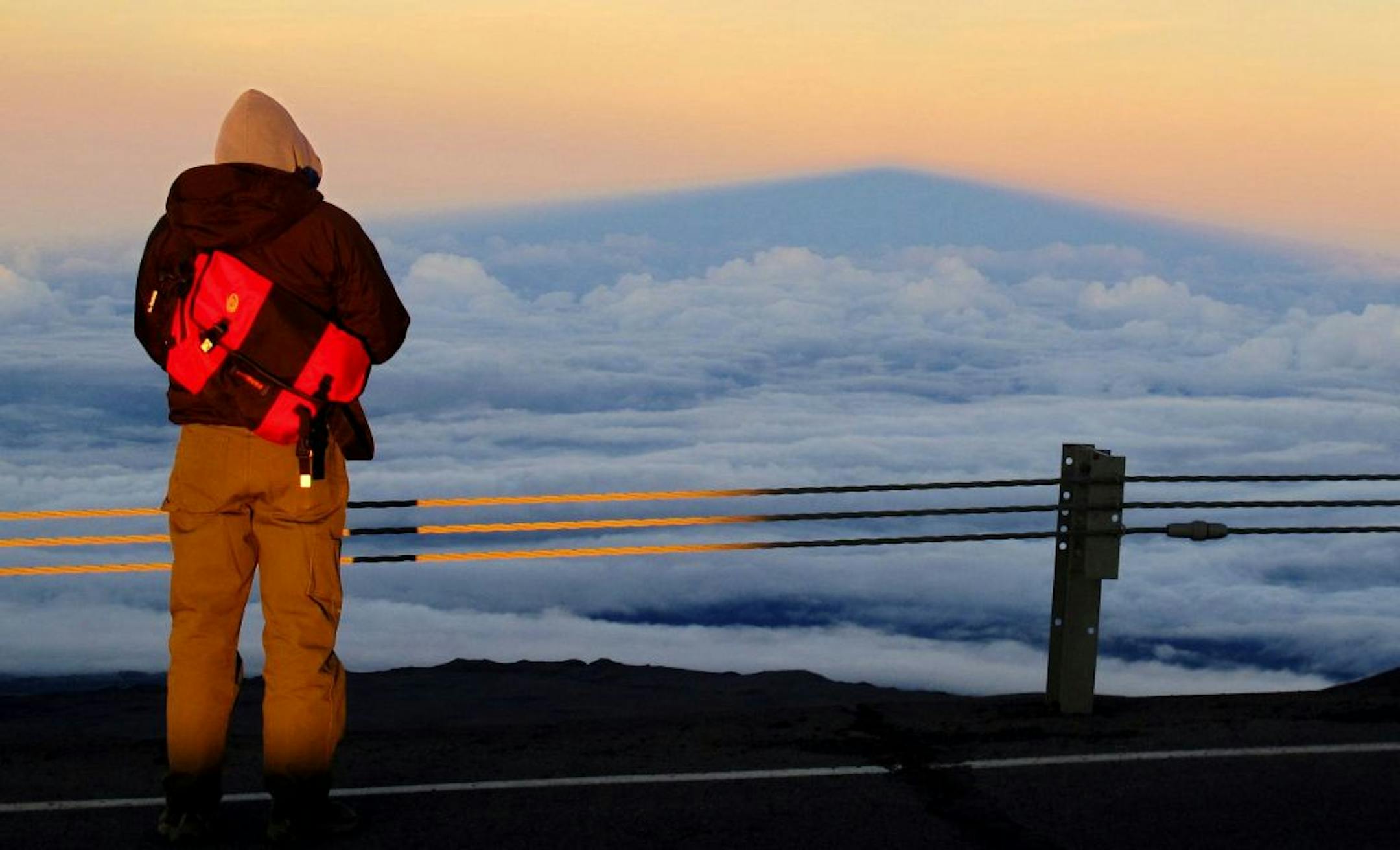
ATOP MAUNA KEA, HAWAII - If you count from sea level, we were 13,796 feet up, almost as high as Mount Rainier. Plenty high enough.
But if you count from the ocean floor? My Big Island tour group was shivering in thin air atop the Earth's highest mountain -- 33,500 feet from its waterlogged base to peak.
And that measure seemed the more meaningful, because this place seemed to have far more to do with outer space than with anything terrestrial.
As the sunset painted clouds in tropical hues, the nightly crowd of parka-clad, camera-snapping tourists looked like so many geckos swarming around a dozen enormous observatories dotting the top of Hawaii's highest peak.
The big crop atop Mauna Kea is telescopes, including the world's two largest functional telescopes, with mirrors 33 feet across, at the W.M. Keck Observatory. (By way of comparison, the Hubble Space Telescope comes in at a measly 8 feet.)
It's a bit like going to Cape Canaveral for a rocket launch. Every visitor to the summit of this dormant volcano is giddy, and not just from thin air.
"It's a very high-powered, high-level group of astronomers here," tour guide Greg Brown told our van full of visitors. "It's big science!"
Hundreds of scientists and engineers support the Mauna Kea observatories, while data from the telescopes are transmitted worldwide to astronomers.


