

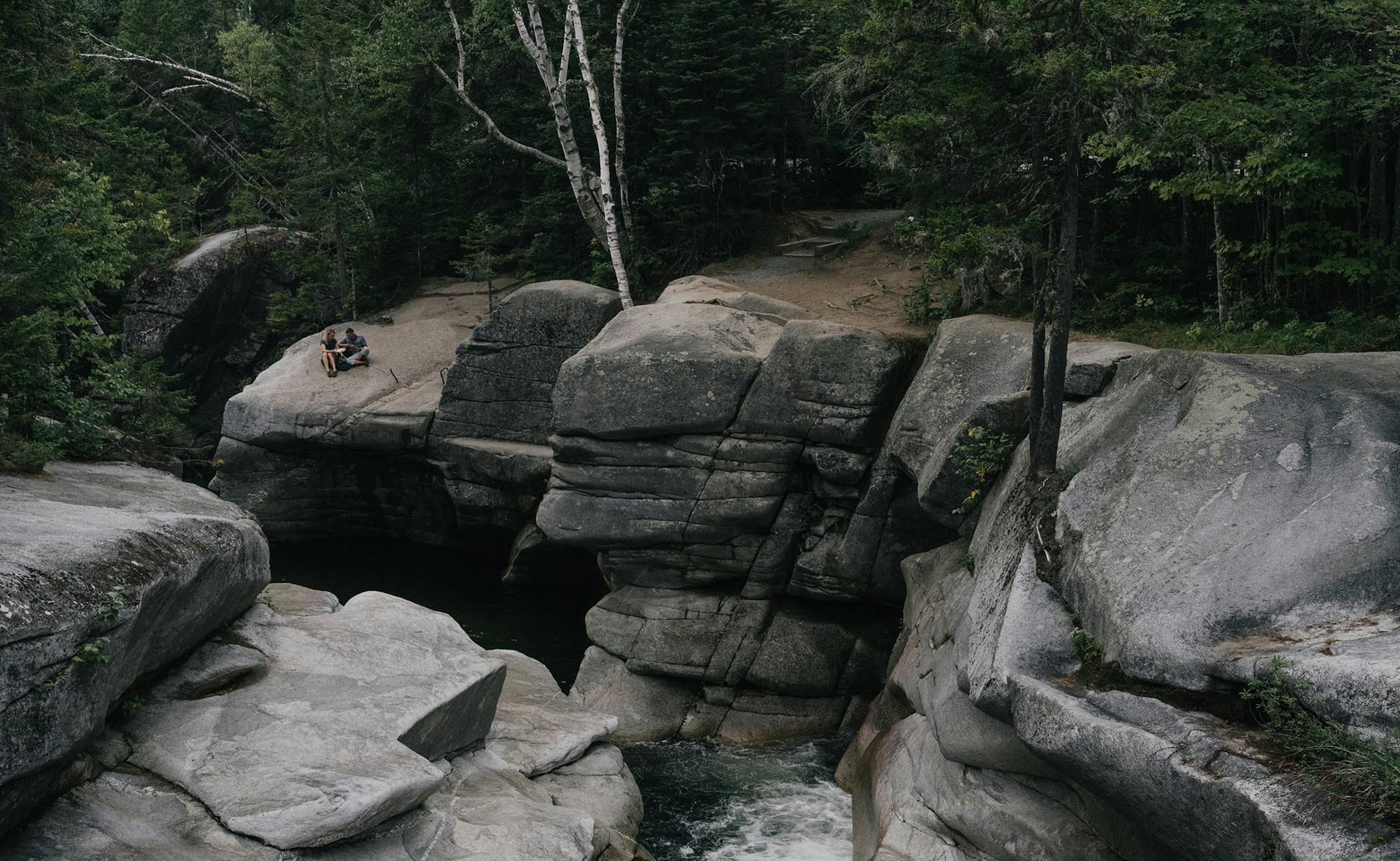
BENTON, N.H. – The hiker trudged up a logging road and into a valley, tracing a route that seemed unremarkable. There were no sweeping views of mountains. There was no summit to scale. Yet he stopped suddenly, jubilant, after about 4 miles of walking. He had found exactly what he was searching for: quiet.
"Let's see," said Dennis Follensbee, "how we experience three minutes of silence."
In these loud times — with political foes yelling on television, trucks rumbling through streets and smartphones chirping all around — who doesn't want a little peace and quiet? But some wilderness lovers have taken their aversion to the cacophony of the modern world a step further, traveling to some of the country's most remote areas in a quest for utter silence.
Armed with Google Maps, bushwhacking tools and 16 years of experience hiking in the area, Follensbee, a programmer, is on an exhaustive search for the noiseless hollows and dells of New Hampshire's White Mountains.
"I know there must be places I can go to have peace," said Follensbee, 39, who has mapped 23 quiet places so far, although he has shared the exact locations only with family members and close friends. (If quiet places are widely known, he reasons, "they cease to be quiet.")
Connoisseurs of quiet say it is increasingly difficult, even in the wilderness, to escape the sounds of vehicles, airplanes, industries and voices.
A study published last year in the academic journal Science found that noise pollution was doubling sound levels in much of the nation's conserved land, such as national parks and areas preserved by the federal Bureau of Land Management.
Noise that humans create can be annoying but also dangerous to animals that rely on hearing to seek their prey and avoid predators. "We're really starting to understand the consequences of noise and the importance of natural sound," said Rachel Buxton, a conservation biologist at Colorado State University who worked on the study.


