Even in darkness, on the way from the airport, Samoa didn't look like anywhere else I'd been in Polynesia -- not like Rarotonga or Fiji, not like Tahiti or Easter Island.
Open pavilions dotted the roadsides, almost as frequent as the small houses. Some were more brightly lighted: Shaped like ovals and sometimes squares, their thatched roofs supported by pillars, they glowed like cages in the hot tropical night.
In some small ones, families were watching TV, as if the pavilions were open-air living rooms. In the largest ones, men were sitting as still as cross-legged statues, one at the base of each pillar. A church service, perhaps? But we were passing dozens of churches. A ceremony, then?
The pavilions were the first things I asked about on a visit to the Samoas last winter, though they weren't the reason I'd come, and my reason wasn't all that typical to start with.
Most tourists come to the Samoas in search of the picture-perfect South Seas paradise: green mountains sloping to white beaches, coconut palms framing deep-blue ocean and friendly people with flowers in their hair. And all that is here.
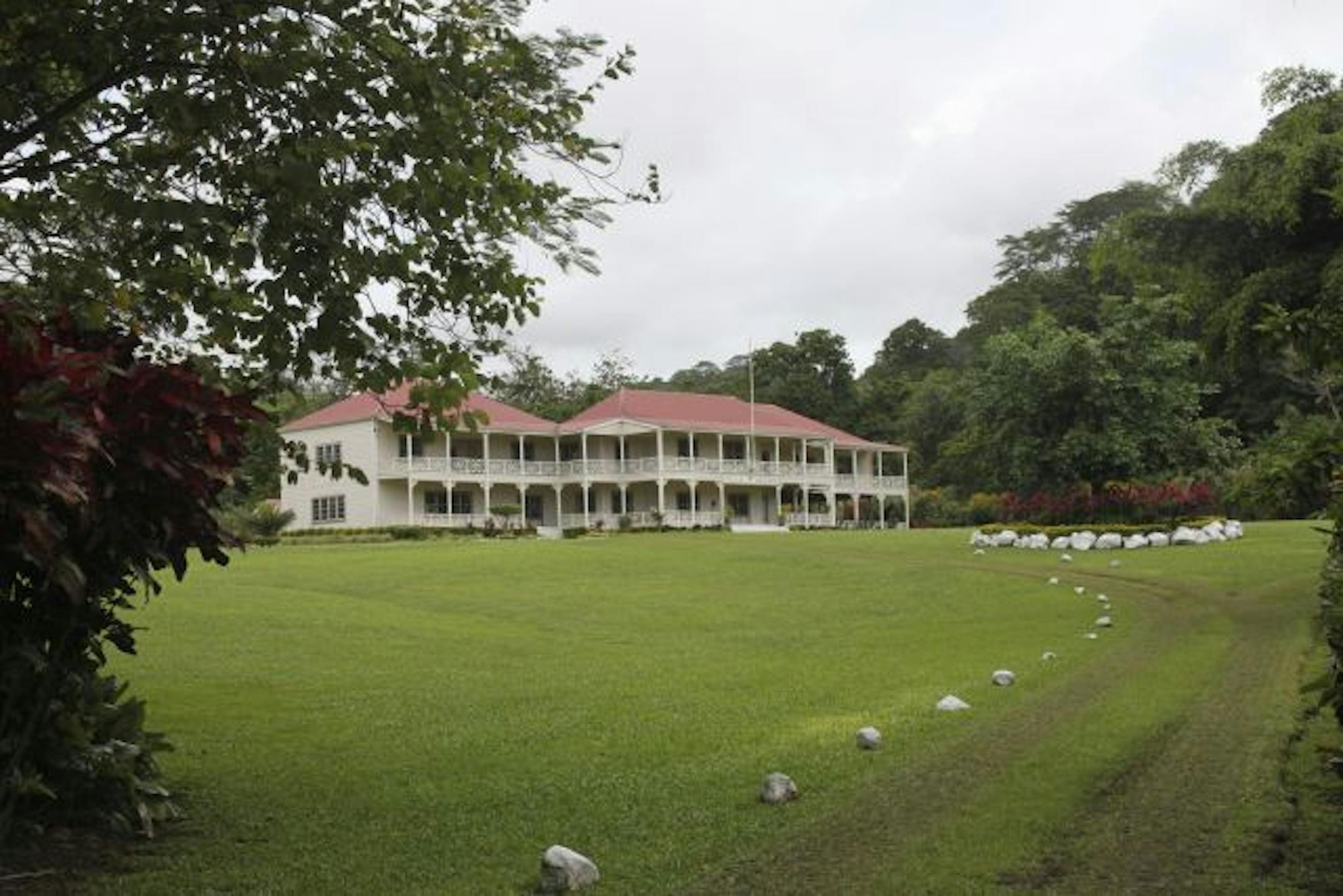
But I had come for a house -- an old house and a long-dead hero. I wanted to see Vailima, the carefully restored Victorian villa that was Robert Louis Stevenson's last home.
Drawn by fragile health and a wandering soul, the prolific author began building Vailima with his extended family in 1890 in the hills above Apia, independent Samoa's small capital. He died there four years later, about as far from his native Scotland as he could get.
I could identify with that. I was a Minnesotan trying to escape the cold. Besides, I'd once dreamed of plying the Pacific in a white schooner, as Stevenson did.