

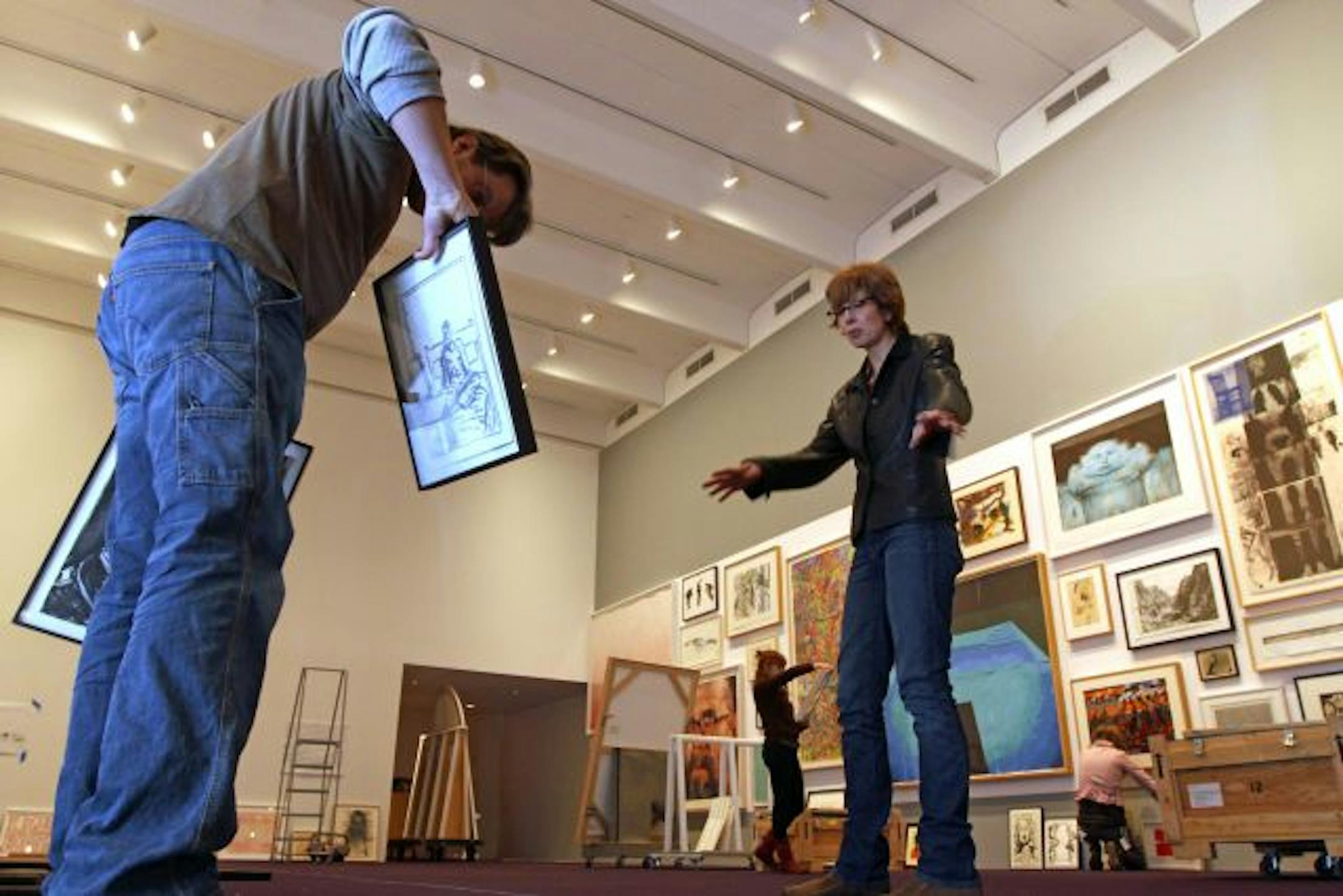
Although half the art in Walker Art Center's new "50/50" show was picked by online voters, curator Darsie Alexander insists it shouldn't be called a popularity contest. There were too many variables in play to imagine that the chosen art really represents the public taste. Still, she admitted, some pictures did get more votes than others and whether they're "popular" or not, those pieces make up the public's half of the exhibit.
"We thought Andy Warhol would pop up earlier, but he's fairly far down on the list at No. 55," said Alexander who chose the other 50 percent of the display. Her side is intended to represent a thoughtful institutional counterpoint to the public's more random selection. The exhibit opened Thursday and runs through July 17.
Planning for the show started last summer when the Walker loaded onto its website images of about 200 prints, drawings and other works on paper from its collection. Viewers were invited to vote on whether each piece should "definitely" or "maybe not" be included in an upcoming show. About 280,000 votes were tallied in all. To entice participation, the rules were kept loose and playful.
"After you voted, you could see what the percentages were, so some people may have gone back and voted multiple times to move the dial on their favorite works," Alexander said.
The top vote-getter was "Break Point," a huge red-on-white screen print by Fiona Banner that consists of lines of words running horizontally across an 8-feet-wide sheet of paper. The words intensify until at the bottom until they're no longer legible and form "a sea of red ink," Alexander explained.
She was somewhat surprised by the print's first-place ranking. "I expected to see a face or a body or something about the human experience," she said, "but at another level I wasn't surprised because it shows a real love of detail, a fascination with meticulous crafting of surface, and an overall aesthetic -- every square inch of the composition was taken up."
As the Walker's chief curator, Alexander is deeply interested in how visitors react to the museum's shows, what kinds of art interest them, how much information they want about it, and why they come to the Walker. By offering fresh, interactive experiences, she hopes to attract more visitors and returnees. She's also eager to share how she and other curators make their decisions about what they buy and how they display it.
"The curator's process of deciding is very slow and deliberative, whereas the public's decisions are probably pretty speedy," she said, "and the process of making an exhibition from these two perspectives accentuated those differences."


