
The new rules for sunscreen labels

Ready to cover up? A major overhaul of sunscreen labels is hitting store shelves.

July 1, 2013 at 8:50PM
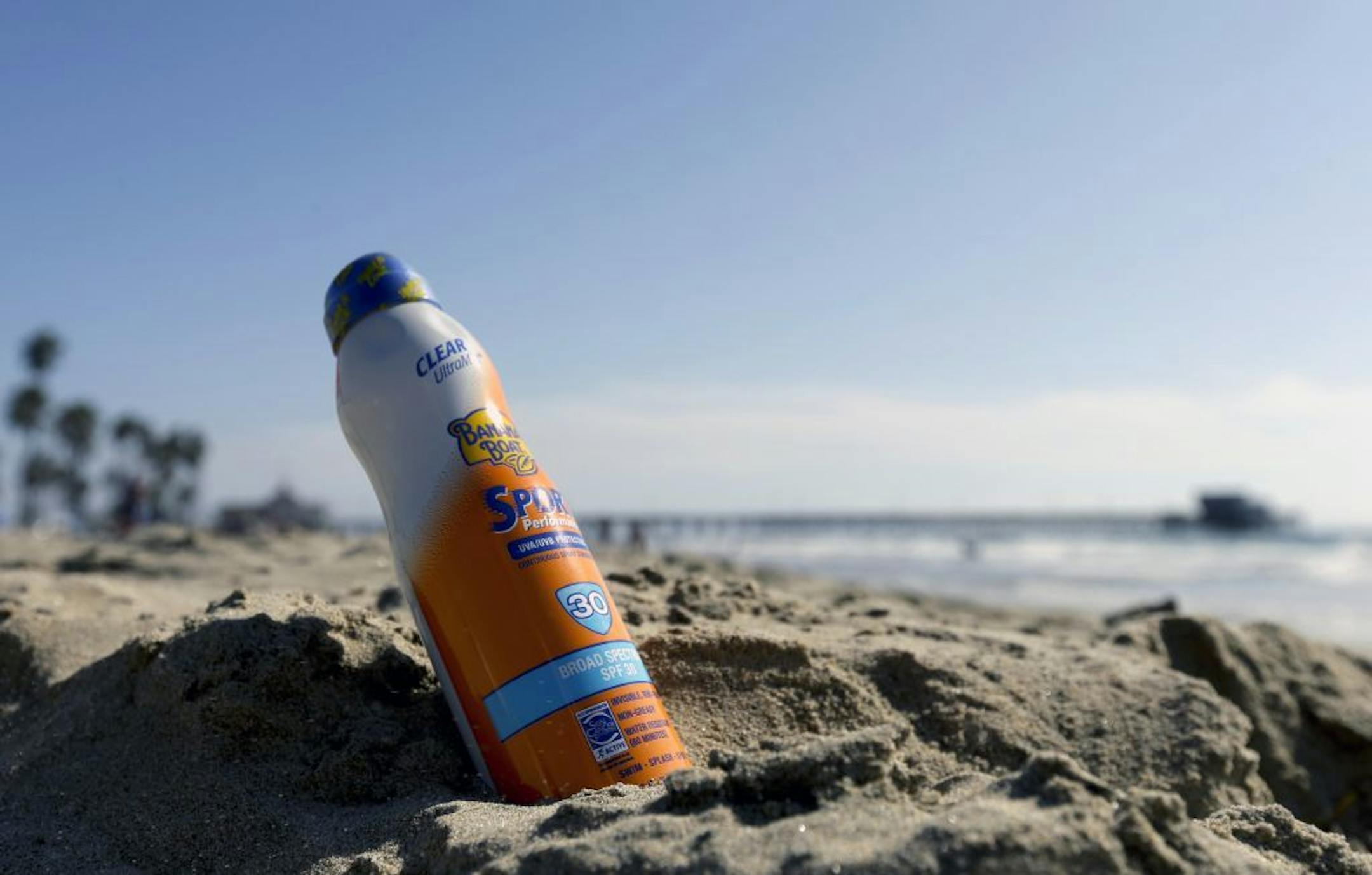
A bottle of Banana Boat sunscreen is placed in the sand near the Newport Beach pier in Newport Beach Calif., Friday, Oct. 19, 2012. The maker of Banana Boat sunscreen is recalling some of its spray-on products after reports that a handful of people who have caught on fire after applying the lotion and standing near open flames. The bottle was placed in the sand by the photographer to illustrate this report.
A bottle of Banana Boat sunscreen is placed in the sand near the Newport Beach pier in Newport Beach Calif., Friday, Oct. 19, 2012. The maker of Banana Boat sunscreen is recalling some of its spray-on products after reports that a handful of people who have caught on fire after applying the lotion and standing near open flames. The bottle was placed in the sand by the photographer to illustrate this report. (Associated Press - Ap/The Minnesota Star Tribune)

Finding the sun has been difficult these days, but finding a good sunscreen shouldn't be.

And this summer, the powers-that-be want to make sure beach-goers not only have a good one — but also one crammed with new, helpful information.

The U.S. Food and Drug Administration has ordered sunscreen makers to roll out products with enhanced labels to comply with new requirements. Labels like "broad spectrum" now carry greater meaning on sunscreens, makeup, lip balms and lotions containing sun protection factor (SPF) in an effort to help consumers better protect themselves from sun damage.

Skin cancer remains the most common type of cancer diagnosed in the United States, and most skin cancers are caused by sun exposure, the FDA says. In Minnesota, the rate of melanoma diagnoses is rising faster than any other kind of cancer.

The biggest change to sunscreen labels is the term "broad spectrum," which means a product has been tested and proven effective against the sun's ultraviolet rays (UVB and UVA). Before, most sunscreens only helped block UVB rays, which cause sunburn. The UVA rays are linked to skin cancer and early skin aging.

"UVA penetrates a little deeper into the skin than UVB," explained Dr. Kamruz Darabi, a dermatologist with Ridgeview Clinics in Chaska and Waconia. "It damages collagen and elastic fibers which are deeper in the skin. Those are the materials we need to keep our skin nice and supple."

SPF numbers remain prominent on sunscreen labels. But products with less than SPF 15, even those carrying the broad spectrum label, must also have a warning label stating that the product has not been demonstrated to help prevent skin cancer or early skin aging.

The FDA has outlawed the use of words such as "waterproof" or "sweatproof," ruling that no product can make such claims. Instead, sunscreens may call themselves "water resistant," and must also list the number of minutes the protection lasts before consumers must reapply.

"This is a field that is evolving," Darabi said. "This is a great first step to educate the public and create some kind of guidelines of what to look for, in a very simple way."

On the heels of the new labeling requirements, a new study revealed last week that slathering on sunscreen daily can prevent the appearance of wrinkles, sagging skin and other signs of aging.

"When people ask me, 'What is the best beauty secret you can tell me,' I say, 'Stay out of the sun and protect yourself,' " Darabi said. "That's the best beauty secret."

Allie Shah • 612-673-4488

about the writer

about the writer

Allie Shah

Deputy editor

Allie Shah is deputy local editor. She previously supervised coverage of K-12 and higher education issues in Minnesota. In her more than 20 year journalism career at the Minnesota Star Tribune, Shah has reported on topics ranging from education to immigration and health.

See Moreicon

More from Minnesota Star Tribune

See More
card image
J. SCOTT APPLEWHITE, ASSOCIATED PRESS/The Minnesota Star Tribune

The "winners" have all been Turkeys, no matter the honor's name.

In this photo taken Monday, March 6, 2017, in San Francisco, released confidential files by The University of California of a sexual misconduct case, like this one against UC Santa Cruz Latin Studies professor Hector Perla is shown. Perla was accused of raping a student during a wine-tasting outing in June 2015. Some of the files are so heavily redacted that on many pages no words are visible. Perla is one of 113 UC employees found to have violated the system's sexual misconduct policies in rece