

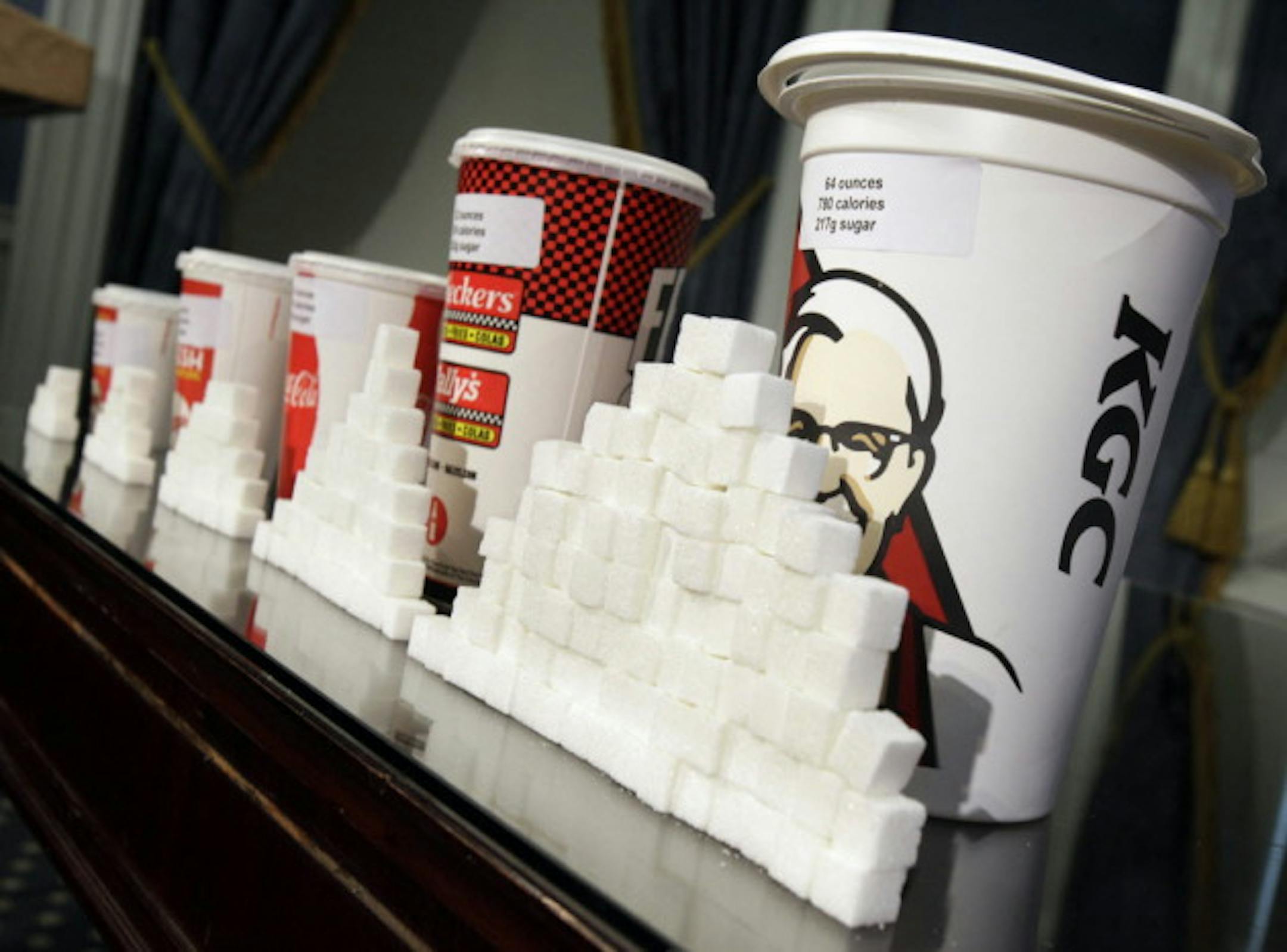
Why has there been so much fuss about New York City's attempt to impose a ban on large "sugary drinks"? After all, people can still get as much soda as they want. This isn't Prohibition. It's just that getting it would take slightly more effort.
Obviously, it's not about soda. It's because such a ban suggests that sometimes we need to be stopped from doing foolish stuff, and this has become, in contemporary American politics, highly controversial, no matter how trivial the particular issue. (Large cups of soda as symbols of human dignity? Really?)
Americans, even those who generally support government intervention in our daily lives, have a reflexive response to being told what to do, and it's not a positive one. It's this common desire to be left alone that prompted the Mississippi Legislature this month to pass a ban on bans — a law that forbids municipalities to place local restrictions on food or drink.
We have a vision of ourselves as free, rational beings who are totally capable of making all the decisions we need to in order to create a good life. It's a nice vision, one that makes us feel proud of ourselves. But it's false.
John Stuart Mill wrote in 1859 that the only justifiable reason for interfering in someone's freedom of action was to prevent harm to others. According to Mill's "harm principle," we should almost never stop people from behavior that affects only themselves.
That "almost," though, is important. It's fair to stop us, Mill argued, when we are acting out of ignorance and doing something we'll pretty definitely regret. You can stop someone from crossing a bridge that is broken, he said, because you can be sure no one wants to plummet into the river. Mill just didn't think this would happen very often.
He was wrong about that. A lot of times we have a good idea of where we want to go, but a really terrible idea of how to get there. It's well-established by now that we often don't think very clearly when it comes to choosing the best means to attain our ends. This has been the object of an enormous amount of study over the past few decades.
Research by psychologists and behavioral economists, including the Nobel Prize-winner Daniel Kahneman and his research partner Amos Tversky, identified a number of areas in which we fairly dependably fail. For example, we suffer from an optimism bias; that is, we tend to think that however likely a bad thing is to happen to most people in our situation, it's less likely to happen to us — not for any particular reason, but because we're irrationally optimistic.


