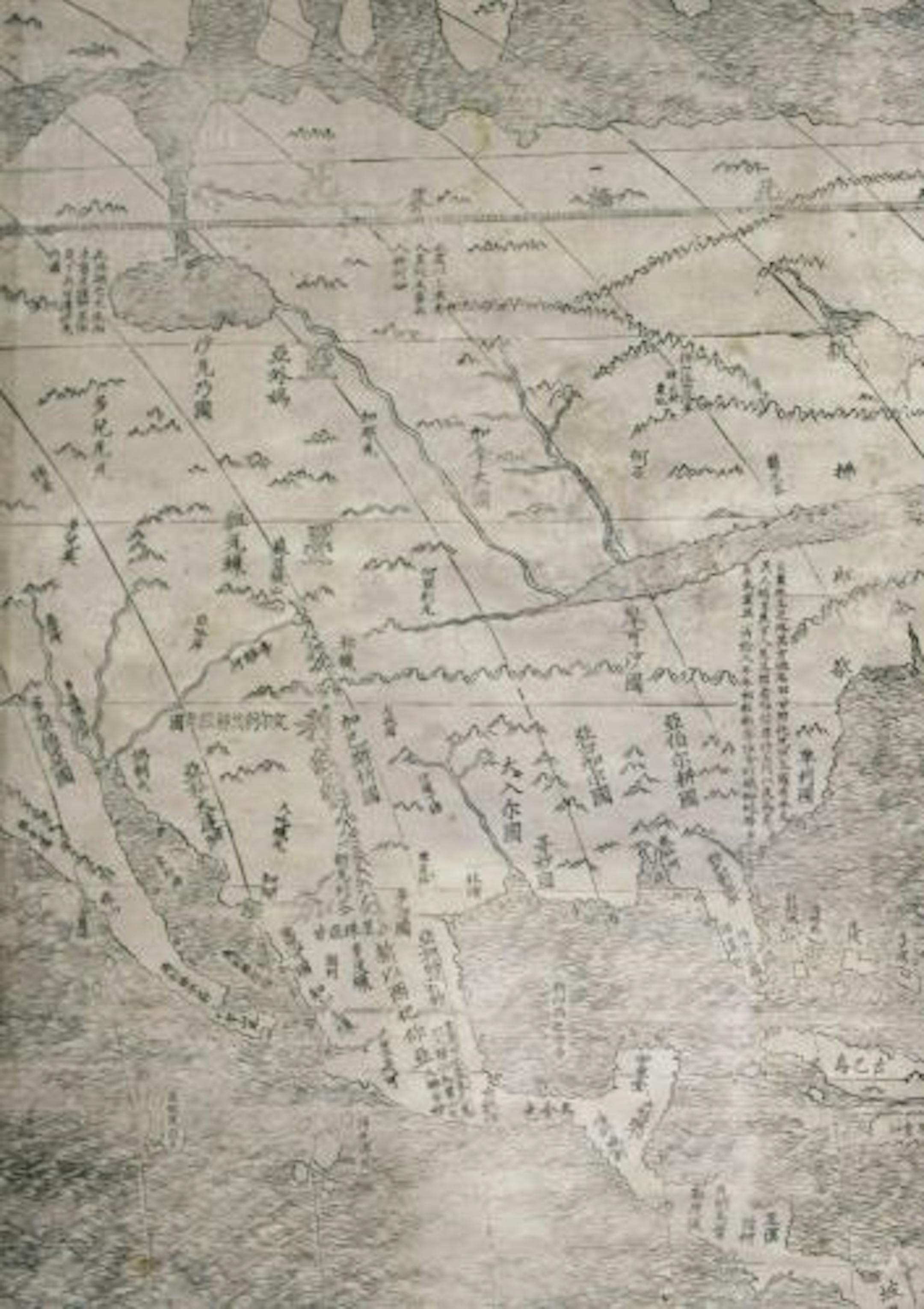
Every Minnesota snowbird will recognize Florida on the first Chinese map to show the American continents. But their home state? Not likely.
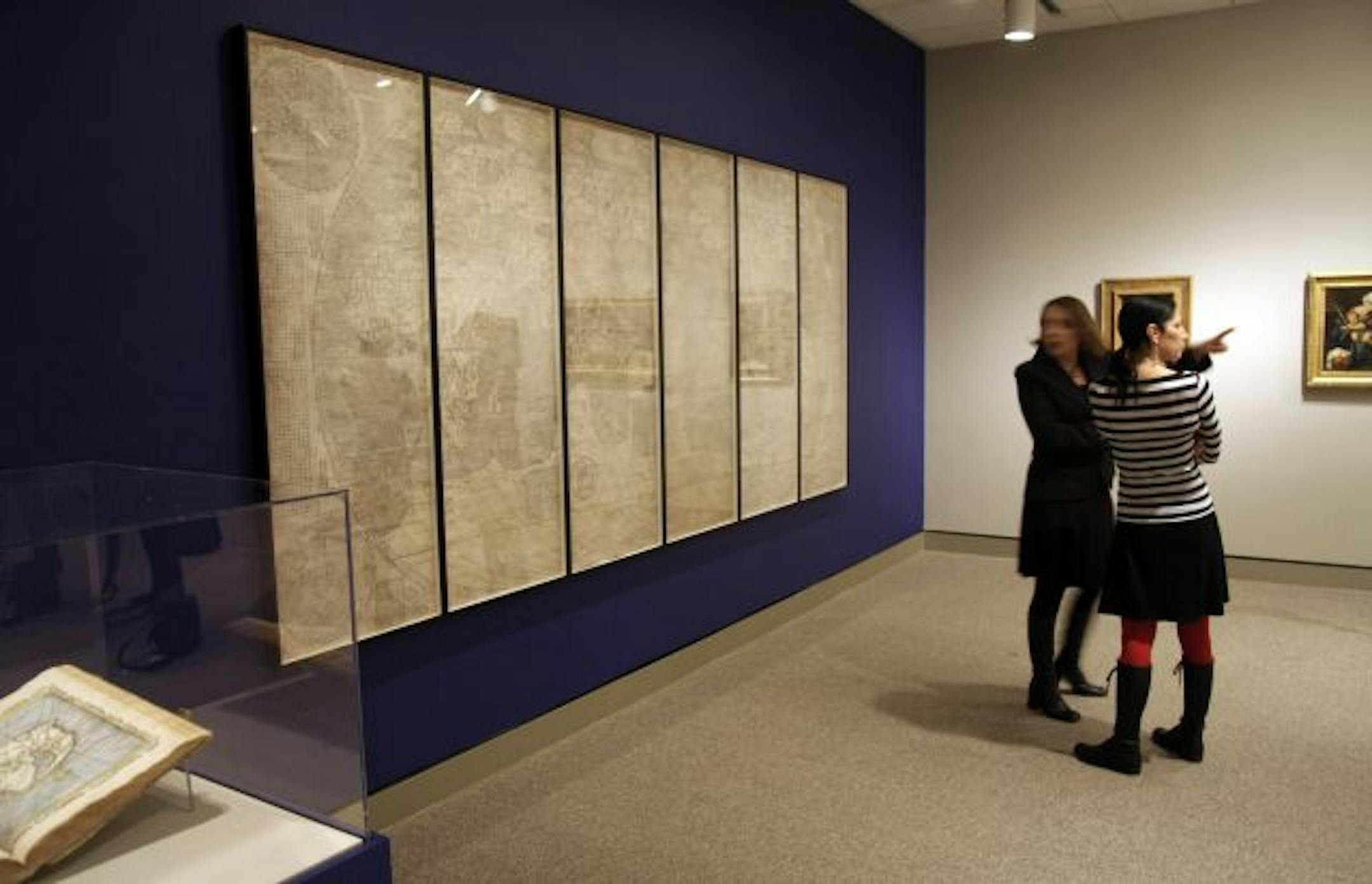
Published in Beijing in 1602, the Kunyu wanguo quantu, or Map of the 10,000 Countries of the World, is one of the world's rarest and most valuable antique maps. Only six copies have survived, and the best-preserved is now at the Minneapolis Institute of Arts through Aug. 29. The centerpiece of a sparkling little exhibit, it offers an extraordinary snapshot of civilization at the dawn of globalization.
The James Ford Bell Trust recently bought the map for $1 million on behalf of the University of Minnesota's James Ford Bell Library, which has lent it to the museum. It is being shown for the first time since an appearance at the Library of Congress this winter.
"It's going to be the jewel in [the Bell Library's] crown," said Rachel McGarry, assistant curator of prints and drawings at the Minneapolis museum, who organized the display. "It will attract scholars and visitors to the university because there is so much to be learned from this map, and it fits so well into the Bell's collection about trade and exploration."
Written entirely in Chinese, the map is more than 5 feet tall and 12 feet wide and printed on six panels like a folding screen. China takes center stage, with the American continents at the right beyond a vast ocean of stylized waves. Europe, Africa, the Middle East and India are accurately delineated to the left of the Middle Kingdom, as China was then known.
Map aficionados have nicknamed it "the Impossible Black Tulip" because it is as rare as an all-black blossom. The Vatican owns one of the maps, and the other four are in private collections in Japan and France. Long presumed lost or destroyed, the Bell map came from Bernard Shapero, a rare-books dealer in London, who bought it at auction in Hong Kong. Before that it was in a private Japanese collection.
North American muddle
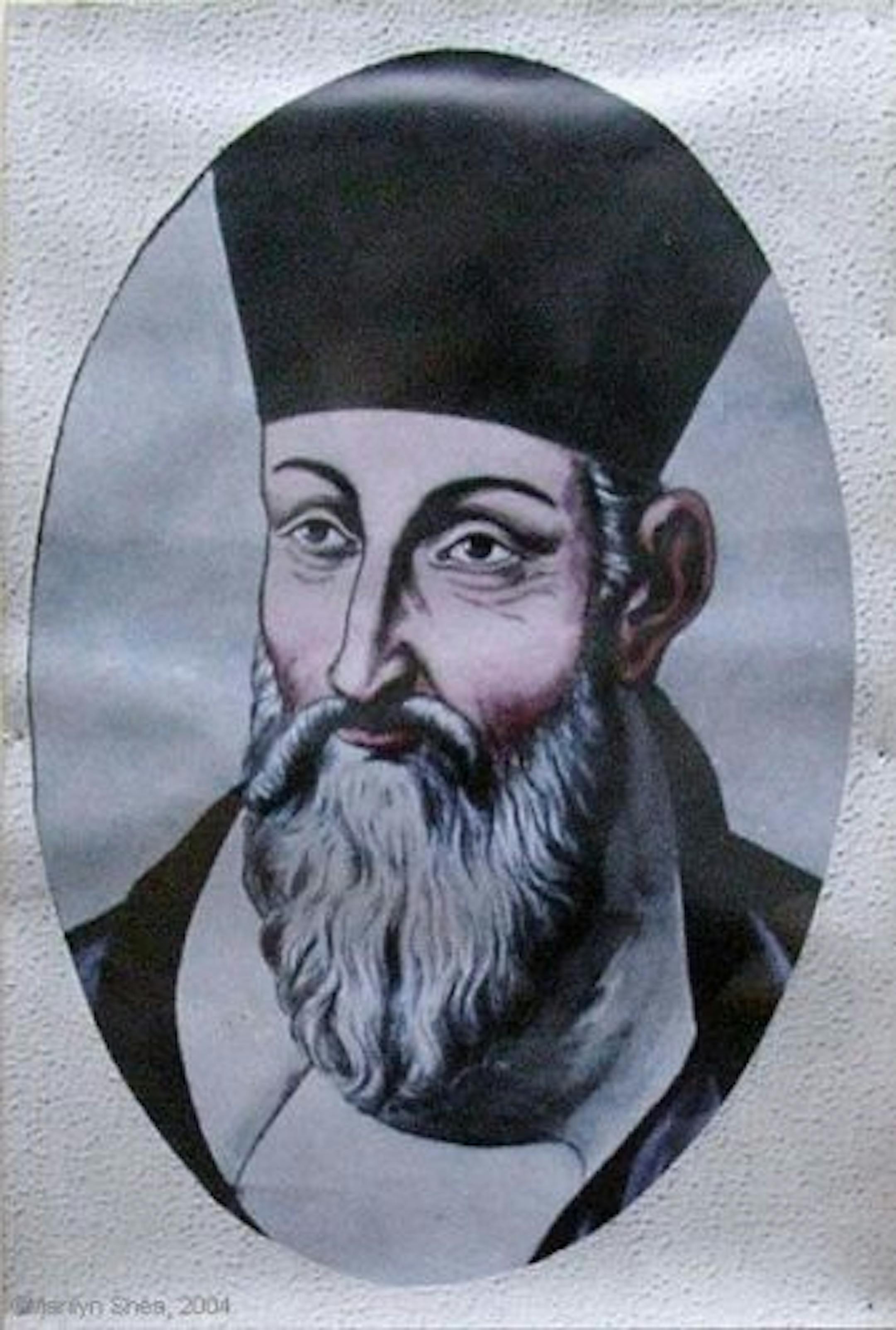
The map was drawn and annotated by Matteo Ricci, a Jesuit missionary who sailed from Italy to China in 1582 and died there in 1610. Adopting Chinese dress and manners, he gained the trust of officials by learning Chinese and introducing European astrolabes, clocks, maps and ideas. As a measure of his acceptance, in 1601 he was allowed to enter the Forbidden City of Beijing, most likely the first European so honored. Made for Emperor Wanli, Ricci's map was the first to combine information from Chinese and Western cartography.