Sprawled on a rocky ledge, two muscular black guys stare right into the eyes of visitors strolling through the Minneapolis Institute of Arts' baroque painting gallery. Dressed in T-shirts and mod pants, they're contemporary urbanites, one with an earring, the other with dreadlocks. Figures in a painting 14 feet long and more than 7 feet tall, the men are so huge that if they were alive at that scale they'd stand nearly two stories tall. As it is, they dwarf everything around them, including suits of armor that seem by comparison designed for pygmies instead of medieval warriors. The black guys also set off a curious imaginary dialogue with the gallery's 17th-century depictions of white gods and goddesses, saints and sinners, and even Jesus raising Lazarus from the dead.
"They're the first thing that popped out in this gallery," said a recent visitor to the museum, Nancy Giles, a senior at Viterbo University in La Crosse, Wis. The painting's bold colors and dramatic realism fit the gallery, she said, "but it's so modern -- what they're wearing -- that it definitely made me want to look in."
Welcome to "Art ReMix," the museum's new way of shaking things up.
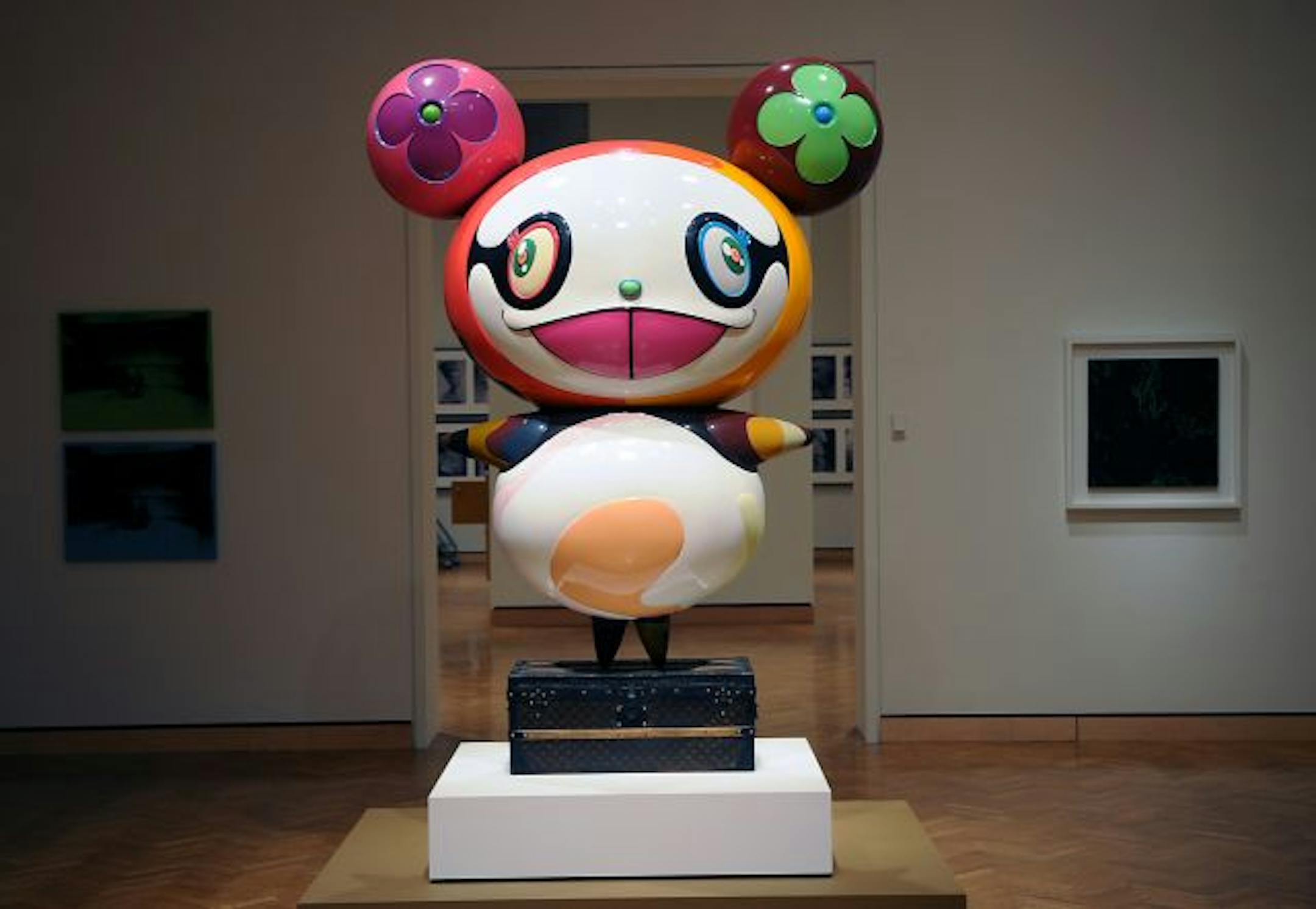
In recent months, the museum has been inserting contemporary art among its classics. Today, it takes a bigger step forward, opening a show of contemporary art spanning the past 50 years. "Until Now: Collecting the New" features more than 85 paintings, photos, sculptures, videos and installations by such widely known Americans as Andy Warhol, Jasper Johns and Ed Ruscha, plus an impressive roster of international talents.
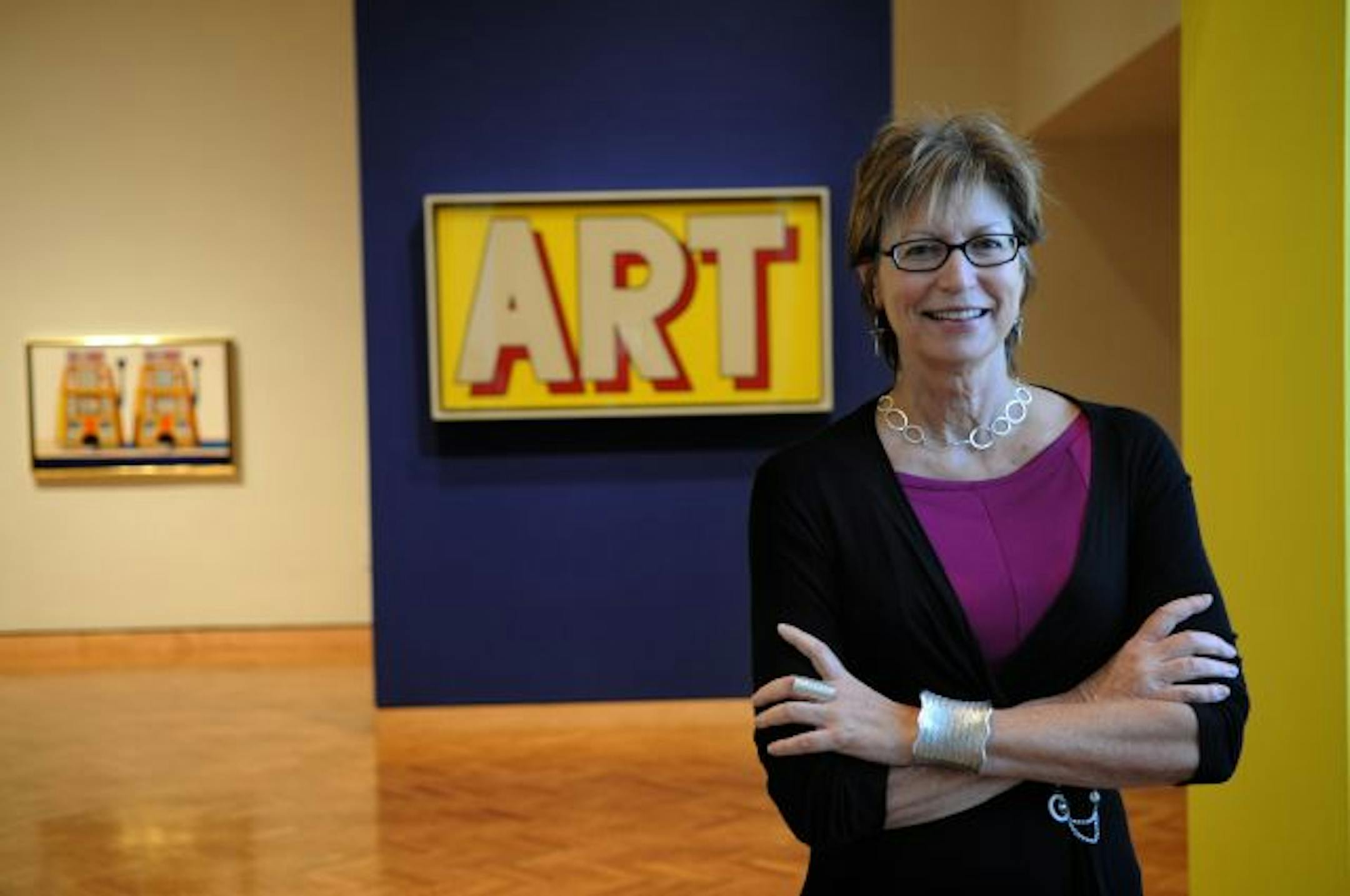
All this may seem a radical departure for a museum sometimes perceived as stodgy and traditional, but it's all part of a strategic plan, said museum director Kaywin Feldman. In 2006 the museum opened a $50 million addition designed primarily for 20th-century and contemporary art. Two years ago it hired its first curator of contemporary art, and now it's laying the groundwork for what that collection might become. Much of the art in "Until Now" is on loan from collectors, whom the museum hopes will donate the work, or from galleries where it could be purchased.
"With the exception of prints and photos, our collection largely peters out around 1960," Feldman said. "We need to stay current. We're a global museum, and not to show the art of today would leave the earlier works without continuity. Europe, Africa, China and the United States today are very different places than they were in the 16th or 17th or 18th centuries, and we need to reflect that."
The institute is not the only traditional art museum embracing contemporary art. The Louvre in Paris has recently begun commissioning installations from contemporary artists, Boston's Isabella Stewart Gardner Museum has a lively artist-in-residence program and New York's Metropolitan Museum of Art has long invited artists to design exhibitions from its collection.
None has mixed contemporary pieces into the galleries as the institute is doing, however.