

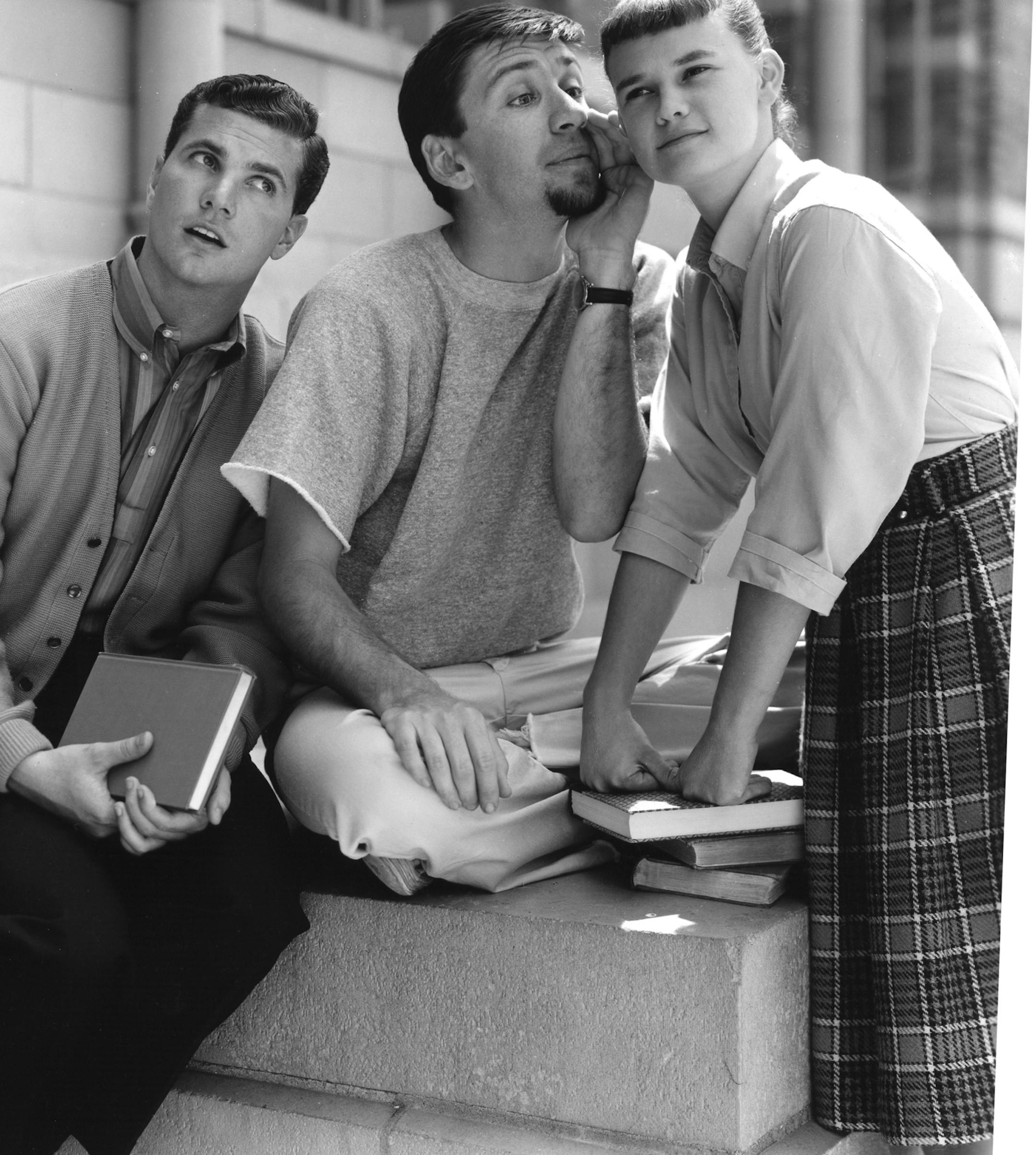
By NEIL GENZLINGER New York Times
If you enjoy a study in contrasts, first spend an evening watching any of today's teenager-centered television offerings — on CW, ABC Family, even TeenNick or the Disney Channel. Then sample a few episodes of "The Many Loves of Dobie Gillis," which ran from 1959 to 1963 and was one of the first shows to depict life from the teenage perspective.
The differences are astonishing. Sure, teenager-hood today isn't what it used to be. But still, the innocence of "Dobie Gillis" — Shout Factory released a boxed set of the series on Tuesday — is downright jarring when juxtaposed with modern fare.
It is possible, though, to view this inoffensive show not as an artifact of an impossibly quaint age, but as quietly radical, a herald of things to come. You just have to change the filter through which you watch it. These days we equate trailblazing in television with shock value: the guy-on-guy kiss, the graphic rape scene, the flash of prime-time nudity. We forget that change can also come through subversion.
And there was a bit of subversiveness to "The Many Loves of Dobie Gillis." The show starred Dwayne Hickman as Dobie, who when the series began was a 17-year-old high school student with nothing on his mind but girls. Just what Dobie hoped to do with the scores of young women who drew his attention over the show's 147 episodes was always left pristinely vague. The implied progression seemed to go from light necking directly to marriage, with nothing in between.
The show was based on a series of stories by Max Shulman, a St. Paul native and University of Minnesota graduate who also created the TV series. Through four seasons, Hickman (who was in his mid-20s when the show began) went from high school student to Army grunt to collegiate Romeo, with he and his friends rarely having a care more traumatic than where to hide a rival football team's lucky pet goat after making off with it.
But hold on.
"In its own way, although it was simplistic and seems perhaps naive because it doesn't show anything negative about society, it was revolutionary," said Sheila Kuehl, who played Zelda Gilroy, a recurring character with a single-minded determination to marry Dobie. And Kuehl knows something about revolution. In 1994 she became the first openly gay candidate to be elected to the California Legislature.


