Like the American West, Siberia was for centuries Russia's undeveloped wilderness, its forests and bogs home to nomadic hunters and herders, religious outcasts and political exiles. Both landscapes have undergone dramatic changes in the past 100 years in response to wide-ranging economic, political and environmental issues.
The parallels are sometimes sketchy, but the similarities can be startling as seen in "Siberia: Imagined and Reimagined," an intriguing show of more than 100 Russian photos dating from 1870 to the present. It runs through May 18 at the University of Minnesota's Weisman Art Museum.
If they think of Siberia at all, Americans may assume it is an eternal tundra, denuded of greenery, snow-covered, bleak and frozen in all seasons. That's as wrong about Siberia as it is about Minnesota.
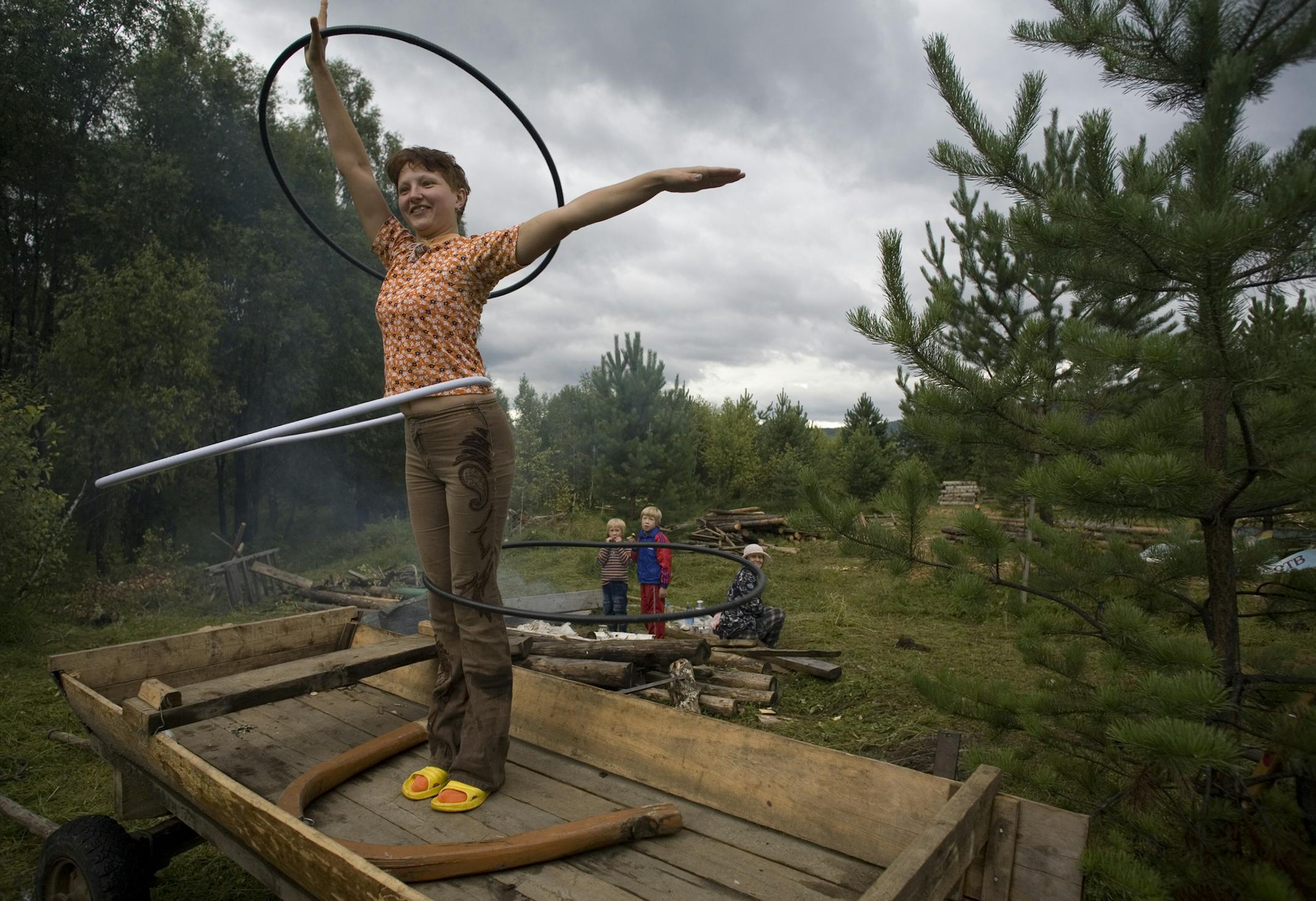
Siberians, too, have mosquitoes — lots of them in the hot summers, when urbanites retreat to the forests and vast lakes of the region. One charming photo shows a girl twirling three hula hoops at a forested campsite that could be in Minnesota, except that her camp was sponsored by the Vissarions, a popular Siberian religious sect founded in 1991 by a former traffic cop who claims to be Christ reincarnate. Another image documents a long line of well-bundled Vissarions trudging through deep snow in a devout procession.
It's this strange mix of the seemingly familiar and the quixotic that makes these pictures so engrossing. They are greatly enhanced by lively, well-researched labels written by Laura Joseph, a Weisman curatorial fellow.
From Tsar through Stalin
Organized by the Foundation for International Arts and Education, a nonprofit based in Washington, D.C., "Siberia" is marked by a kind of National Geographic anthropological earnestness. Loosely divided into five sections, it begins in Czarist times when the Imperial Russian Geographic Society set out to document a territory that stretched more than 3,000 miles from the Ural Mountains to the Pacific.
History buffs will love early photos that include a studio image of nomadic hunter-gatherers in full hide-and-fur regalia, clutching bow and spear amid a clutter of bark containers and scrubby conifers in front of a dreamy painted backdrop. There are startling images of prisoners in newly forged chains, and surprises such as a color picture of a railway guard taken about 1910 by Sergey Prokhudin-Gorskii, a Russian chemist who invented a color process decades ahead of its time.
An intrepid photographer sought out "The House of the Decembrists," the whitewashed log home of a Russian prince banished to Siberia for trying to assassinate Czar Nicholas I in December 1825, a caper that sparked a revolutionary movement in Russia and — 175 years later — a popular folk-rock band from Portland, Ore.