

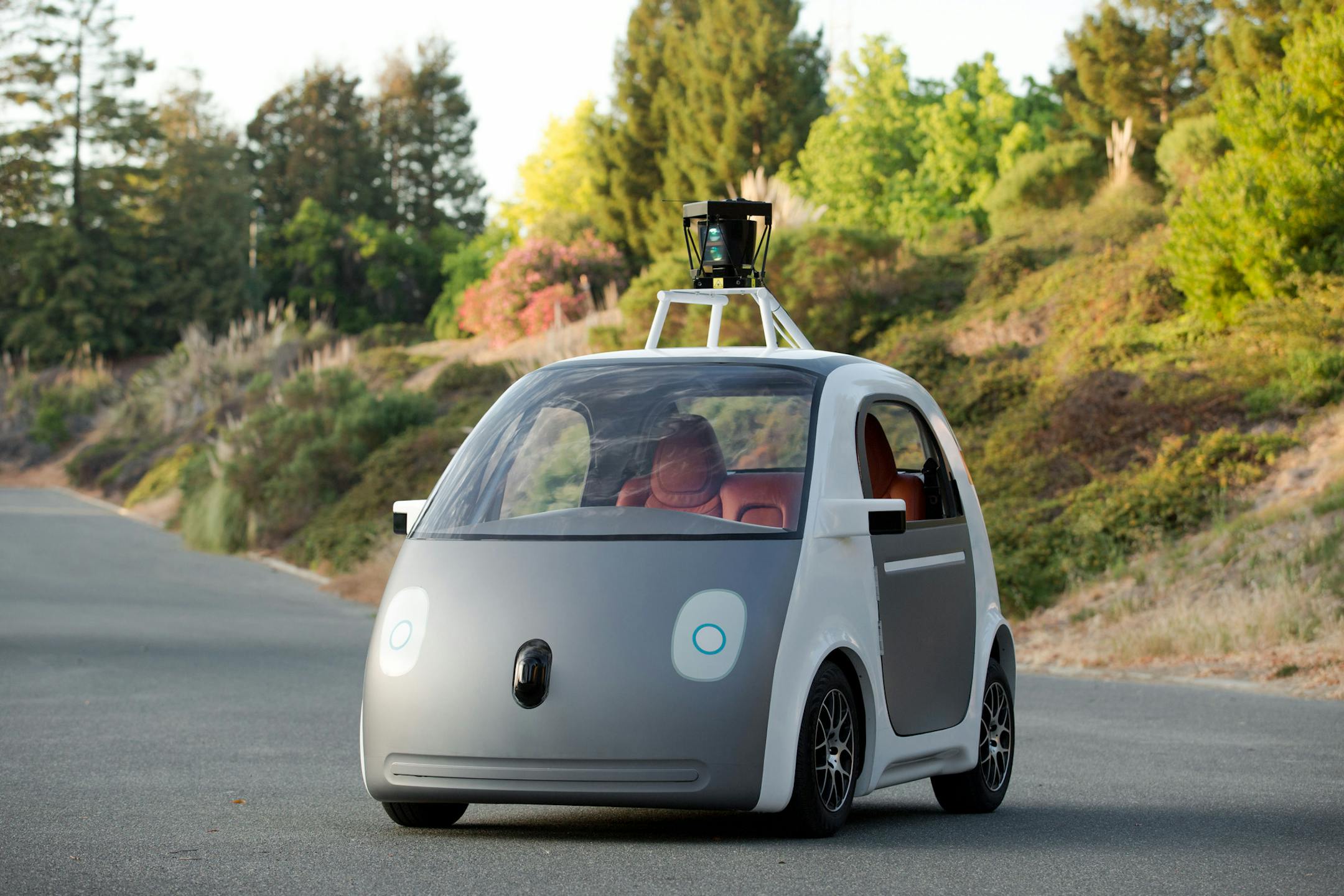
In inventing a self-driving car, Google has in one fell swoop struck a blow at masculinity, female empowerment, romance, sex and action heroes. It may even violate two of our three inalienable rights — liberty and the pursuit of happiness.
But let's not get negative.
In early tests, the buglike car logged thousands of miles in Mountain View, Calif. This electric car has two buttons (stop/go and emergency), and no brakes or pedals. (A version with a manual control that lets the driver take over is expected to be legal on California roads next year.)
In American middle-class life, driving is independence. Remember your learner's permit and that first venture out: you in the driver's seat, Mom or Dad coaching? With the Google car, say goodbye to all that bonding as well as the psychological growth that switch-around embodies.
I remember being on Wilshire Boulevard in Los Angeles, my dad suggesting that I change lanes, and being too terrified to do it. And then I did.
On my 16th birthday, I got my license. Hello, freedom. To pass the test I had to parallel park, and it is still one of the things I do best. Afterward I was proud. I picked up a friend and drove us to the beach. With Google cars, there is nothing to learn, nothing to master. This car fosters passivity, nurtures infancy. It has no driver, only passengers.
Over the years, I have grown to feel that the greatest thing about driving is that, if I really need to get somewhere or really need to get away from somewhere, I can do it. Essential to that sense of security and power is that I am actually doing the driving. Now I imagine running out, jumping into the car, and having to call tech support.
Suppose O.J. Simpson hadn't been in an SUV? Suppose he was heading down the freeway in a Google car? Could Google have stopped it?


