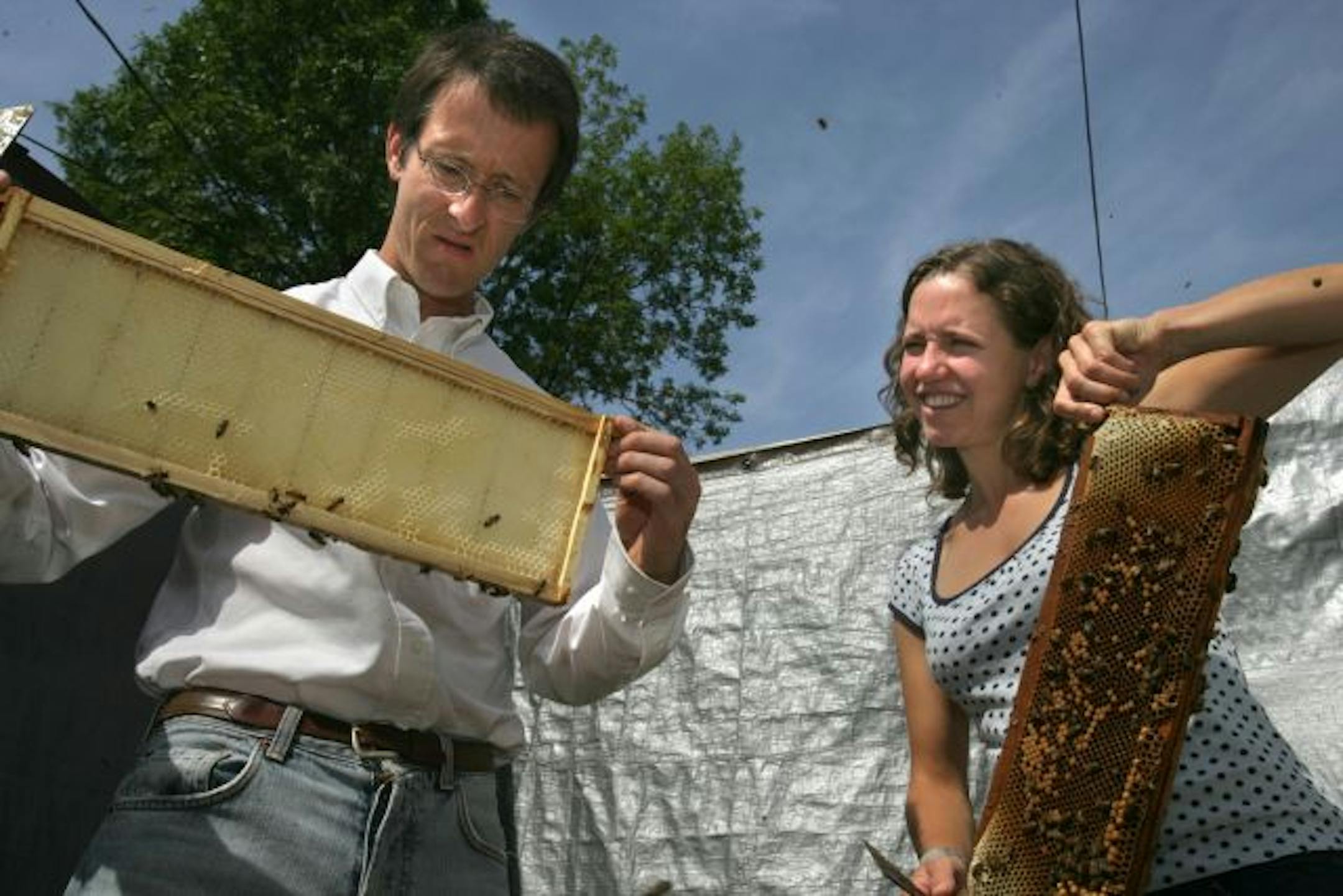
The last time David Nicholson appeared in the Star Tribune, he didn't reveal his face or last name. Nicholson was trying to stay under the radar because he was engaged in an illegal activity: harboring honeybees.
But now that Minneapolis has ended its decades-long bee ban, stealth beekeepers are emerging from the shadows to talk up their hobby.
"I find bees absolutely fascinating," said Nicholson. He and his partner, Betsy Ranum, a bee research assistant at the University of Minnesota, have been keeping them in their south Minneapolis back yard for the past three years. "It's so pleasant to sit there," Nicholson said. "The bees are busy, and it smells so nice around the hive."
The couple's bees weren't a secret in the neighborhood. They talked to their nearest neighbors in advance, and one even helped build their "flyway barrier" -- a tarp enclosure designed to direct the bees' flight from the hive upward, out of humans' way. Nicholson said the bees don't bother anyone, adding: "If we hadn't told people, they wouldn't know."
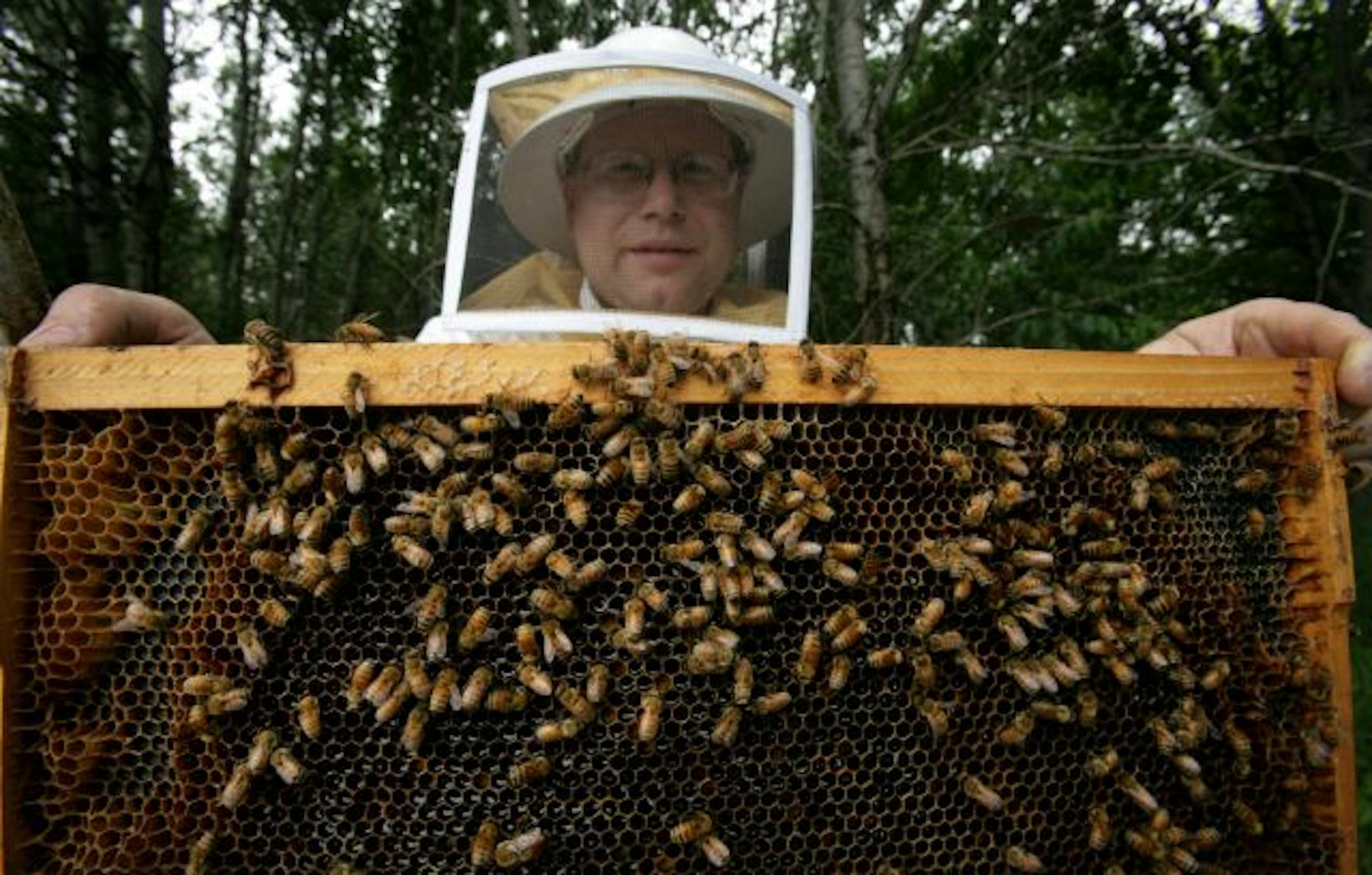
Beekeeping, which also is allowed in St. Paul (with a permit) and in many Twin Cities suburbs, is on the rise, part of the urban agriculture movement. More city dwellers are replacing their turf grass with vegetable plots and adding back-yard chicken coops and apiaries, or beehives. The Minnesota Hobby Beekeepers Association boasts about 300 members, up from 250 a few years ago, said president Dan Malmgren.
There's added buzz around bees because there's a sense of urgency; many fear they're an endangered species.
That's relevant to anyone who eats.
"We need bees to pollinate our plants," said Bob Sitko, a certified master beekeeper who teaches classes at Century College in White Bear Lake. "If all bees disappeared today, we wouldn't have watermelons, blueberries. ... They're responsible for about one-third of the food supply."