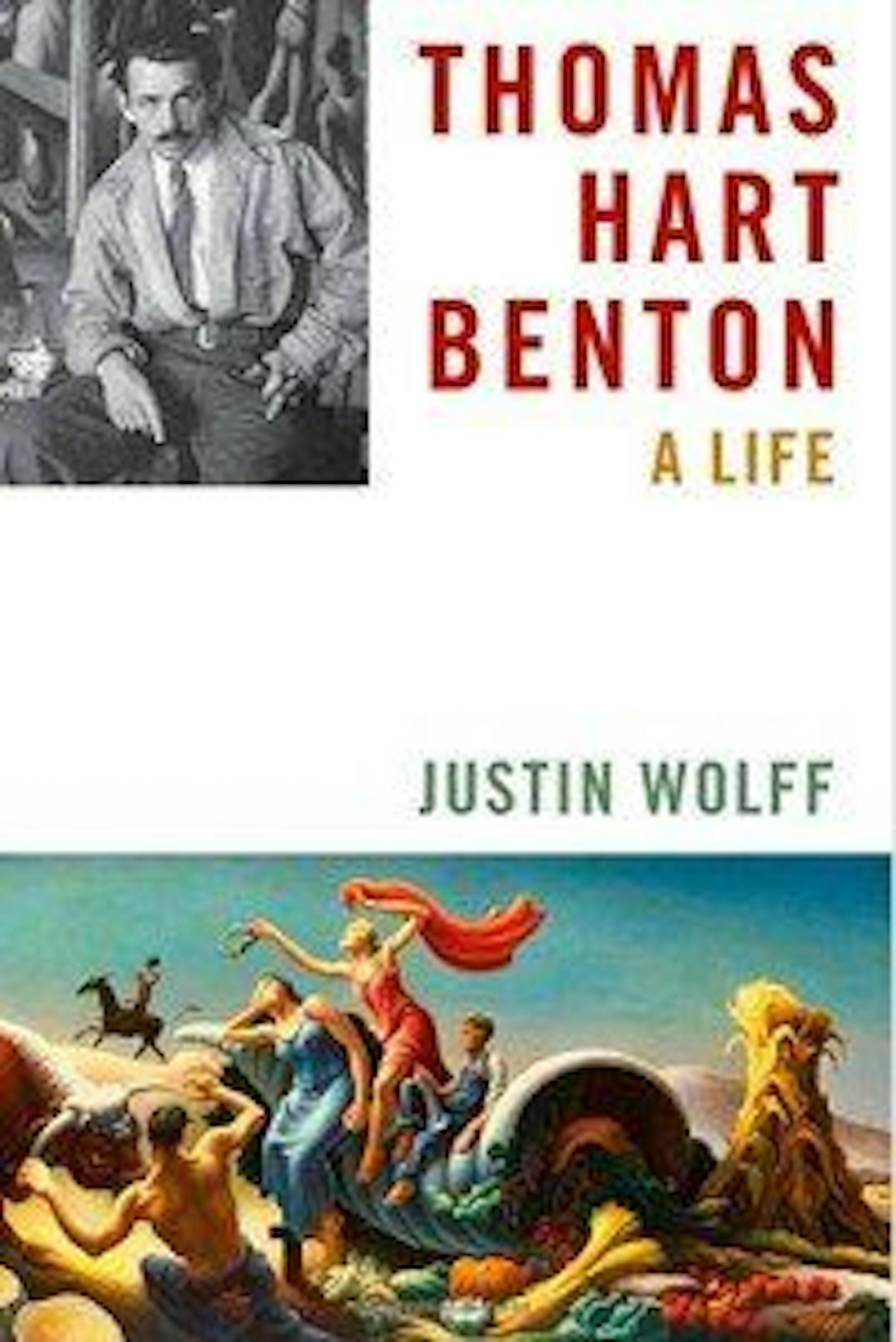
THOMAS HART BENTON
By Justin Wolff (Farrar, Strauss and Giroux, 400 pages. $40)
It is difficult to imagine an artist more emblematic of the United States in the throes of the Great Depression than Thomas Hart Benton, whose unmistakable work depicted "robust figures situated in stylized landscapes, cityscapes or interiors," as the noted critic Justin Wolff puts it. But Benton's "trademark dynamism" was so much more: It was a celebration of undulating forms and animated contrasts that promoted what the artist passionately believed was a uniquely American philosophy of art. Moreover, Wolff explains, it emerged from the philosophical pragmatism of John Dewey and the writings of historian Lewis Mumford that deeply influenced Benton. Fascinating stuff, this. And while many people are familiar with Benton's oeuvre, the artist himself has largely eluded examination. Wolff rectifies the oversight rather well, giving us a portrait of this complicated, fascinating, often contradictory man that is crisp, well informed and satisfyingly complete. What John Dos Passos did for the epoch in words, Benton did on canvas.
MICHAEL J. BONAFIELD, freelance writer
THE CITY AND THE COMING CLIMATE
By Brian Stone Jr. (Cambridge University, 206 pages, $29.99)
One way to take a bite out of global warming would be to forget the "global" part, argues urban environmental planner and Georgia Tech Prof. Brian Stone Jr. In his new book, "The City and the Coming Climate" -- both an excellent primer on climate change dynamics and a package of policy recommendations -- Stone stands as a new kind of climate change skeptic, asserting that cities are both where climate change is being experienced most intensely and where the greatest progress can be made in slowing it. Stone faults international climate monitors, in particular the U.N.'s Intergovernmental Panel on Climate Change, for focusing on global temperature trends, greenhouse gas emissions and broad, politically cumbersome agreements. In populated areas, he asserts, as much as half of what's driving climate change is land use, which can be adjusted quickly and efficiently at the local level. "For many, to live in a large city today is to live on the leading edge of the most rapidly changing environmental conditions ever experienced by humans, and to not even know it," Stone writes, detailing how urban temperatures have increased far faster than global readings, without getting nearly the same attention. Climate experts will argue that Stone overplays the impact of land use on climate warming, and underplays the impact of ocean warming and factors affecting all of Earth's atmosphere. Nevertheless, his methodically presented arguments could leave climate-sensitive readers feeling more perspiration but less desperation.
BILL MCAULIFFE, STAFF WRITER